UK CAA warns airlines over rise in unstable approaches continued to landing

The UK CAA has warned airlines about a rise in unstable approaches continued to landing. The practice is up to 100 times more likely to present a safety risk.

Aircraft landing at Heathrow Airport
Photo: Steve Daniels | Wikimedia Commons

The UK Civil Aviation Authority (CAA) has issued a new Safety Notice warning airlines and flight crews about an increase in unstable approaches that continue to land rather than being abandoned with a go-around. The regulator says this practice significantly increases operational risk. 

In Safety Notice SN-2026/008, issued on 4 August, the regulator said analysis of Mandatory Occurrence Reports (MORs) and operator safety data has identified a growing number of unstable approaches that are not discontinued. That is despite established stabilised approach criteria. 

A stabilised approach is one of aviation’s most important safety defences against landing accidents. It helps reduce the risk of runway excursions, hard landings, tail strikes and runway contact events. 

Continued unstable approaches carry far greater risk

The CAA notes that many unstable approaches end in uneventful landings. However, the regulator warns that this can create a dangerous sense of normality.

The Safety Notice cites historic Flight Safety Foundation research which found unstable approaches were a factor in 66% of approach and landing accidents. 
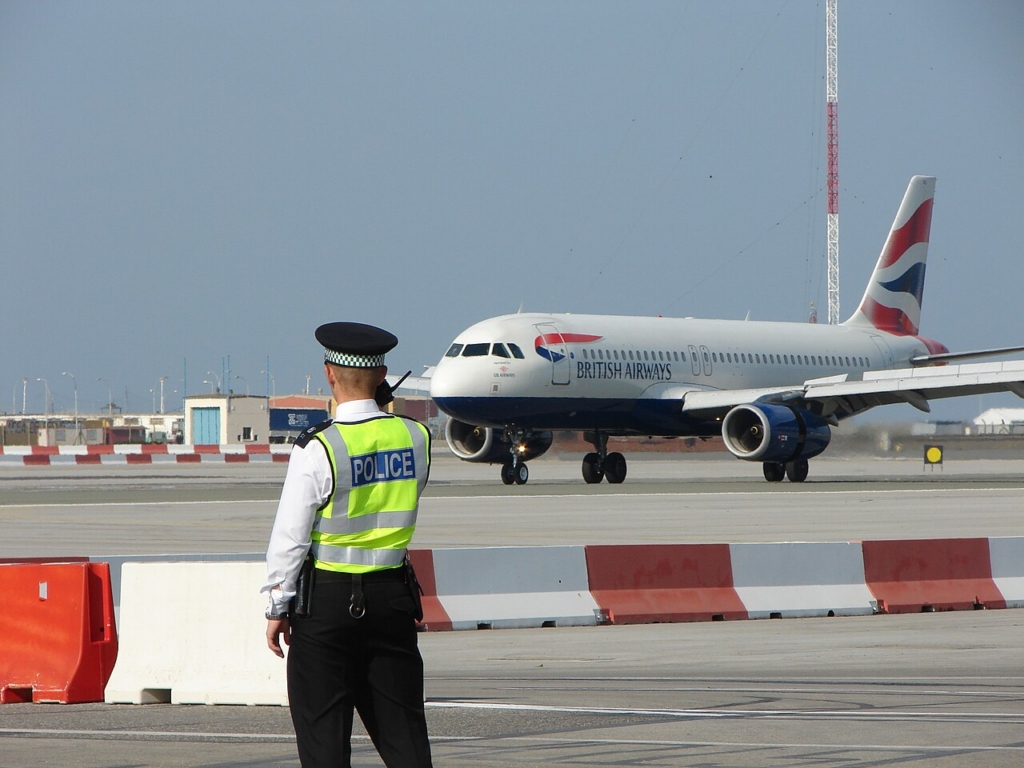
British Airways aircraft landing at Gibraltar Airport
Photo: RedCoat | Wikimedia Commons

Additionally, the CAA’s analysis of UK occurrence data from 2024-2025 shows that an approach continued while unstable is 80 to 100 times more likely to result in an adverse event than a stabilised approach or one discontinued with a go-around. 

Runway excursions remain a major concern. However, the regulator notes that the most common consequences are hard landings, deep landings and tail strikes.

Go-arounds should be the normal response

The CAA stresses that aircraft commanders retain ultimate authority to decide whether, in exceptional circumstances, continuing an approach is safer than initiating a go-around.

However, the regulator makes clear that when an aircraft fails to meet defined stabilised approach criteria, a go-around should be the expected outcome, not an exceptional event. 

The CAA says any decision to continue an unstable approach should only be justified when a clearly identifiable hazard would make a go-around the greater safety risk. For example, in case of an aircraft system issue, a specific performance limitation or another defined operational hazard.

Conversely, the CAA says decisions should not be influenced by:

  • Commercial or schedule pressure
  • Low confidence in flying a go-around
  • A belief that a go-around is abnormal or undesirable
  • Busy airspace or air traffic control workload

The notice emphasises that approach, departure and air traffic management procedures accommodate safe go-arounds when needed. Busy airspace alone should not justify continuing an unstable approach. 

Operators told to reinforce training and safety culture

The CAA is calling on operators to strengthen their operational procedures and organisational culture to promote stabilised approaches.

Among the CAA’s recommendations are:

  • Reviewing stabilised approach policies to ensure they are clear, objective and consistently applied.
  • Reinforcing that go-arounds are a routine safety manoeuvre and do not indicate poor performance.
  • Using Flight Data Monitoring (FDM) and Safety Management Systems (SMS) to identify trends in unstable approaches.
  • Monitoring whether crews comply with stabilised approach gates.
  • Ensuring recurrent simulator training includes realistic unstable approach and go-around scenarios.
  • Encouraging a culture in which crews can report go-arounds and unstable approaches without fear of criticism. 

The regulator also encourages operators to review individual events through safety investigations. They should aim to understand why an approach became unstable, and why the decision was made to continue.

A focus of the UK’s aviation safety plan

The warning follows publication of the UK’s National Aviation Safety Plan 2026-2029 this April, which identifies unstable approaches as a key cause of runway excursions, and prioritises improving approach and landing performance. 

The CAA’s latest Safety Notice will remain in force until 31 August 2029. The extended timeframe gives operators several years to make the recommended changes in their training, operational procedures and safety management systems.

Related

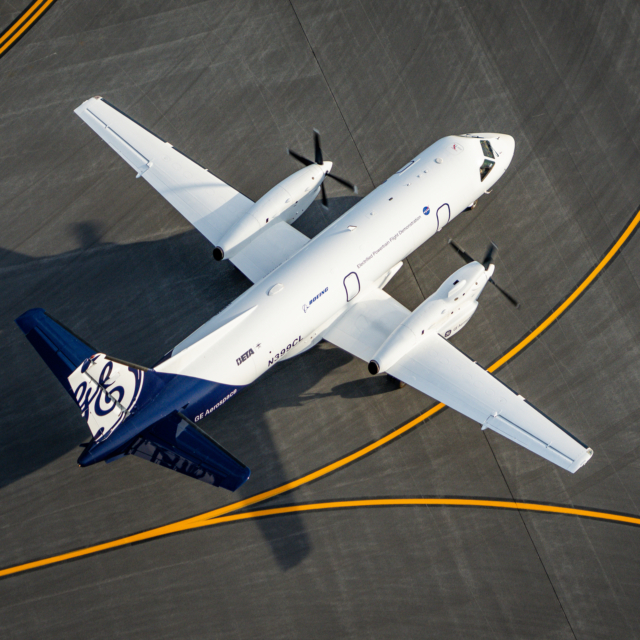
GE Aerospace and BETA demonstrate hybrid-electric takeoff with modified Saab 340B
GE Aerospace Saab SF340
GE Aerospace and BETA demonstrate hybrid-electric takeoff with modified Saab 340B
The companies have recently completed the world's first hybrid-electric assisted take-off using a conventional regional aircraft.
Aerospace

9 Nov 2026

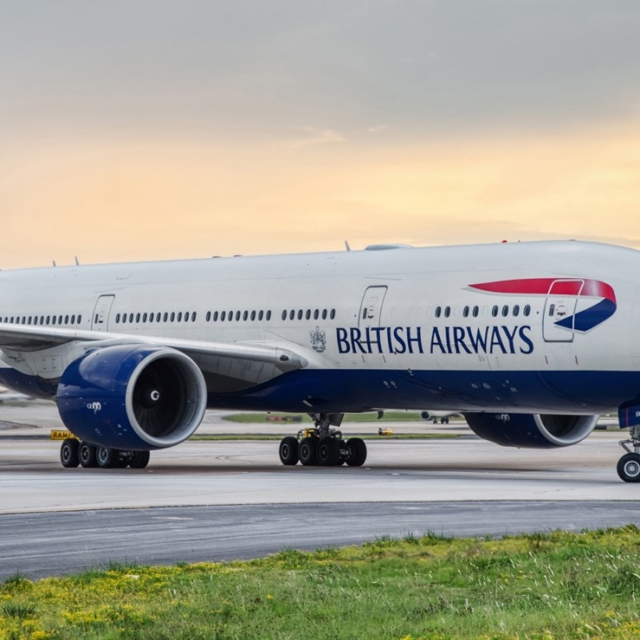
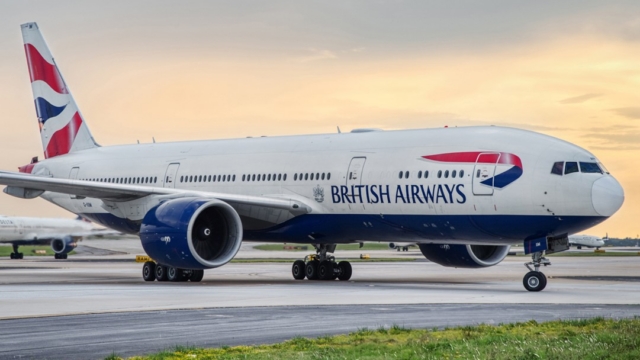
British Airways navigates Q3 margin pressures amid rising costs and disruption
British Airways Boeing 777 aircraft at Atlanta Airport
British Airways navigates Q3 margin pressures amid rising costs and disruption
Rising fuel bills, air traffic control disruptions, and Middle East geopolitical pressures weighed on performance.
Aerospace

8 Nov 2026

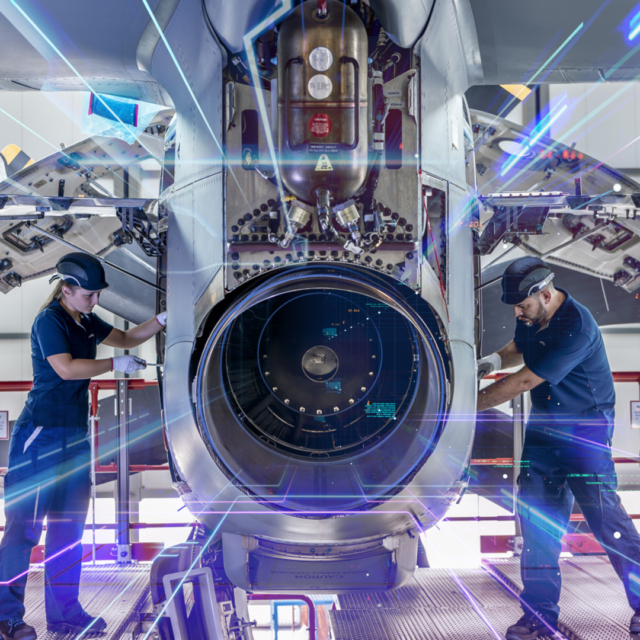
Which UK aerospace jobs are hardest to fill in 2026?
Airbus engines
Which UK aerospace jobs are hardest to fill in 2026?
Aerospace skills shortages are particularly noticeable in positions requiring advanced technical knowledge, practical engineering experience and specialist qualifications.
Aerospace

8 Nov 2026

PM reviews £2.4bn Skynet satellite contract as Airbus and Lockheed make competing jobs pledges
SKYNET 6A
PM reviews £2.4bn Skynet satellite contract as Airbus and Lockheed make competing jobs pledges
Airbus and Lockheed Martin are competing to deliver Britain's next military communications satellites, with the outcome carrying implications for UK jobs, investment and sovereign space capabilities.
Defence Uncategorized

9 Nov 2026

Which raw materials are critical to defence? NATO’s essential materials explained
Engineer robotic mechanic women technician working in advance robotic industry plant work assembly robot arm repair fix maintenance or service large machine by hand skill
Which raw materials are critical to defence? NATO’s essential materials explained
Raw materials are fundamental to military aviation, playing a vital role in aircraft structures, jet engines, avionics and electrical systems. We explore NATO's list of 12 defence-critical materials, how they are used in aerospace and why securing a reliable supply matters to the industry.
Defence

8 Nov 2026

Babcock and Everllence partner on propulsion of Arrowhead Frigates
MoU signing at Euronaval, Paris.
Babcock and Everllence partner on propulsion of Arrowhead Frigates
The new partnership framework will see Everllence supporting the development of next-generation power and propulsion systems across Babcock's Arrowhead programmes.
Defence Member News

6 Nov 2026

Leicester’s National Space Centre Discovery Team wins Sir Arthur Clarke Award
National Space Centre Discovery Team wins Sir Arthur Clarke Award
Leicester’s National Space Centre Discovery Team wins Sir Arthur Clarke Award
Following delivery of its education and outreach initiatives across the UK to inspire the next generation of scientists, engineers and space explorers, the National Space Centre's Discovery Team has gained national recognition by winning a prestigious Sir Arthur Clarke Award.
Member News Space

5 Nov 2026

Astroscale and OHB to collaborate on space security
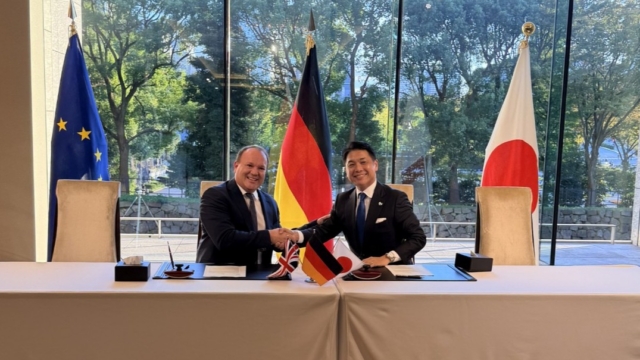
Astroscale and OHB sign MoU
Astroscale and OHB to collaborate on space security
Following ratification of the Kensington Treaty in October, Astroscale and OHB have signed an MoU to enhance cooperation between the UK, Germany and Japan towards protecting critical infrastructure in space, whilst supporting the safe, sustainable and responsible use of the orbital environment.
UK Space Agency launches In-Orbit Manufacturing research competition
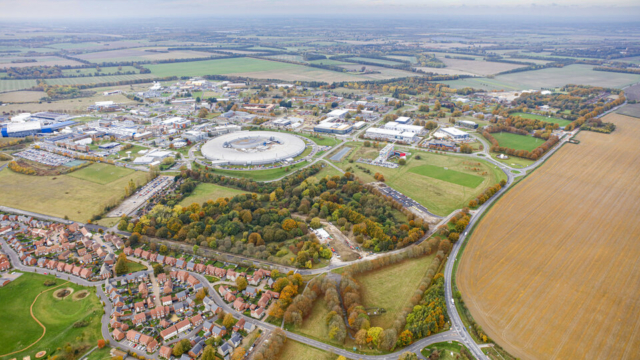
View_of_Harwell_campus_in_the_UK_article
UK Space Agency launches In-Orbit Manufacturing research competition
A new competition launched by the UK Space Agency (UKSA) seeks projects that will underpin the research, development and maturation of an In-Orbit Manufacturing process and associated payload.
Events Space

4 Nov 2026

Met Police chief calls for major overhaul to tackle cybercrime
Police on patrol
Met Police chief calls for major overhaul to tackle cybercrime
Metropolitan Police Commissioner Sir Mark Rowley has called for England and Wales’s 43 police forces to be reorganised into eight to 10 regional forces.
Security

6 Nov 2026

UK plans tougher facial recognition laws and police technology watchdog
Facial recognition
UK plans tougher facial recognition laws and police technology watchdog
The Home Office plans a statutory framework for police facial recognition, including independent oversight and mandatory bias testing.
Security

5 Nov 2026

Astroscale and OHB to collaborate on space security
Astroscale and OHB sign MoU
Astroscale and OHB to collaborate on space security
Following ratification of the Kensington Treaty in October, Astroscale and OHB have signed an MoU to enhance cooperation between the UK, Germany and Japan towards protecting critical infrastructure in space, whilst supporting the safe, sustainable and responsible use of the orbital environment.