

MOD launches £5m hunt for technology to counter mass drone attacks


As low-cost drones continue to reshape modern warfare, the Ministry of Defence has launched a £5 million competition to find new technologies capable of protecting UK troops from mass aerial attacks.
Project PANOPTES is seeking counter-drone solutions that have the “capability to detect, track, identify, decide and defeat mass and low-cost threats in a cost-effective manner and without being overwhelmed or exhausting stockpiles.”
The UK Defence Innovation (UKDI) themed competition comes as armed forces worldwide look for more affordable ways to counter the growing threat posed by large numbers of low-cost drones.
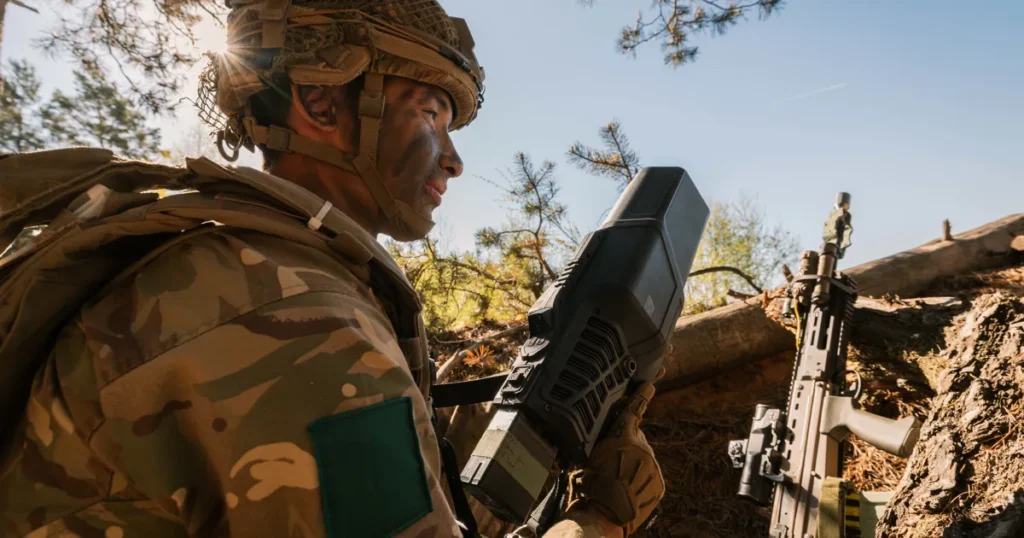
The announcement notes that existing counter-UAS approaches are constrained by current capability, high costs, limited manoeuvrability, and the pace of evolving UAS.
The MOD says that proposals should consider integration with a future uncrewed ground vehicle (UGV) and a future Army and Joint Ground-Based Air Defence (GBAD) capability. Exportability is also desirable.
A focus on defending ground forces and the Army
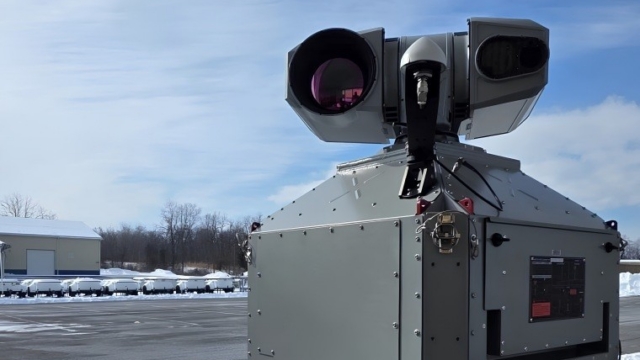
The notice says that the requirement is particularly acute for deployed land forces as well as fixed infrastructure. Laser weapons, autonomous operation, open architecture, and future integration with the British Army ground vehicles are all explicitly in scope.
The solution is to be more affordable than existing options and be able to counter emerging air threats instead of just legacy systems.
The MOD wants the solution to be able to exploit open architectures, have platform-generated power, be a modular design, and be capable of autonomous operation.

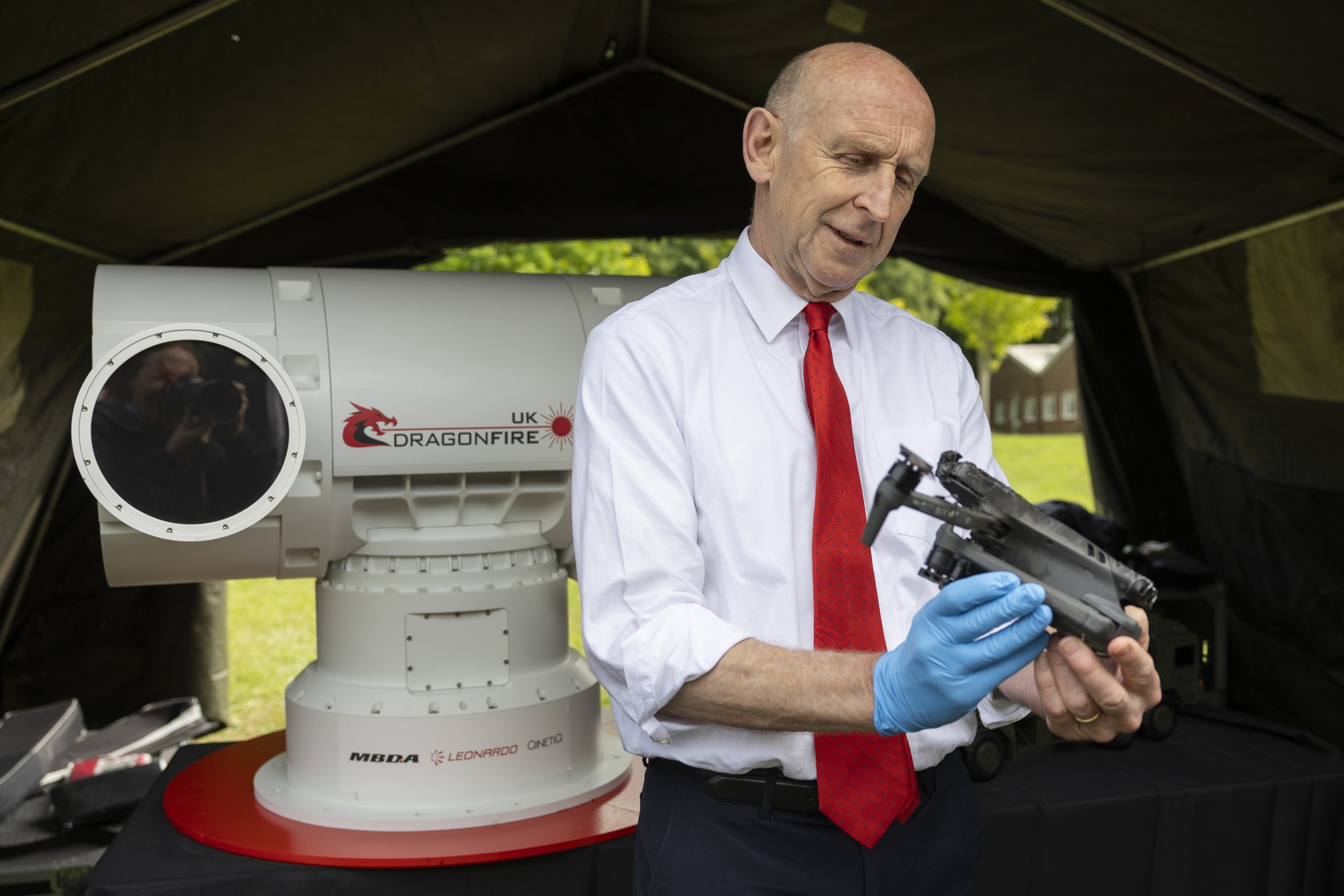
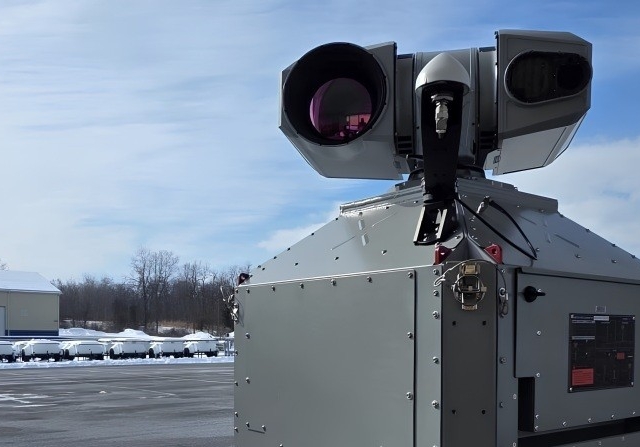
While it is interested in a range of innovative solutions, it specifically identifies Laser Directed Energy Weapons (LDEWs) effectors as one possible solution. It is worth noting that the UK is already developing the DragonFire laser system and that it is to be installed on British warships and operational in 2027.
The war in Ukraine has shown how vulnerable ground forces and their equipment have become to masses of cheap drones. Some advanced tanks come with an active protection system (APS).
One of the most popular is the Israeli-made Trophy APS. This provides around six ready-to-fire interceptors across both sides of the vehicle before needing a major reload from the outside.
But even this can be saturated. Ukrainian sources have previously said they often use 15-20 drones to destroy a single Russian tank, which typically lacks APS.
£5 million available with contracts issued late 2026
The initial competition seeks to deliver an integrated C-UAS force-protection capability that is capable of autonomous operation. It is the “first phase of a planned multi-phase capability development and acquisition pathway leading to a future Programme of Record.”

The deadline for Stage 1 is 23 September. Stage 2 will then request detailed proposals on successful ideas. This is a fast-paced project with an expected duration of six months or less, while the aim is for projects to start in November or December 2026.
The project is open specifically to British innovators, and a share of up to £5 million is available immediately for the winners. No single company is expected to secure the full funding as the MOD anticipates an award of multiple contracts.
Sign up for our newsletter and get our latest content in your inbox.
Similar Reads



Sign up for our newsletter. Select all sectors relevant to you.
Related