How will RAF Typhoons help defend Saudi Arabia from Houthi drones and missiles?


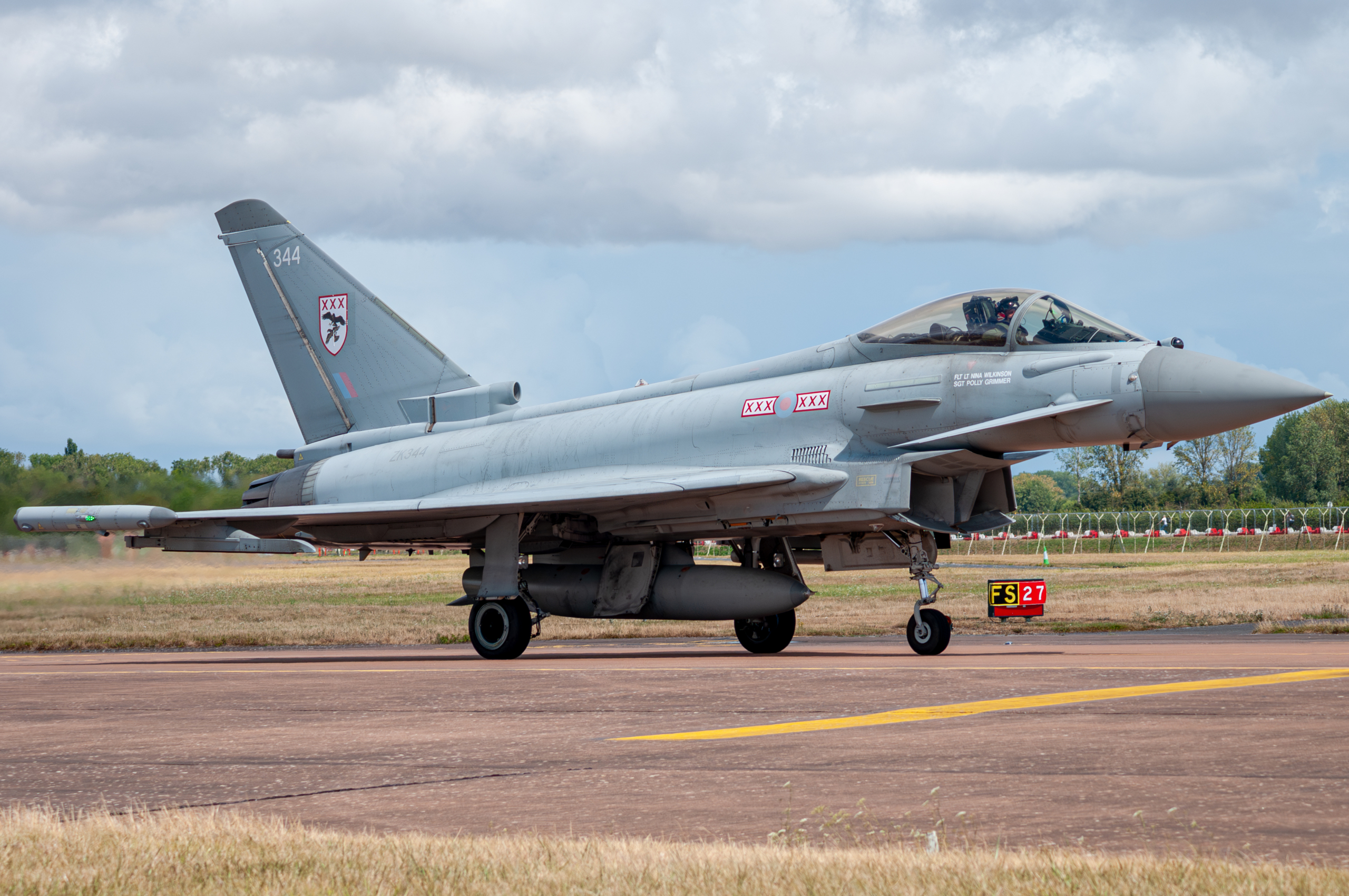
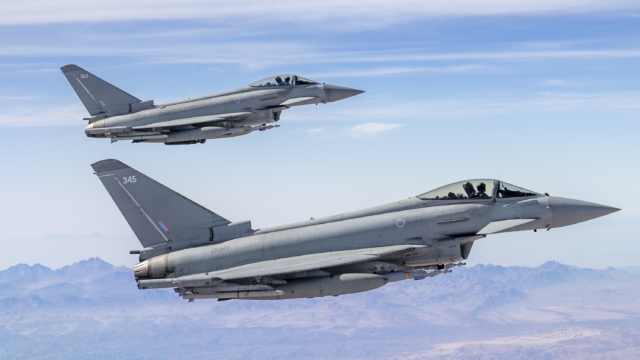
The UK is preparing to deploy Royal Air Force (RAF)-operated Eurofighter Typhoon FGR4 fighters to Saudi Arabia to strengthen the kingdom’s air defences amid escalating missile and drone attacks by Iran-backed Houthi militants in Yemen.
The deployment marks a significant expansion of British military support in the Middle East. This article examines the threats facing Saudi Arabia, the capabilities and weapons that underpin the Typhoon’s defensive mission, and the wider strategic implications for the UK’s regional security commitments.
Announced by the UK Ministry of Defence (MOD) on 20 October, the deployment will see the aircraft conduct defensive counter-air (DC-A) missions to protect Saudi cities, military facilities and critical national infrastructure. The number of aircraft and deployment timetable have not been publicly disclosed.
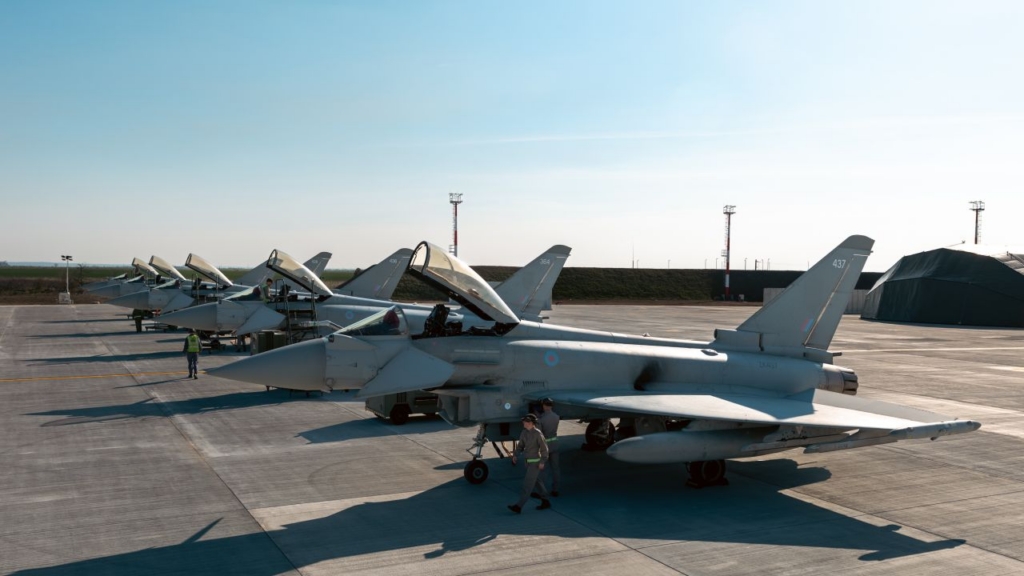
UK Defence Secretary Wes Streeting authorised the additional support following renewed Houthi attacks on Saudi territory, including strikes that targeted Aramco-owned energy infrastructure, military facilities and King Khalid International Airport in Riyadh. Since the start of October, Houthi cross-border missile and drone strikes in Saudi Arabia have killed at least 19-20 people and injured hundreds more.
The upcoming RAF Typhoon deployment expands the UK’s existing contribution that includes defensive air-to-air refuelling (AAR) support provided by a single RAF-operated A330-243MRTT Voyager KC2/KC3 tanker-transport and additional military personnel. An RAF A400M Atlas C1 tactical transport will also support the movement of equipment and personnel within Saudi Arabia.
Saudi Arabia faces barrage of Houthi drone and missile attacks from Yemen
Saudi Arabia faces a combination of ballistic/cruise missile threats and one-way attack (OWA) drones launched by the Iran-backed Houthi movement in Yemen. These weapons can threaten population centres, airports, civil and military installations and key energy infrastructure, creating a complex air defence challenge.
🚨🚨🇸🇦 BREAKING NEWS: HOUTHI MISSILE STRIKE REPORTED AT SAUDI ARAMCO HEADQUARTERS 💥 Reports claim that a missile struck the headquarters of Saudi Aramco in Dammam, Saudi Arabia, causing damage to the upper three floors of the executive building, including the CEO’s office. 🎯 This is not a refinery or an oil tanker — the reported target is the headquarters of Saudi Aramco, one of the world’s largest oil companies. ⚠️🔥 If confirmed, the incident could mark a significant escalation in the regional conflict, raising serious concerns about the security of Saudi Arabia’s critical energy infrastructure. 📍🇸🇦 Further details and independent confirmation are still needed.
— ARMY LIFE (@Sarfarosh_1947) October 14, 2026
Low-cost OWA drones can be launched in large numbers from obscure locations, potentially forcing defensive forces to spread their surveillance, targeting and interception resources across multiple targets. However, missiles present a different challenge, with their speed, flight profiles and limited interception windows placing significant demands on detection, tracking and response systems.
Consistent attacks against energy facilities and civilian infrastructure will also carry wider economic implications. Continued disruption to oil production, transport and commercial aviation services could further affect regional stability and international markets, extending the consequences beyond the immediate conflict zone.
Typhoon capabilities underpin defensive mission in Saudi Arabia
The Typhoon FGR4 currently serves as the backbone of the RAF’s air defence capabilities and is capable of performing air policing, interception and air-to-air combat operations.
Its sophisticated onboard sensors, advanced beyond-visual-range weapons and legacy Captor-M mechanically scanned radar – which will soon be replaced by the enhanced European Common Radar System Mark 2 (ECRS Mk2) active electronically scanned array (AESA) radar – enable crews to detect, track and engage hostile aircraft and other airborne threats.
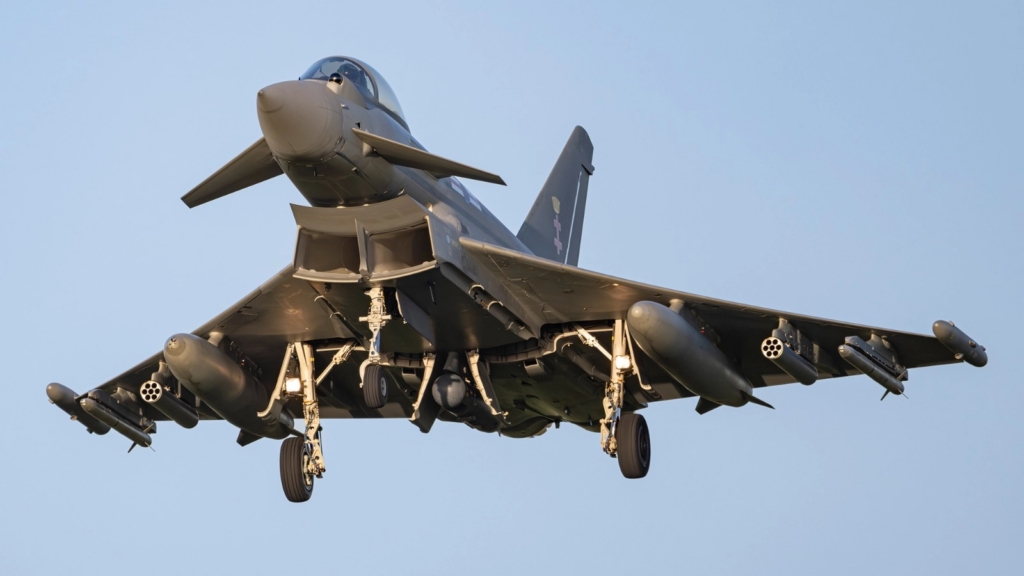
The multi-role fighter’s air-to-air weapons arsenal include the AIM-120 Advanced Medium-Range Air-to-Air Missile (AMRAAM) and Meteor beyond-visual-range air-to-air missile (BVRAAM) for use against targets at range, while the AIM-132 Advanced Short-Range Air-to-Air Missile (ASRAAM) is used when engaging threats at shorter range.
The RAF has also integrated the Advanced Precision Kill Weapon System (APKWS) II – a laser-guided 70mm rocket system – onto its Typhoon FGR4 fleet, providing a lower-cost option for engaging suitable aerial threats, including OWA drones, while conserving more expensive air-to-air missiles.
Operated by both the UK and Saudi Arabia, the Typhoon’s speed, manoeuvrability and sophisticated sensor suite allow it to rapidly respond to emerging threats and conduct combat air patrols (CAPs) and DC-A missions over areas requiring protection. Its effectiveness will depend on the wider air defence network, including surveillance, target identification and coordination with Saudi forces.
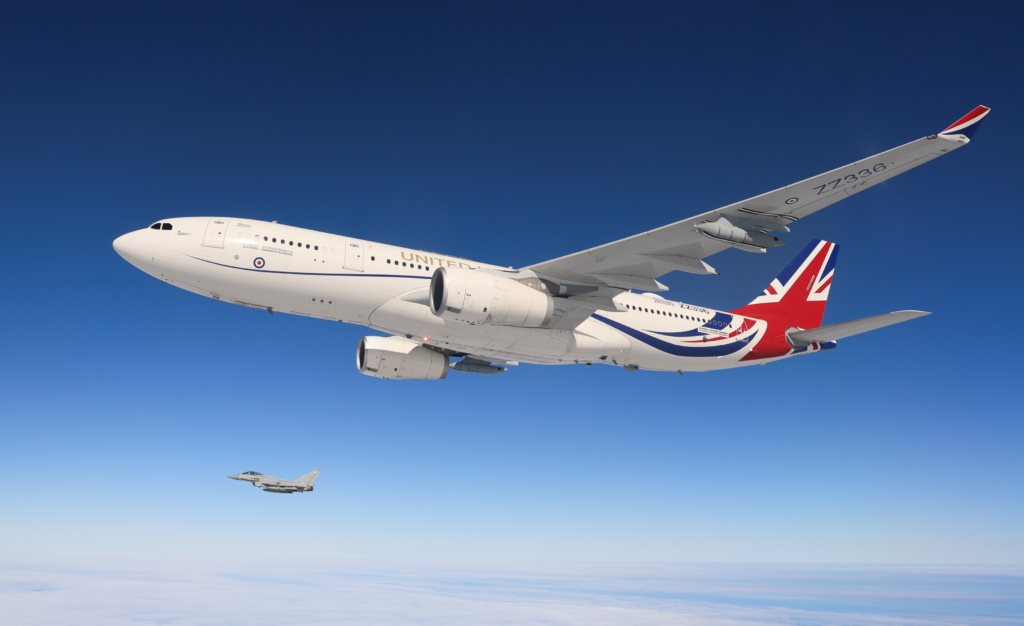
Having been deployed in support of Saudi air defence operations since September, the RAF Voyager KC2/KC3 provides AAR support that can extend the endurance of combat aircraft and help sustain longer CAPs. Meanwhile, the A400M Atlas will provide an additional logistical capacity, with UK military advisors also being deployed to assist Saudi personnel.
The UK MOD has emphasised that the Typhoon’s task will remain defensive. They will protect Saudi airspace rather than conduct any offensive strikes against Houthi-affiliated targets as part of this commitment.
Why is this deployment strategically significant for the UK?
This deployment reinforces the UK’s security partnership with Saudi Arabia and demonstrates its willingness to contribute directly to protecting a key regional ally. It also supports wider efforts to safeguard civilian infrastructure, commercial aviation services and key regional energy supplies.
For the UK, instability in the Gulf presents potential economic risks, including disruption to energy markets, increased business costs and pressure on household living expenses. Protecting regional stability therefore has implications beyond simple defence policy.
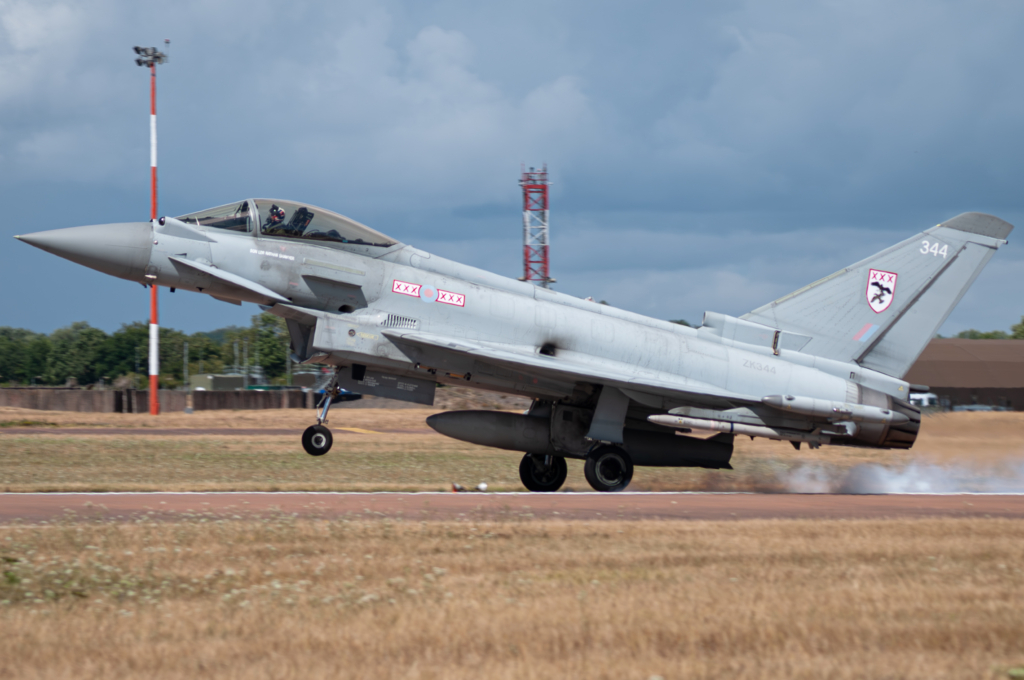
The move also highlights the importance of combining frontline fighters with AAR and air mobility capabilities, along with additional advisory support to sustain major air defence operations over a prolonged period of time.
While the deployment strengthens Saudi Arabia’s defensive posture, the UK has reiterated its support for a diplomatic resolution to the conflict in Yemen. The challenge will be to counter continuing aerial threats while avoiding further escalation across an already volatile region.
Sign up for our newsletter and get our latest content in your inbox.
Similar Reads


Sign up for our newsletter. Select all sectors relevant to you.
Related