

The British Army’s next Land Rover: Seven prospective LMV solutions


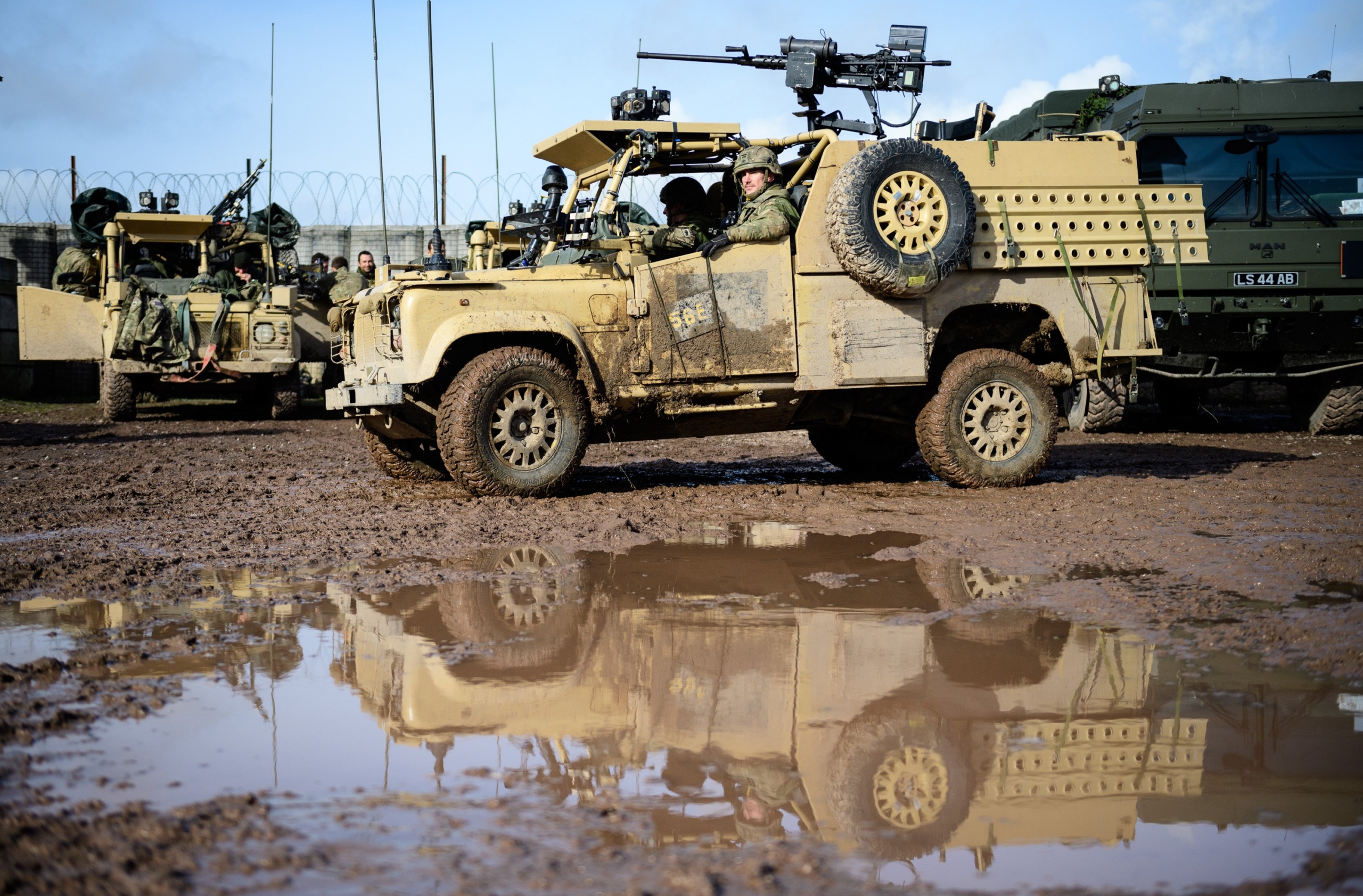
Seven major industry teams have now publicly presented vehicles for the British Army’s Light Mobility Vehicle programme, which will replace much of the Army’s ageing Land Rover and Pinzgauer fleets.
The formal competition has begun, but the final Invitation to Tender has not yet been issued. Companies had until 1 September to request participation in the procurement, after which the Ministry of Defence plans to select no more than seven teams for dialogue and vehicle trials. It has not disclosed which companies applied or confirmed an official shortlist.
The seven offers examined here are therefore publicly declared prospective contenders rather than confirmed shortlisted bidders. Other manufacturers have previously displayed possible LMV solutions or expressed interest in the requirement.
The MoD estimates the contract at £2 billion excluding VAT, or £2.5 billion including VAT. It will include an initial vehicle purchase and options potentially taking the fleet beyond 9,500 vehicles, although the final quantity has not been fixed.
Seven possible British Army LMV contenders compared
The MoD has not disclosed which companies submitted requests to participate by the 1 September deadline. These are publicly presented prospective solutions rather than a confirmed shortlist.
| Prospective team | Proposed LMV platform | Base vehicle origin | Proposed UK contribution | Main selling point |
|---|---|---|---|---|
| Jaguar Land Rover-led consortium | Defender Wolf Series II | Defender assembled in Slovakia; UK-built engine | UK design and engineering, Wolverhampton engines and proposed military integration | Continuity with the British Army’s 70-year Land Rover relationship |
| Team Grenadier | Ineos Grenadier and Quartermaster family | Manufactured at Hambach, France | UK adaptation, supply-chain and through-life support partners | Rugged ladder-frame platform proposed across all nine LMV roles |
| Rheinmetall UK | Mercedes-Benz military G-Class family, potentially including Caracal | Germany | Proposed UK modification, integration and support | Established military vehicle family with airborne and special-operations options |
| Babcock and Supacat | General Logistics Vehicle based on Toyota Land Cruiser 70 | Japanese platform | Babcock says around 70% of programme value would remain in the UK, including work at Devonport and Honiton | Globally supported commercial platform combined with British military engineering |
| Team LionStrike | GM Defense vehicles based on Chevrolet Colorado and Silverado | North America | Adaptation, systems integration and support by BAE Systems and NP Aerospace in the UK | Military-proven US platforms offering scale and rapid availability |
| General Dynamics, Ford and Ricardo | Militarised Ford Ranger and Ranger Super Duty family | Global Ford platform | Dagenham-built engines, British engineering and proposed integration in South Wales | Mass-produced platform with an extensive international support network |
| Fering Technologies | Pioneer X hybrid-electric vehicle | Designed in London | Fering says the vehicle will be built in the UK through a manufacturing partnership | Hybrid-electric powertrain, extreme range and silent EV-only operation |
Jaguar Land Rover’s Defender Wolf Series II
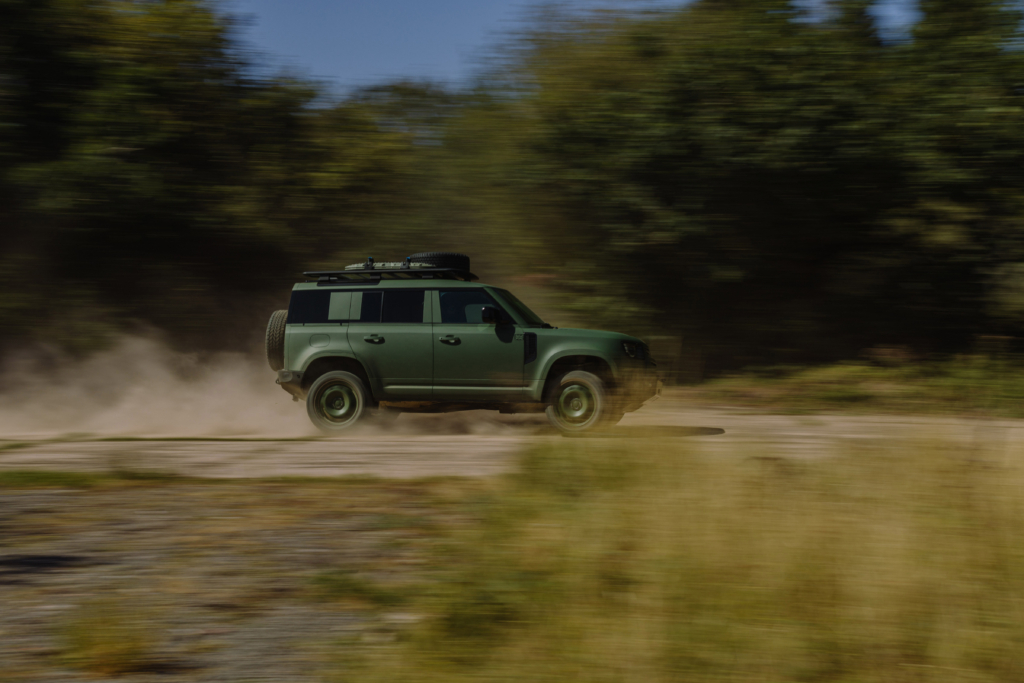
Defender has announced that a Jaguar Land Rover-led consortium intends to compete for LMV with the Wolf Series II.
Based on the Defender’s D7x architecture, the Wolf Series II is the first new military Defender since the original Wolf of the 1990s, continuing a British Army relationship with Land Rover that stretches back more than 70 years.
While Jaguar Land Rover is a quintessential British brand, it is now owned by the Indian automotive manufacturing company Tata Motors.
Adding to the tension, Jaguar Land Rover has just confirmed that 4,000 jobs will be cut over the next two years, with most lost in the United Kingdom.
The Defender would allow the British Army to continue its famous relationship, but with a significantly upgraded platform. Defender has presented four proposed variants: tactical, general mobility, ambulance and utility.
Ineos Automotive militarised Grenadier and Quartermaster family
ADS reported earlier this week that Ineos Automotive has added British supply-chain specialists (Hobson Industries and TVS Supply Chain Solutions) to its consortium to offer its Grenadier as the foundation for the LMV.
The Grenadier is the spiritual successor to the old Defender and is designed from the ground up as a rugged and relatively uncomplicated working vehicle. The Grenadier is already used by German police and other European law-enforcement and border-security organisations.
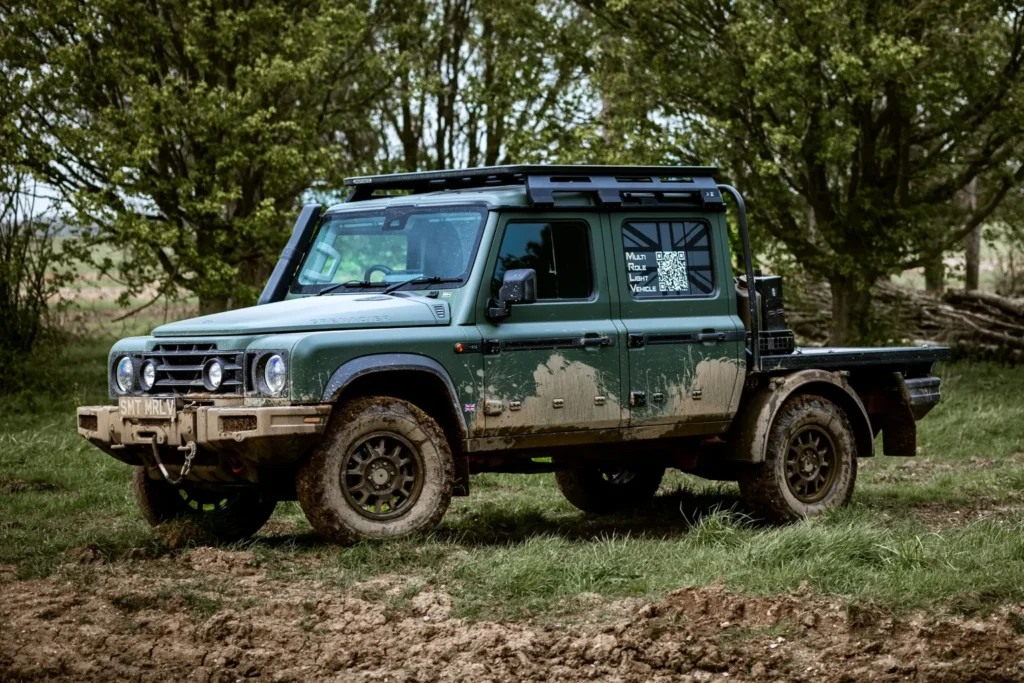
The company has built over 40,000 Grenadiers since production began.
The vehicles are manufactured at Ineos Automotive’s Hambach plant in France, with UK partners handling elements of adaptation, supply and through-life support.
Rheinmetall UK’s Mercedes-Benz G-Class family
Rheinmetall UK has positioned vehicles from the military Mercedes-Benz G-Class family for the requirement, including the Caracal airborne platform and a militarised G-Class station wagon.
Rheinmetall says its Caracal is a new airborne platform and is designed as a compact and air-transportable all-terrain vehicle primarily designed for airborne and special operations.
The German defence contractor claims that the Caracal’s modular design allows it to be used in a variety of roles, particularly in airborne operations. This makes it “suitable as a combat vehicle or a simple troop transporter, with specialised variants available for combat engineers and medical units.”
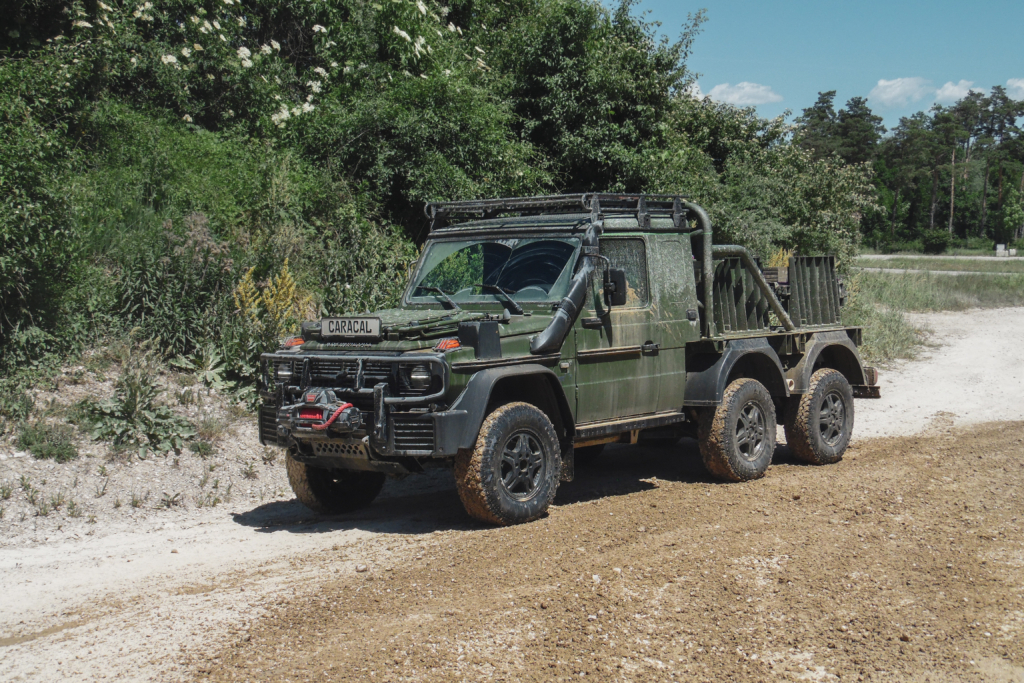
The vehicle was selected by the German Army and the Royal Netherlands Army. Rheinmetall officially delivered the first mass-production examples to the German Bundeswehr this month.
Ukraine became the initial operational user of the platform after an emergency German aid package. The first units arrived in Ukraine in late 2023.
Babcock/Supacat’s General Logistics Vehicle
Babcock and Supacat have presented the General Logistics Vehicle family, based on the Toyota Land Cruiser 70 Series, for LMV. The Land Cruiser is arguably the most popular off-road vehicle in the world.
Toyota’s vehicles are almost inseparable from the “technical” class of military vehicles found in many conflicts across the Middle East and beyond. The Land Cruiser brand was first launched in 1951, while the Land Cruiser 70 series was launched in 1984 as a heavy-duty model for commercial use in harsh environments.
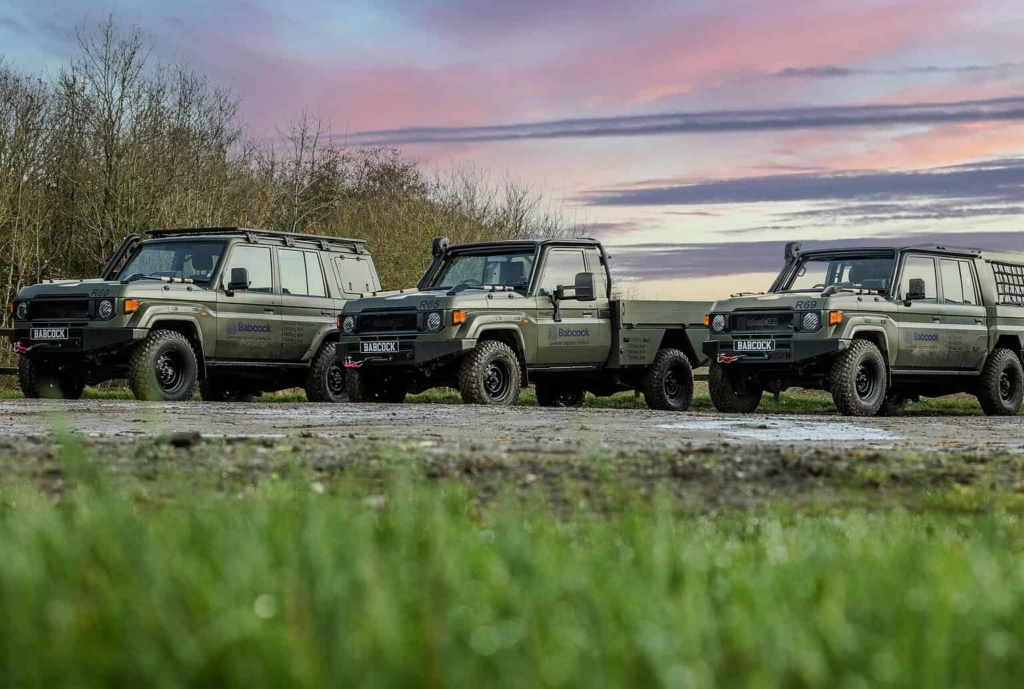
Babcock says around 70% of the programme value would remain in the UK, with much of the work to be done at Devonport and Honiton. The British defence contractor first announced its partnership with Supacat in July.
Babcock says, “Developed by Babcock in the automotive heartland of the West Midlands, the GLV draws on decades of expertise in designing, customising and delivering vehicles for the UK’s armed forces, government agencies and emergency services.”
Team LionStrike’s GM Defense vehicle family
Team LionStrike, comprising GM Defense, BAE Systems and NP Aerospace, has proposed a family drawing on GM’s Colorado-derived Infantry Squad Vehicle and Silverado platforms.
This option comes with the advantage of proven US scale and military experience and would offer the British Army an off-the-shelf option. The team expresses it as “immediate readiness, reduced costs, and long-term UK industrial benefits.”
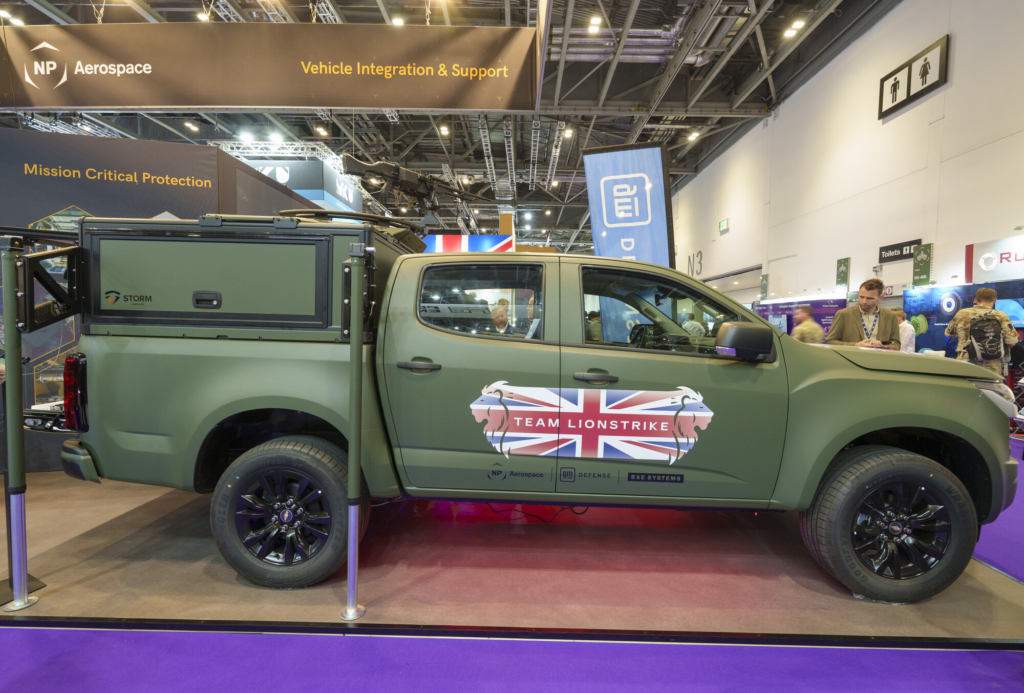
The vehicles would be built in North America and then adapted, integrated, and supported in Britain. Team LionStrike unveiled its General Support Utility Platform (GSUP) as part of its bid to modernise the British Army’s vehicles during DSEI UK 2025.
One of the variants is an ultra-light expeditionary nine-seater “optimised for rapid air insertion and high-speed transit across restrictive, non-permissive terrain.” Another is a five-seater that includes a rear load bed designed for rapid reconfiguration into counter-UAS, logistics, or other tactical roles.
General Dynamics’ Ford Ranger/Super Duty
General Dynamics Land Systems–UK, Ford and Ricardo have formed a team offering militarised 4×4 and 6×6 vehicles based on the Ford Ranger and Ranger Super Duty.
The mass-produced Ranger platform comes with an enormous international support base, while the bid includes British-built engines and British military engineering.
General Dynamics unveiled the bid at DSEI UK 2025, saying that its “relevance to the UK MoD lies in its scalability, durability, and compatibility with defence-grade modifications.” It also noted that the partnership brings together the extensive UK-based capabilities of General Dynamics Land Systems–UK and Ricardo to meet the British Army’s operational needs.
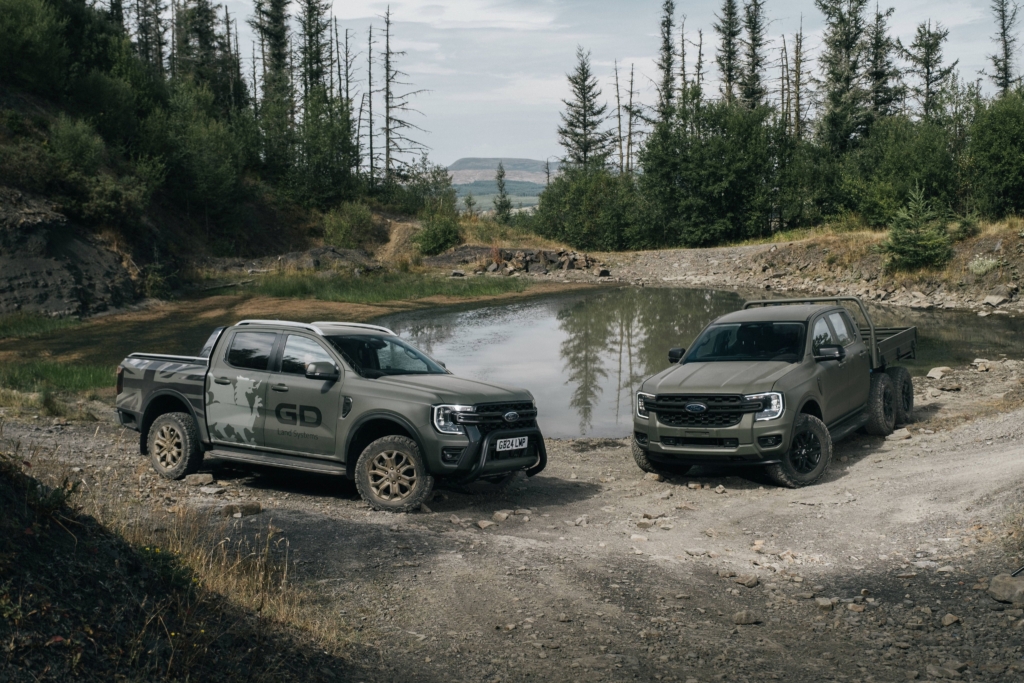
The team points to potential integration work at GDLS–UK’s South Wales facilities, supported by Ford engines manufactured at Dagenham and Ricardo’s British engineering capabilities.
Fering Technologies’ hybrid-electric Pioneer X
London-based Fering Technologies has confirmed that it submitted the Pioneer X for the LMV programme, making it the seventh publicly known prospective contender.
The British-designed hybrid-electric vehicle uses an ultra-lightweight carbon chassis and modular architecture intended to support all nine LMV roles. Fering says it will build the vehicle in the UK through a manufacturing partnership, although it has not named the proposed production partner.
The Pioneer X has a claimed kerb weight of 1,750kg, a payload of up to 1,550kg and a maximum train weight of 7,000kg. It is designed to be carried by a CH-47 Chinook and can also be operated remotely.

Its hybrid-electric powertrain distinguishes it from the other publicly promoted solutions. Fering claims a range of up to 7,010km, up to 80km of silent EV-only running and the ability to provide 60kWh of power for onboard systems or equipment in the field. The company argues that this combination of range, reduced acoustic and thermal signatures and exportable electrical power offers the Army a different tactical proposition from a conventional diesel utility vehicle.
The prospective LMV field brings together British, European and North American manufacturers offering markedly different approaches, from adapted civilian pickups to specialised military platforms.
The immediate question is which companies applied before the 1 September deadline and which will be selected for the next stage. Up to seven teams are expected to receive a draft Invitation to Tender, enter limited dialogue with the MoD and put their vehicles through trials before the final tender is issued.
Fering is the only one of the seven publicly promoted teams proposing a vehicle designed in the UK and intended to be built here, although it has not disclosed its manufacturing partner. For the wider field, the industrial contest will turn not only on the origins of each base vehicle, but on how much engineering, integration, support and long-term programme value each team can anchor in the UK.
Sign up for our newsletter and get our latest content in your inbox.
Similar Reads


Sign up for our newsletter. Select all sectors relevant to you.
Related