

Bristol Airport funds three new projects to cut aviation emissions


Bristol Airport is funding three new technology projects exploring wind power, carbon capture and hydrogen-electric aircraft operations as part of its efforts to reduce aviation emissions.
The three projects were selected for the airport’s 2026 Aviation Carbon Transition (ACT) Programme, which funds organisations developing technologies that could cut emissions linked to aviation and airport operations.
The programme is now in its fourth year and has provided hundreds of thousands of pounds for aviation decarbonisation research.
This year attracted a record 28 applications. Clare Hennessey, Director of Sustainability at Bristol Airport, said the number of applications had made selecting this year’s projects difficult.
“The projects we’re supporting are exceptional and will look to overcome some of the challenges we and the wider aviation industry face,” Hennessey said. “Our region has a unique cluster of aerospace companies, expertise, and world-leading universities. Our ACT Programme provides them with funding for innovative ways to reduce emissions, with the option of the Airport being available as a testbed for new technology.”
The airport had made £150,000 available for the 2026 funding round, with most individual awards capped at £32,000.
The programme focuses primarily on Scope 3 emissions, including aircraft operations, passenger surface transport, staff commuting, construction and waste.
Could wind turbines work at airports?
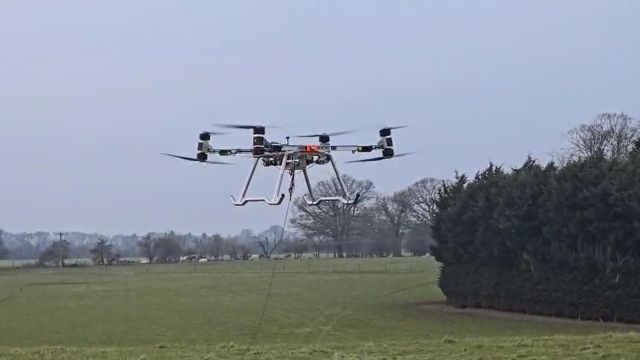
The first project, Falcon: Airport Wind, is led by Seamach and will investigate whether low-height wind turbines could generate renewable electricity at Bristol Airport.
Placing wind turbines around airports presents a challenge because of potential interference with radar and other operational and safety considerations. The feasibility study will examine whether lower-height turbines could overcome some of those barriers. It will also explore their potential use alongside direct air capture technology.
Bristol currently generates renewable electricity from solar panels. According to the airport, its solar installation produced enough electricity last summer to power around 400 homes.
Capturing CO2 to make sustainable aviation fuel
A second project, led by Equilibrion, will investigate establishing direct air capture infrastructure in South West England.
Direct air capture removes CO2 from the atmosphere. The study will identify potential local sites, compare different technologies and develop a roadmap to incorporate carbon removal into Bristol Airport’s longer-term decarbonisation plans.
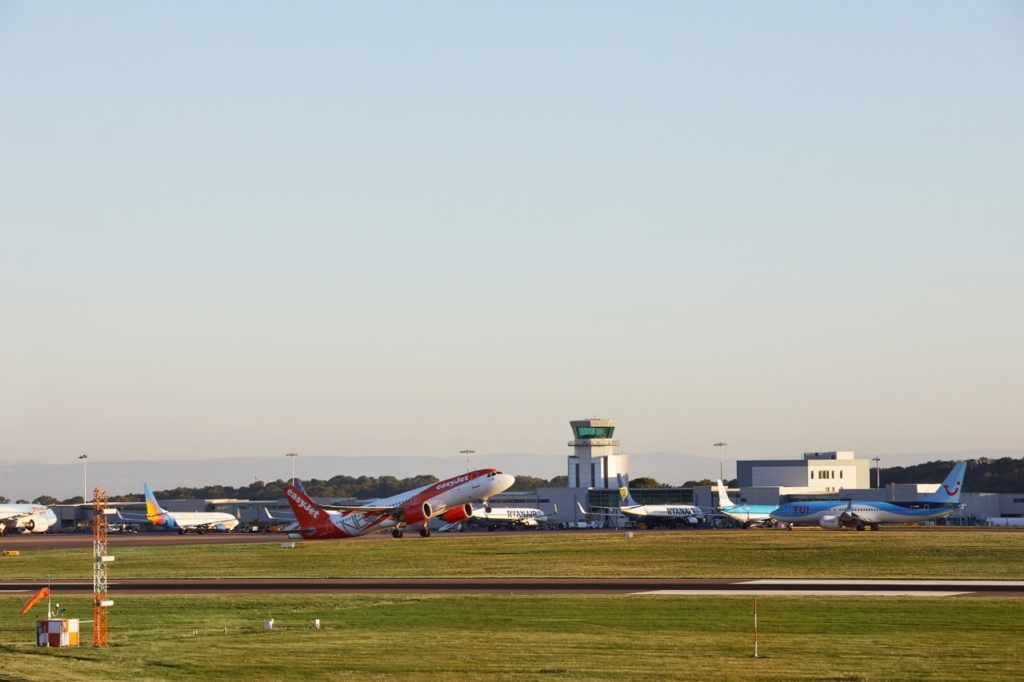
Captured CO2 could potentially become a feedstock for producing synthetic sustainable aviation fuel.
The project builds on previous work between Bristol Airport and Equilibrion. An earlier ACT-funded feasibility study examined producing SAF and hydrogen in the South West using electricity generated by small modular nuclear reactors.
That study estimated such a system could eventually produce around 130,000 tonnes of SAF annually, with lifecycle emissions reductions exceeding 95%.
Digital twin will test hydrogen aircraft operations
The third project, Supercool: Hydrogen Turnaround and Cold Chain, comes from HyFlux.
It will create a digital twin simulation of hydrogen-electric aircraft operations at Bristol Airport. The virtual model can examine how hydrogen might be produced, liquefied, transported and ultimately supplied to aircraft in the region, before constructing expensive hydrogen infrastructure.
Airports will require substantially different infrastructure to support hydrogen-powered aircraft in commercial service. Liquid hydrogen must be stored at extremely low temperatures. The alternative fuel will need new procedures for storage, handling, refuelling and aircraft turnaround.
The UK Civil Aviation Authority is already examining these issues through its Hydrogen Challenge. The regulator published a hydrogen roadmap this summer setting out work towards scaling hydrogen operations for small aircraft by 2035.
Bristol becoming a testbed for zero-emission flight
The ACT projects form part of a wider concentration of aviation decarbonisation research around Bristol.
The Department for Transport has also selected Bristol Airport for work under its Zero Emission Flight Demonstrator programme.
One government-backed project involving Bristol and Equilibrion is developing a pathway for introducing liquid-hydrogen infrastructure at the airport. The project costs £135,237 in total, including £93,164 of DfT funding.
The wider government programme is providing £7.3 million to eight projects developing infrastructure for technologies including hydrogen and electric aircraft.
Bristol Airport said its involvement includes projects intended to demonstrate zero-emission flight technologies, including plans for the airport’s first flight of a liquid hydrogen-powered aircraft.
The ACT programme allows Bristol Airport to serve as a testbed for emerging sustainability technology.
The combination of wind generation, carbon removal and hydrogen infrastructure shows airport decarbonisation will extend beyond replacing fossil jet fuel. The challenge includes producing clean energy, developing new fuels and creating the infrastructure airports will need to support new types of aircraft.
Sign up for our newsletter and get our latest content in your inbox.
Similar Reads

Sign up for our newsletter. Select all sectors relevant to you.
Related