Prime Minister considers delaying decision on UK defence spending, according to reports

A potential delay to the UK’s defence spending roadmap raises fresh questions over procurement, industrial investment and the UK government’s long-term funding commitments.

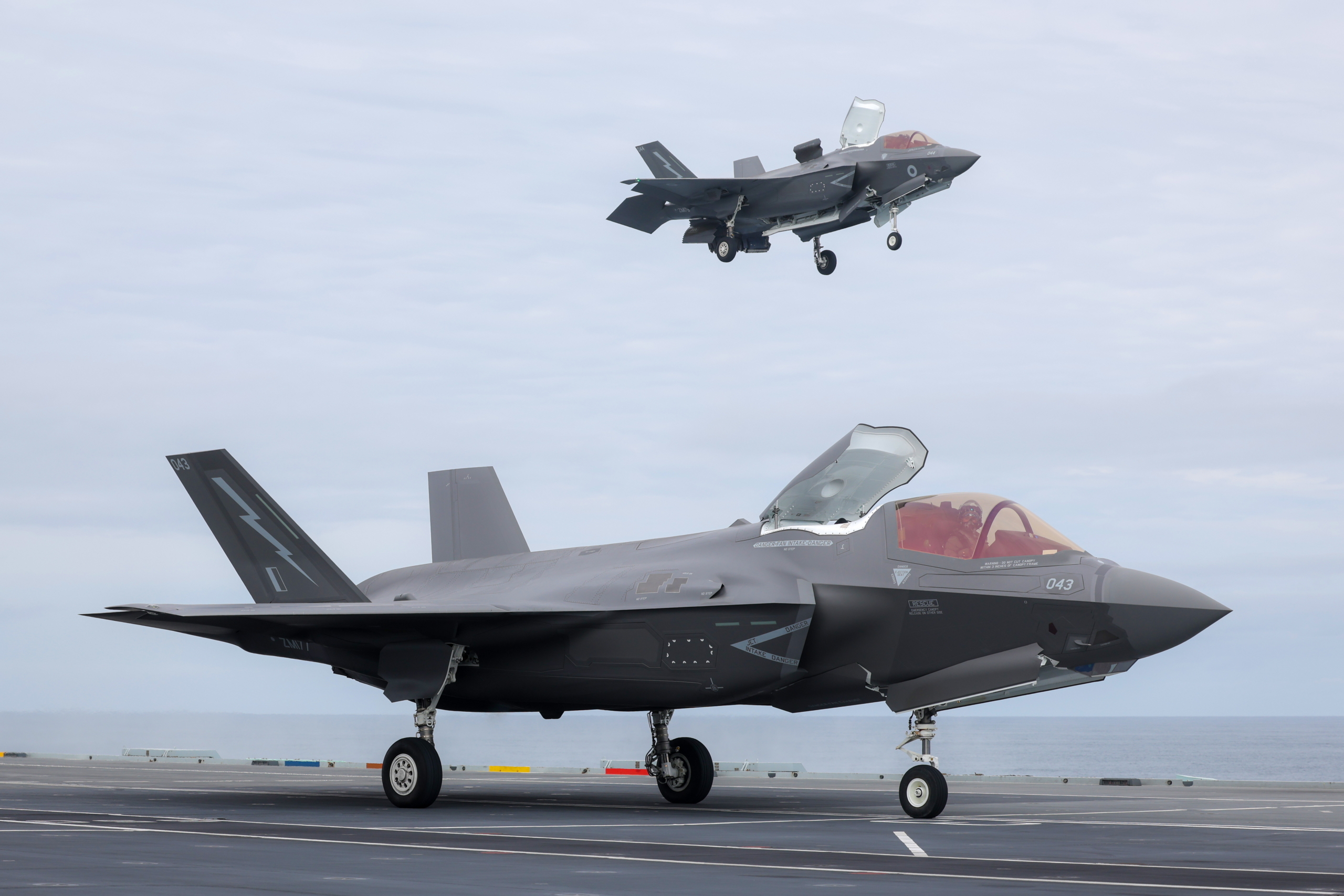
British F-35Bs land back on HMS Prince of Wales (R09) after completing a mission during Exercise Neptune Strike 26-3 on 19 July 2026. Image: MOD Crown Copyright/PO Phot Chris Sellars
Image: MOD Crown Copyright/PO Phot Chris Sellars

Prime Minister Andy Burnham is reportedly considering delaying a decision on how and when the UK will increase defence spending, potentially pushing back a key Spending Review from Spring to Autumn 2027.

The reported move, which was first highlighted by The Times on 6 October and subsequently reported by The Telegraph and Reuters, would delay Westminster’s plans to set out a pathway towards spending 3% of GDP on defence. The UK has committed to reaching 3.5% on core defence spending by 2035, in line with the wider defence investment pledge that was agreed by NATO allies at the 2025 Hague Summit.

According to The Times, the current “working assumption” among officials is that the next Spending Review for defence could take place in October 2027 rather than in the Spring of that year, as was previously planned.
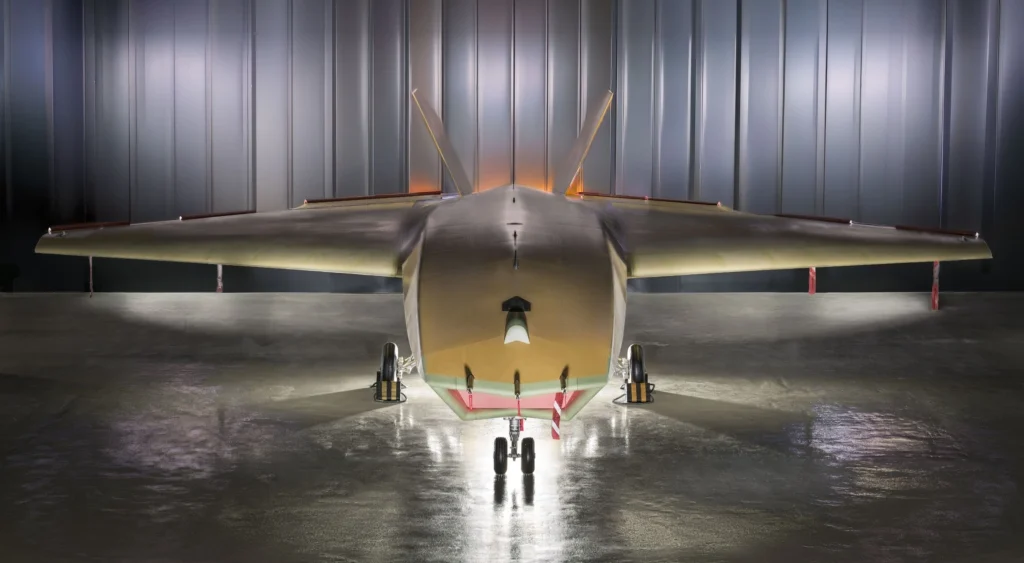
BAE Systems unveiled its first production-standard Brontanax CCA demonstrator during the 2026 Farnborough International Airshow. The platform is expected to completed its maiden flight in 2027. Image: BAE Systems
BAE Systems unveiled its first production-standard Brontanax CCA demonstrator during the 2026 Farnborough International Airshow. Image: BAE Systems

Such a timetable would allow the government to align the review with a budget and potentially provide more time to assess its economic position and identify additional funding for increased defence spending.

Commenting on the proposed move in a written response to Reuters, a spokesperson for the Treasury rejected the suggestion that a delay has been agreed, saying the date of the next Spending Review had not yet been set and describing reports of a postponement as “pure rumour and speculation.”

UK defence funding faces fresh uncertainty amid reports of new delay

The timing of this decision is significant for the UK defence sector. Published in June 2026, the UK government’s Defence Investment Plan (DIP) commits £298bn to defence over the next four years and is intended to implement the priorities established by the 2025 Strategic Defence Review (SDR).

A digital rendering of the SSN-AUKUS nuclear-powered attack submarine. Image: BAE Systems

However, Reuters reported that the government still faces a £4.7bn funding gap associated with the existing investment plan, while reaching the interim 3% target would require substantially more funding. Having previously served as Defence Secretary, Chancellor John Healey MP is due to deliver his first Budget in the role on 28 October.

Any delay in setting out the longer-term spending trajectory could therefore leave defence companies waiting for greater clarity over the scale and timing of the UK’s future defence procurement plans.

Industry waits for clarity on UK defence spending

For UK-based defence firms, the central issue will be whether the government can provide a credible long-term funding trajectory while maintaining momentum on programmes that have already been announced, such as the UK-led Global Combat Air Programme (GCAP) and the development of the SSN-AUKUS nuclear-powered attack submarines in partnership with Australia and the US.
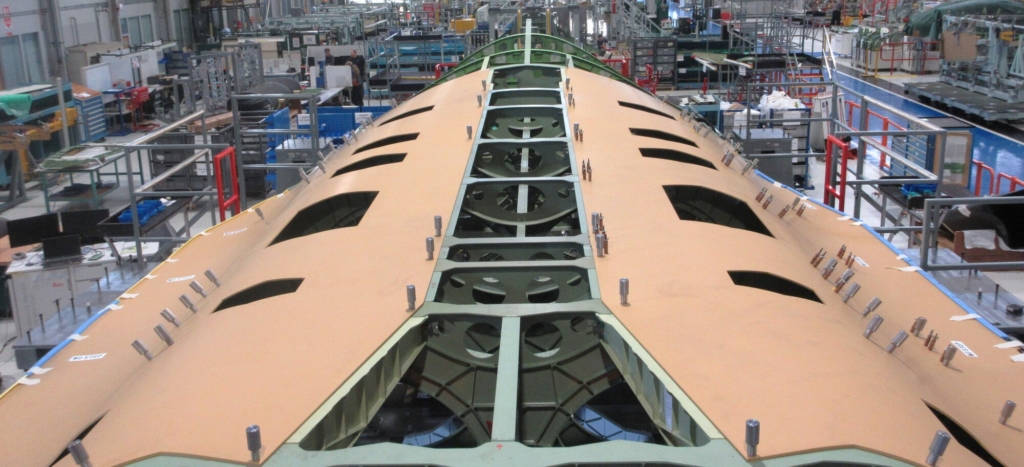
The bulbous central fuselage section of BAE Systems' CAFD demonstrator is seen underway at the firm's facility in Samlesbury, Lancashire, in July 2026. Image: BAE Systems
Image: BAE Systems

The 2026 DIP has been presented as a means of strengthening both military readiness and the domestic defence industrial base. Any further delay to decisions on defence spending could therefore be closely watched across the supply chain, particularly by firms investing in manufacturing capacity, specialised skills and technology on the expectation of sustained procurement demand.

With the Budget due later this month, the defence industry will be looking for indications of whether the UK government intends to maintain that momentum while resolving the wider question of how it will fund the UK’s longer-term defence procurement ambitions.

What will the UK’s next tranche of defence spending focus on?

In the next three years, UK defence spending is expected to focus heavily on capabilities that have already been identified as priorities rather than entirely new programmes and initiatives.
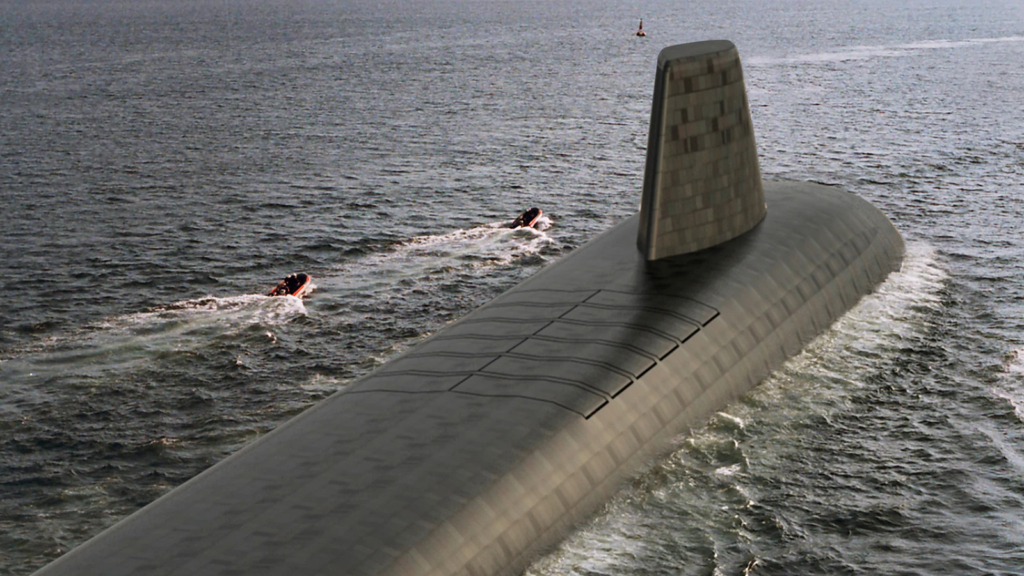
Dreadnought class submarine rendering
The UK’s future fleet of Dreadnought-class nuclear-powered ballistic missile submarines are expected to enter service in the early 2030s. Image: BAE Systems

Munitions and weapons procurement will likely be a major area of investment. The 2026 DIP allocated £11.1bn to increase the UK’s weapon stockpiles, expand domestic munition production and refresh capabilities through the procurement of new long-range strike weapons, low-cost cruise missiles and one-way effectors (OWEs). The UK also plans to create at least six new energetics factories by 2030.

Uncrewed systems are another key priority, with more than £5bn allocated to the transformation of the UK’s military drone capabilities. This would cover the purchase of new strike and surveillance drones, uncrewed ground vehicles (UGVs) and Collaborative Combat Aircraft (CCAs), as well as funding for the Royal Navy’s new ‘Hybrid Navy’ concept, which aims to field a mixed fleet of crewed and autonomous platforms.

Investment into the UK’s future Combat Air capabilities will also continue, with £8.6bn having been set aside for the GCAP programme alongside Italy and Japan. The first full-scale GCAP demonstrator, known as the Combat Air Flying Demonstrator (CAFD), is slated to complete its maiden flight in 2027. Meanwhile, the 2026 DIP specifically allocated £300m to launch a dedicated UK CCA project.

The UK also intends to purchase a second tranche of 27 F-35 Lightning IIs in the coming years. This follow-on order would comprise 15 additional short take-off and vertical landing (STOVL)-configured F-35Bs, along with 12 conventional take-off and landing (CTOL)-standard F-35As. The F-35A acquisition will enable the UK to join NATO’s airborne nuclear attack mission and also better support day-to-day training operations.

Alongside these programmes, near-term defence investment is expected to fund greater air and missile defence, digital targeting systems, new space-based capabilities and the UK’s enduring submarine-based nuclear deterrent through the ongoing development of the Royal Navy’s future Dreadnought-class ballistic missile submarines and the SSN-AUKUS fleet.

Related

Virgin Atlantic CEO talks Manchester expansion and Airbus A330neo introduction
Virgin Atlantic Airbus A330neo aircraft landing
Virgin Atlantic CEO talks Manchester expansion and Airbus A330neo introduction
Virgin Atlantic, faced with constraints in Heathrow, has set its sights on Manchester. Its Airbus A330neos will debut next summer.
Aerospace

22 Nov 2026

Why some Scottish flights operate as public transport lifelines
Loganair Britten-Norman BN-2Islander
Why some Scottish flights operate as public transport lifelines
Scotland's regional aviation network offers some of the UK's most unusual flying experiences, but there's much more to these operations than interesting aircraft and short sectors.
Aerospace

22 Nov 2026

EgyptAir will fly to three London airports as it launches Gatwick and Stansted, adds Edinburgh
Airbus A321neo Egyptair on static display at an airshow
EgyptAir will fly to three London airports as it launches Gatwick and Stansted, adds Edinburgh
EgyptAir will also be ending Boeing 777 flights to London Heathrow as of this month, replacing them with a mix of A350s and 787s.
Aerospace

21 Nov 2026

From D-Day to stealth bombers: The remarkable history of RAF Fairford
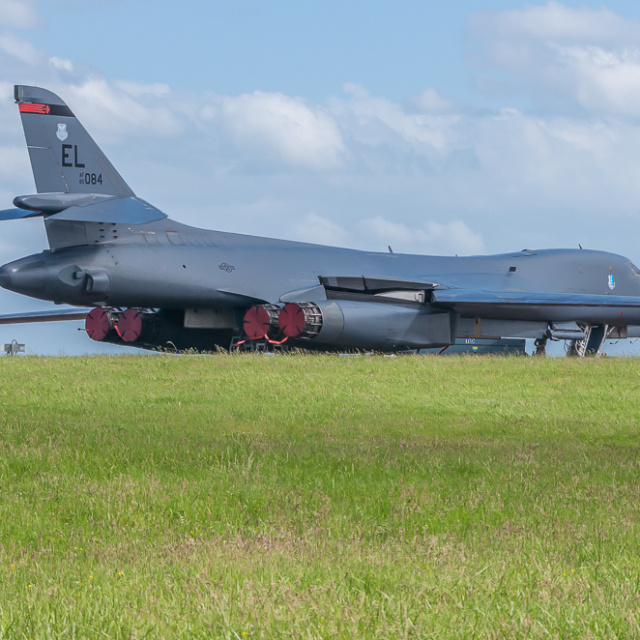
B1-B Lancer
From D-Day to stealth bombers: The remarkable history of RAF Fairford
The airbase has played a significant role in British and American military aviation for more than 80 years.
Defence

22 Nov 2026

UK manufacturing orders rebound, with aerospace and defence demand providing a boost
British Army
UK manufacturing orders rebound, with aerospace and defence demand providing a boost
British manufacturing output rose in November for the first time since May 2024, driven by strong aerospace and defence orders, CBI says.
Defence Uncategorized

20 Nov 2026

Aircraft return to RAF Brize Norton after runway reopened
RAF Brize Norton runway
Aircraft return to RAF Brize Norton after runway reopened
Aircraft returned to RAF Brize Norton after a 16-week dispersal while the runway was replaced, forming part of a £180 million programme to strengthen RAF Brize Norton’s airfield infrastructure for the future.
Defence Member News

20 Nov 2026

Why don’t rockets launch from the UK?
Starshield's proliferated low-Earth orbit architecture provides inherent resiliency and constant connectivity to on-orbit assets, while SpaceX's proven rapid launch capability provides expedient and economical access to space.
Why don’t rockets launch from the UK?
While the UK is often described as a poor location for rocket launches, the reality is more complicated. Its geography creates challenges for some missions, but also gives emerging spaceports in Scotland and Shetland a valuable niche in the fast-growing small-satellite market.
Space

21 Nov 2026

ESA awards OHB €102m ClearSpace-1 contract
ClearSpace Titel V2
ESA awards OHB €102m ClearSpace-1 contract
Following the selection of OHB as the prime contractor for the European Space Agency's ClearSpace-1 programme, Europe has moved a step closer to realising Europe’s first active space debris removal mission.
Member News Space

20 Nov 2026

Viasat launches VIA to work across all in-flight connectivity networks
A cloud-delivered media platform that runs on any in-flight connectivity network - including via satellite - has been launched by Viasat, which can enable airlines to deliver their own branded experience across their fleets.
Met launches handheld facial recognition pilot for frontline identity checks
New Scotland Yard sign
Met launches handheld facial recognition pilot for frontline identity checks
The Metropolitan Police have launched a six-month trial of a new handheld facial recognition tool that allows officers to verify a person's identity without their consent by comparing a photograph taken on a police-issued mobile device against the force's custody image database.
Security

20 Nov 2026

Hexagon and Red Bull look beyond engineering degrees to find manufacturing’s future talent
Formula 1 car at Red Bull's MK7 campus
Hexagon and Red Bull look beyond engineering degrees to find manufacturing’s future talent
At Red Bull’s Milton Keynes campus, Hexagon brought students and employers together to explore how interests in gaming, data and problem-solving could become a route into manufacturing — and what industry needs to do to open those doors.
Expert shares what SMEs should do in the first two hours of an energy or cyber disruption
Server racks creating data center corridor 3d
Expert shares what SMEs should do in the first two hours of an energy or cyber disruption
Cyber attacks, grid failures and rising electricity demand are creating new business risks. Dr Phil Wu explains the three actions SMEs should take in the first two hours of a disruption.
Security

19 Nov 2026