

“Putin Tax” report warns Russian activity costs UK up to £2.5bn a year



Russian hybrid activity is costing the UK up to £2.5 billion a year, according to a new report that attempts to put a price on the economic impact of Moscow’s cyber attacks, sabotage and other hostile actions.
Entitled The Putin Tax, the study was published by Graeme Downie, the Scottish Labour MP for Dunfermline and Dollar. It argues that British taxpayers, public services and businesses are bearing significant costs from Russian-linked activity, while acknowledging that the full financial impact is difficult to measure.
Drawing on official attribution, law enforcement findings and intelligence assessments, the report to answer the question, “What are Russia’s hostile actions already costing the UK economy?”
There is nuance in the numbers, as the headline figures don’t just include Russian-linked damage, but also British investment into resilience. The report acknowledges that measuring relevant costs is difficult as attribution is complex, information fragmented, and consequences extend beyond immediate damage.
Key findings of the “Putin Tax” report
The headline figure for the cost of the Putin Tax on Britain is £2-£2.5 billion. It adds, “Confirmed attacks alone have generated an estimated £1.6bn–£2.1bn in economic losses.”
The breakdown of the expenses includes £0.4-£0.5 billion in economic losses from proven attacks (e.g., JLR), £1.47 billion from Russia-linked cyber activities, and £250-£500 million in subsea cable exposure. The report couldn’t put a figure on the wider economic impacts and future costs and exposure (e.g., impact on credit ratings).
The UK lacks a consistent framework for measuring the economic impact of hostile-state activity. Often the government is unable to build a picture of the financial consequences.
The report argues that the UK is among the countries most frequently targeted by Russian hybrid activity.
Cyber attacks are the key area of financial costs
The area with the biggest assessed financial impact is cyber.
In May 2026, the British GCHQ agency stated, “Russia is scaling up its daily hybrid activity against the UK and Europe, stretching from the seabed to cyberspace — relentlessly targeting critical infrastructure, democratic processes, supply chains and public trust.”
It also found there have been over 300 identified Russian-linked cyber incidents that have affected British companies since 2022. This is believed to be a significant undercount.
The report adds that 75% of significant cyber incidents that affect critical national infrastructure are linked to hostile states.

The report cites the 2025 cyber attack on Jaguar Land Rover (JLR) as the costliest cyber incident considered in its analysis, estimating a broader economic impact of £1.6bn-£2.1bn.
It assesses there is a 5% chance the UK will experience a single attack by a hostile power that could cost 1.5x that figure or £3.3 billion.
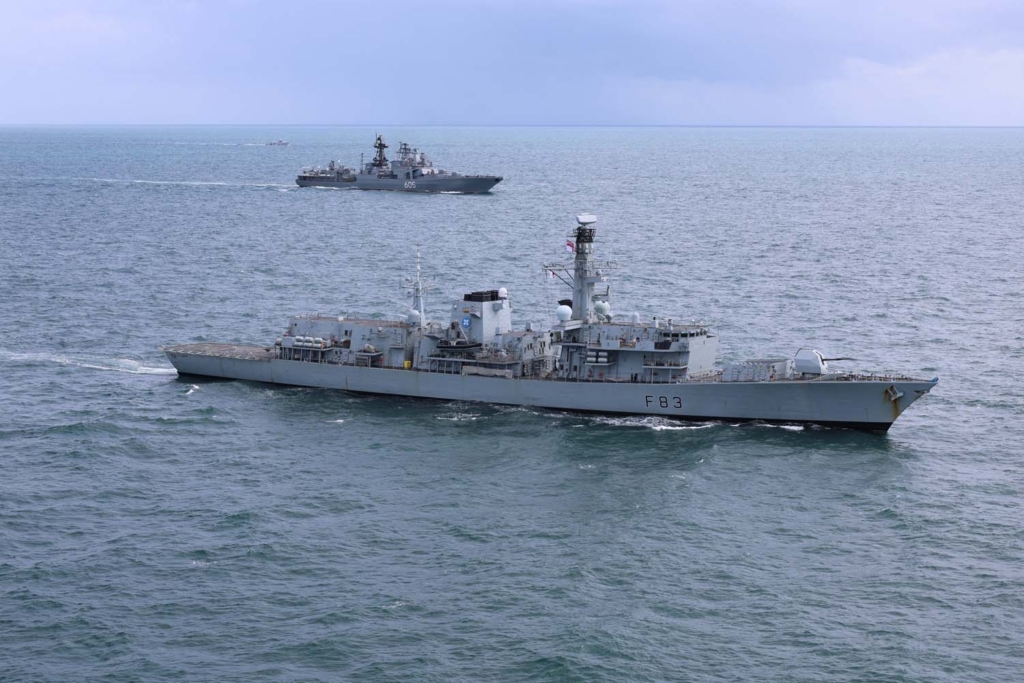
Hybrid wars are two-way; no assessment was given for the costs the UK is imposing on Russia. For example, in 2026, the UK seized a Russian shadow tanker, forcing the Russian Navy to step up escort duties for its vessels.
Sign up for our newsletter and get our latest content in your inbox.
Similar Reads




Sign up for our newsletter. Select all sectors relevant to you.
Related