Big cargo drones complete first BVLOS delivery to North Sea wind farm

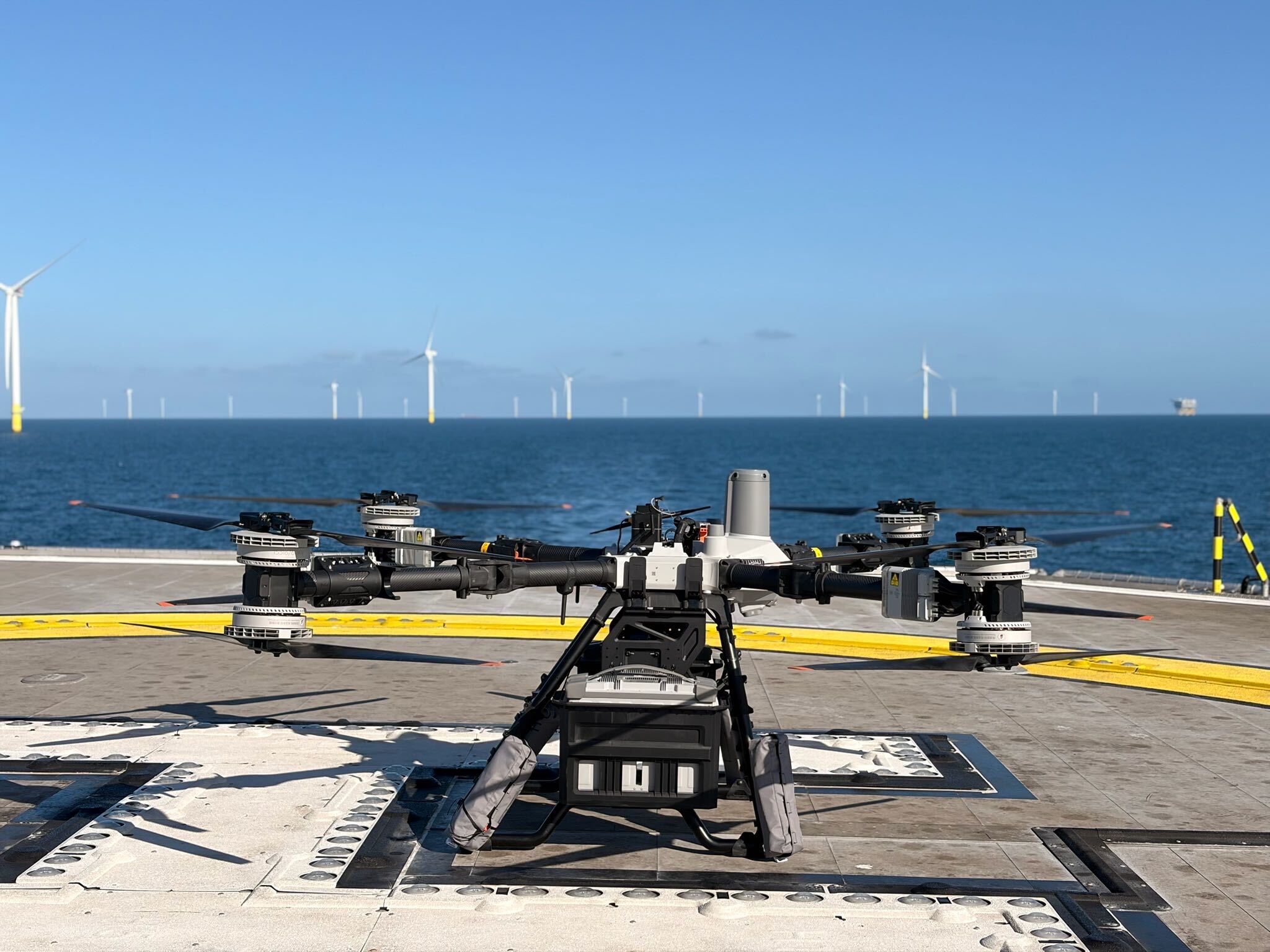
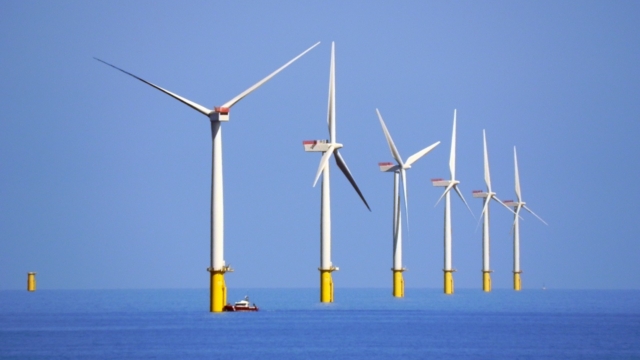
In partnership with Skyports Drone Services (Skyports), Ørsted has completed a new trial of a large cargo drone at Hornsea 2, its offshore wind farm in the North Sea. The trial assessed whether drones could deliver maintenance kits and reduce routine vessel trips, helping turbines generate electricity more consistently while lowering operational risks and costs.
Ørsted partnered with Skyports on its most complex cargo drone trial to date. The team developed a new load-collection method using an automatic hook attached to the drone. This removed the need for an operator to connect the bag manually, making the process more automated, efficient and safe.
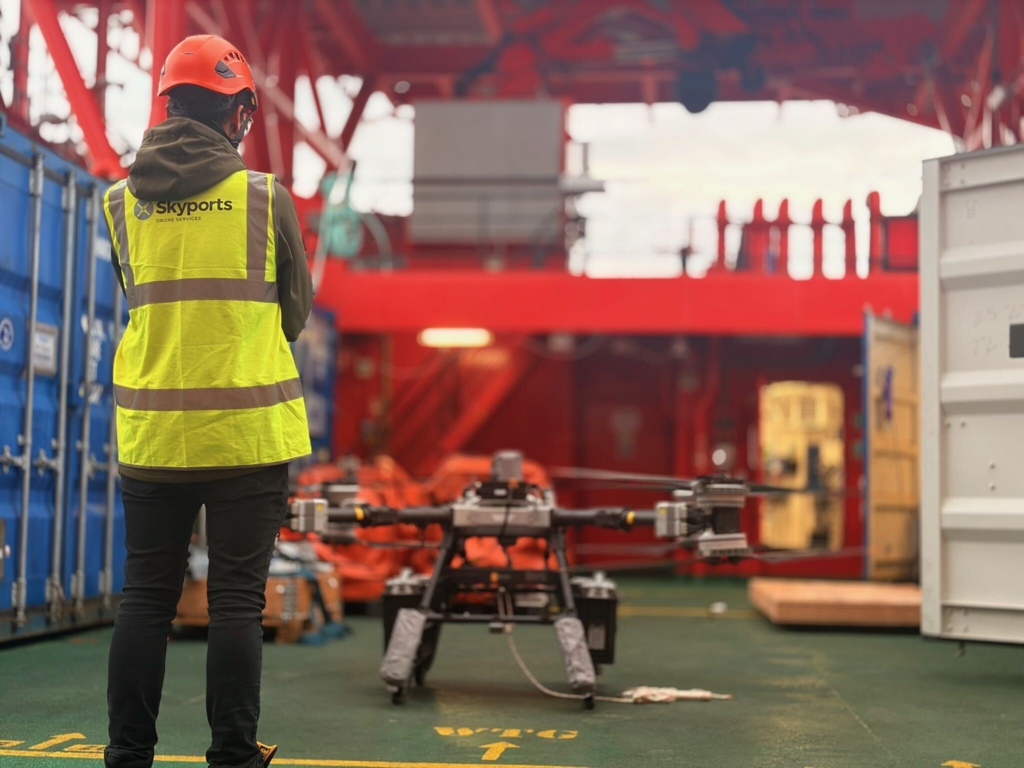
Photo: Skyports / Orsted
The approach allows rapid response, enabling quicker delivery of tools, spare parts and welfare items so maintenance can be completed sooner and turbines can spend more time generating electricity.
The four-week trial brought together specialists in safety, aviation, warehousing and site operations, alongside drone operator Skyports – working within the UK Civil Aviation Authority’s regulatory framework – to complete the first beyond visual line of sight (BVLOS) wind farm delivery.
Why drone delivery to offshore turbines enhances safety and operational efficiency
Each maintenance kit contained the tools, spare parts and materials required for a specific task. The kits, weighing approximately 55–65 kg, were packed in bags and flown to different turbines before technicians arrived. After the work was completed, the drone collected the kits and returned them to the Service Operations Vessel (SOV).
Alex Brown, CEO, Skyports Drone Services. said: “The offshore environment is a challenging one – traditional turbine logistics, either through vessels or helicopters, involve time, coordination, varying levels of risk and cost. At Hornsea 2, we’ve shown the potential for cargo drones as a viable alternative that minimises these factors. These drones give wind farm operators like Ørsted a practical way to reduce lifting and vessel movements, get technicians working faster and maximise the time turbines spend generating.”
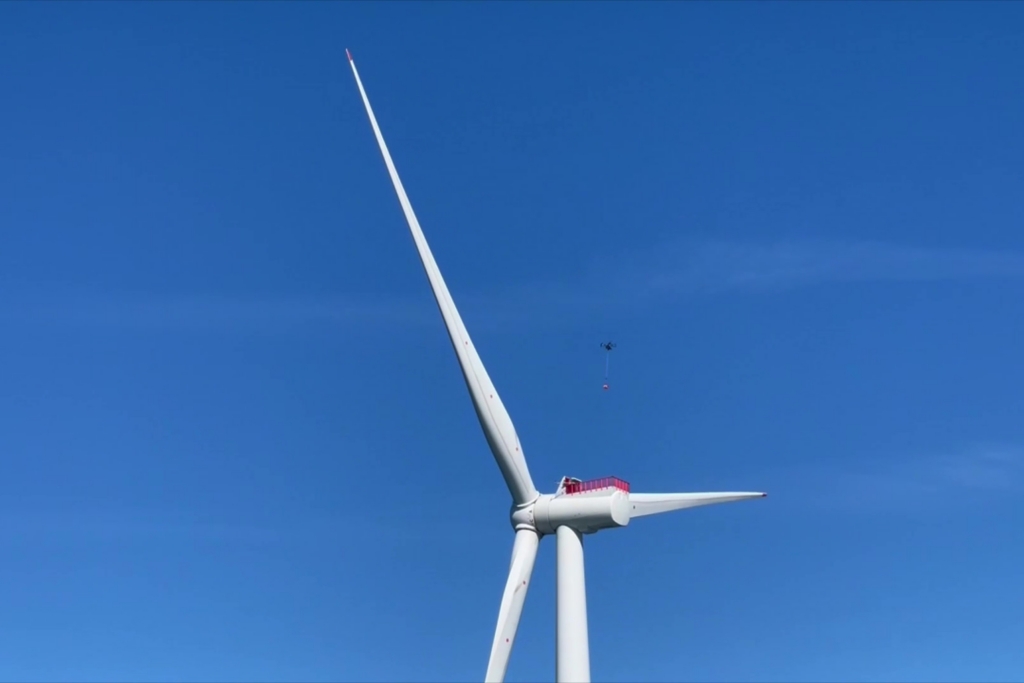
Photo: Skyports / Orsted
The turbine can continue generating electricity while a delivery is in progress, reducing lost production. The approach also enhances safety by reducing lifting operations by technicians offshore. Fewer vessel trips also may lower fuel use, emissions and operating costs.
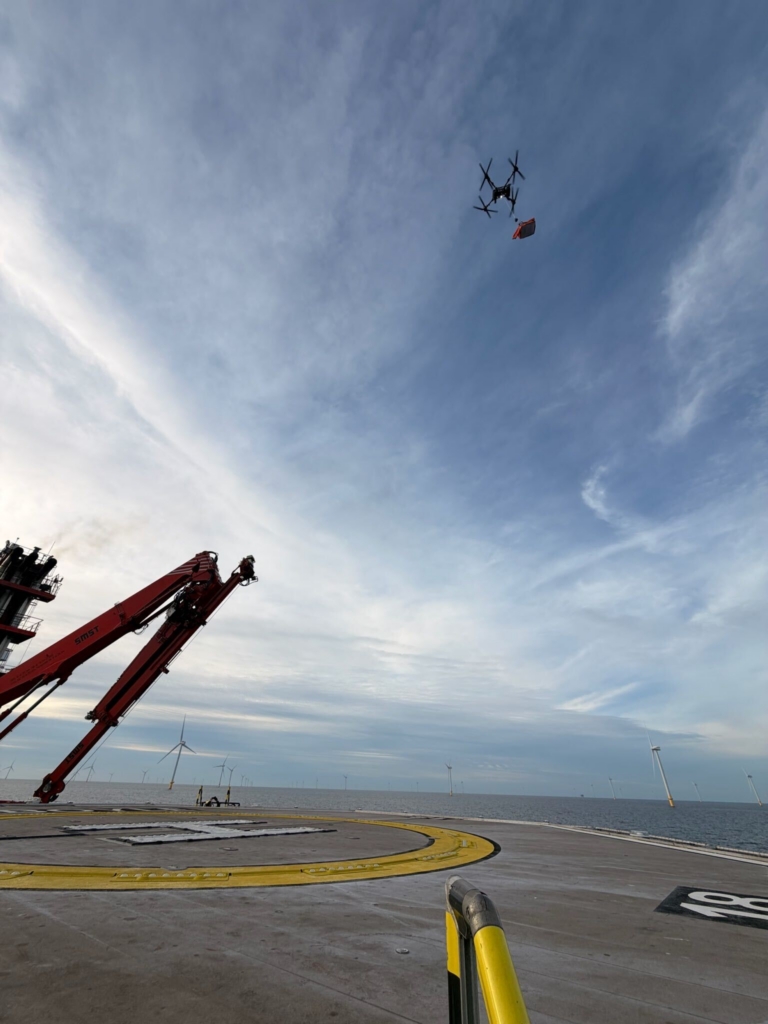
Photo: Skyports / Orsted
Richard McCrilley, Project Lead at Ørsted, said: “This trial confirms our approach to integrating drone-enabled maintenance into our routine operations. By delivering parts and tools more efficiently and safely, we can improve turbine uptime and reduce emissions and operating costs. As we had a daily presence, we were able to cater for a variety of ad-hoc flight requests and get equipment sent out to support the teams. We were able to cover both planned and reactive works.
“On a personal note, it was impressive how we have moved into this logistics phase. The technology performed really well and the team worked incredibly hard in project development and execution. My sincere thanks to Skyports and the HOW02 team for their support.”
How collaboration underpinned first BVLOS offshore wind farm drone operations
Safety remained a core priority. Drones minimise manual lifting and cargo handling for technicians, delivering tools and spare parts directly between a vessel and the top of a turbine. This helps reduce exposure to lifting operations and changing sea conditions.
Each flight was carefully planned, coordinated and monitored to manage aviation, weather and operational risks.
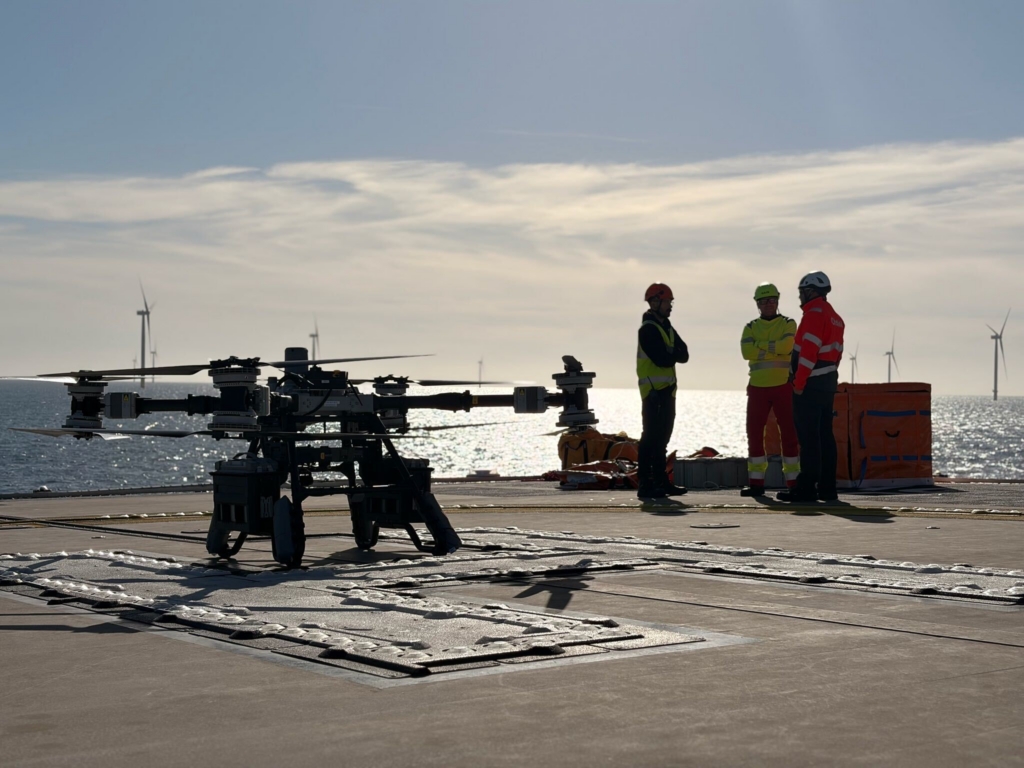
Photo: Skyports / Orsted
In a milestone for offshore drone operations, the team completed its first delivery beyond visual line of sight (BVLOS) inside the wind farm. The drone travelled around four kilometres, with the flight planned, coordinated and monitored from a specialist service vessel.
Trials like this require the help of other organisations and the Civil Aviation Authority (CAA) were integral in helping with the airspace approvals to conduct the project. Ed Clay, Head of Technical Strategy, Future Safety and Innovation, UK Civil Aviation Authority, said: “The successful delivery of this trial reflects the strong collaboration between Skyports, Ørsted and the wider aviation community.
“By enabling increasingly complex beyond visual line of sight operations, we are helping to demonstrate how drones can safely deliver meaningful economic and operational benefits.
“Continued industry collaboration and evidence gathering will be vital as we work towards integrating routine BVLOS operations into the airspace system and unlocking the full potential of this technology.”
Sign up for our newsletter and get our latest content in your inbox.
Similar Reads

Sign up for our newsletter. Select all sectors relevant to you.
Related