GPS jamming linked to Russian warship disrupted 140 flights over UK and North Sea

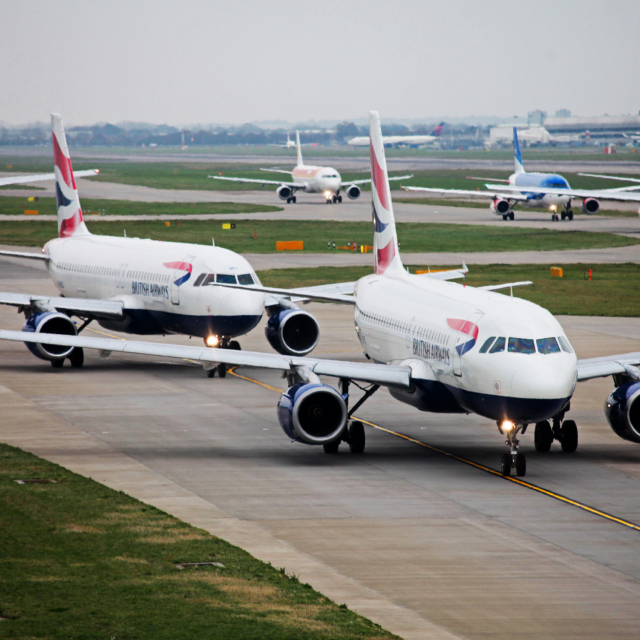
Around 140 aircraft, including Ryanair, easyJet and British Airways flights, experienced GPS disruption over the North Sea in an incident analysts suspect was linked to a Russian warship escorting cargo vessels.

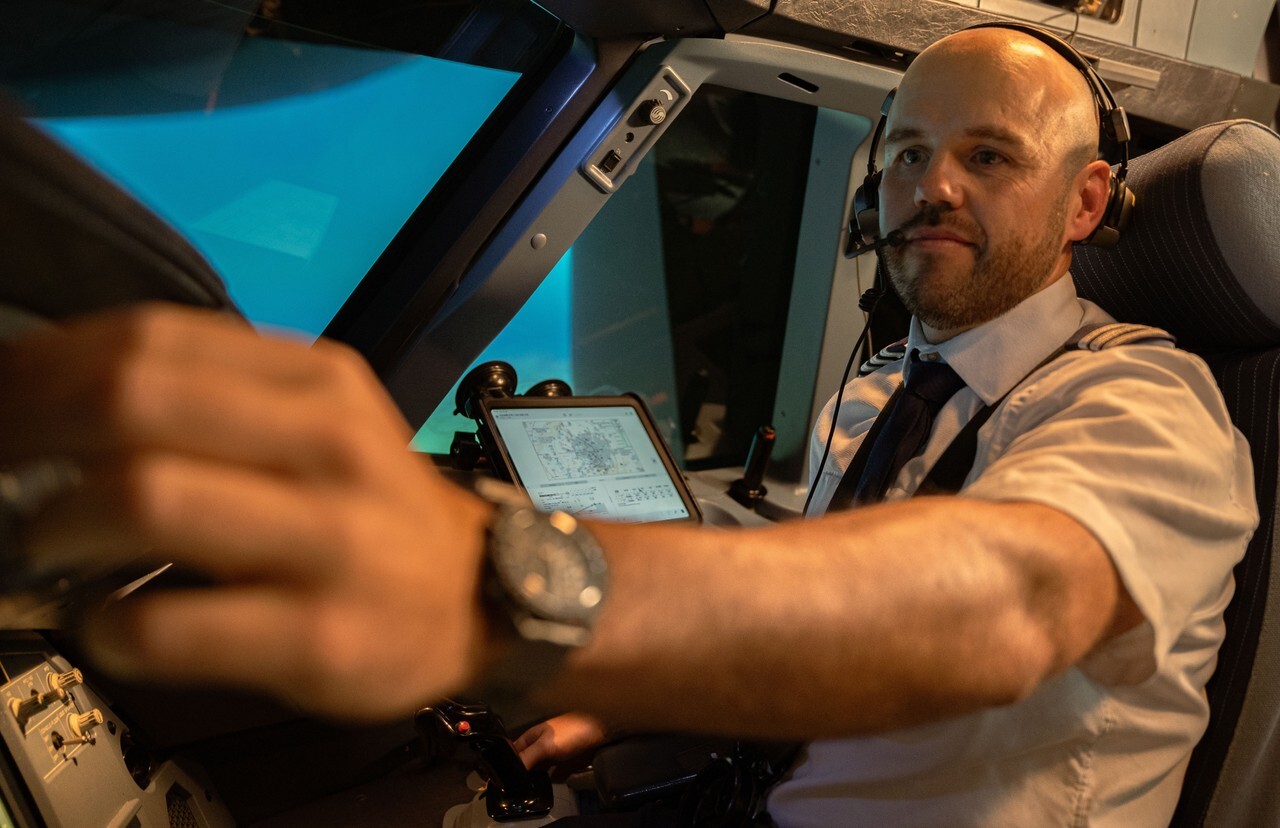
BA pilot in the flight deck
Photo: British Airways

A Russian warship escorting three cargo vessels through the North Sea is suspected of jamming GPS signals used by about 140 aircraft on 9 November. Flight-tracking data show that aircraft hundreds of kilometres apart reported a sharp drop in position accuracy within seconds.

The timing and the convoy’s presence in the area led a maritime analyst to suspect the escort, though its involvement remains unconfirmed.

The interference lasted about 19 minutes, from 17:08 to 17:27 GMT, and extended across the southern North Sea, the Netherlands, eastern England and north-west Germany.

John Wiseman’s analysis for Hexbird counted up to 92 aircraft affected at once. It placed 39 of the affected aircraft west of the Amsterdam flight information region, broadly in UK-controlled airspace.

The i Paper identified a Ryanair flight from Edinburgh to Rome, an easyJet service from Manchester to Hurghada and a British Airways flight from Heathrow to Stockholm among those affected.

How analysts traced the interference

Aircraft broadcast their position and an indication of how accurate that position is.

Hexbird examined those broadcasts and found that the accuracy indicators fell within six seconds of one another on aircraft spread across roughly 510 km. The degradation then cleared quickly. Hexbird assessed that a radio transmitter was almost certainly responsible.

Aircraft wing
Photo: Met Office

The disruption mainly affected aircraft at cruising altitude. That pattern fit a transmitter near the surface, where Earth’s curvature limits how far a signal can reach aircraft flying lower.

Hexbird’s modelling pointed to an area in the southern North Sea north of Texel, although with low confidence in the precise location. Aircraft reported a sudden drop in the accuracy of their positions. Hexbird found no sign that they were being fed the same false location. The overall pattern was consistent with GPS jamming.

Why the Russian escort came under suspicion

The i Paper reported that Lady R, Lady D and Maia-1 were sailing south towards the English Channel with a Russian naval escort at the time.

Former naval intelligence officer James Droxford told The i Paper the warship was “almost certainly the origin of the GPS jamming”. He pointed to the short duration, the location and the vessels in the area, and suggested the interference may have been intended to deter Western surveillance of the convoy.

Ramsey Faragher, chief executive of the Royal Institute of Navigation, told The i Paper it was “a very large area that was covered”. In his assessment, that suggested equipment more likely to be carried on a military platform.

Electronic warfare specialist Thomas Withington told London Loves Business, “I don’t think it’ll be the last time.”

The publication also quotes Ramsey Faragher, chief executive of the Royal Institute of Navigation, as saying the pattern of the interference suggested sophisticated military equipment was used.

Hexbird said its data could not establish who operated the transmitter or why. UK authorities have yet to publicly attribute the incident.

What GPS interference meant for flight operations

NATS told The i Paper it received no pilot reports of satellite navigation interference that day. However, KLM said it reported the incident to the authorities, and Dutch broadcaster NH Nieuws reported that the Netherlands’ air navigation service provider received reports from crews. 

Though concerning, the incident did not cause any operational disruptions for the aircraft. Crews are trained to manage flights during GPS interference.

The UK Civil Aviation Authority says interference can affect navigation and surveillance, with some effects persisting after an aircraft has left the area. Its safety notice advises operators to train crews to recognise interference and to prepare to use alternative navigation if satellite signals become unreliable during a procedure that depends on them.

Related

More passengers, fewer flights: How more seats shaped UK aviation’s summer 2026
Larnaca, Cyprus - September 4 2025: Group of travelers heading towards an easyJet airplane to board.
More passengers, fewer flights: How more seats shaped UK aviation’s summer 2026
From Jet2’s 232-seat Airbus A321neo to an extra row on easyJet’s A320s, airlines are finding ways to carry more passengers on each flight.
Aerospace Insights

24 Nov 2026

Ryanair gains 1.5 million UK passengers as cost of living shapes summer travel
Ryanair aircraft
Ryanair gains 1.5 million UK passengers as cost of living shapes summer travel
Ryanair came within 120,000 passengers of overtaking easyJet at UK airports this summer, while British Airways, Virgin Atlantic and several major overseas carriers saw traffic fall.
Aerospace

23 Nov 2026

Heathrow third runway faces fresh challenge over £19bn funding gap
British Airways A319 taxis at London Heathrow, UK, 17 November 2010
Heathrow third runway faces fresh challenge over £19bn funding gap
British Airways parent company IAG has warned ministers that Heathrow’s £49bn expansion plan would require airport charges that push fares too high.
Aerospace

23 Nov 2026

AtkinsRéalis and INFINITY help shape advanced manufacturing campus
Artist impression of INFINITY HQ
AtkinsRéalis and INFINITY help shape advanced manufacturing campus
A new technology facility in Derby that will address complex nuclear, aerospace and defence programmes, by providing access to advanced systems to research, develop and manufacture large components, is being supported through a new bilateral partnership between AtkinsRéalis and INFINITY.
Defence

23 Nov 2026

Royal Marines take top honours in Special Forces drone competition
Royal Marines at Drone Crucible
Royal Marines take top honours in Special Forces drone competition
At the inaugural Special Operations Forces allied drone combat competition, known as Drone Crucible, the Royal Marines competed against teams from the US, Germany, Latvia and Ukraine, to become overall champions.
Defence Events

23 Nov 2026

Royal Edinburgh Military Tattoo strengthens governance and leadership expertise
Royal Edinburgh Military Tattoo Board of Directors
Royal Edinburgh Military Tattoo strengthens governance and leadership expertise
The strategic leadership team of the Royal Edinburgh Military Tattoo has been enhanced, with Sir Stuart Atha KBE CB DSO MA BSc and Malcolm Leask MBA MRICS FCIM being appointed to the Tattoo Board, alongside the recent appointment of Chris Edmonds as Chair.
Defence Events

23 Nov 2026

UK-built X-ray instrument begins work as BepiColombo reaches Mercury
The MIXS flight instrument before the launch of the BepiColombo mission
UK-built X-ray instrument begins work as BepiColombo reaches Mercury
Following an eight-year journey, the joint ESA-JAXA BepiColombo spacecraft has entered orbit around Mercury, preparing the UK-led MIXS X-ray instrument to map the planet's surface composition.
Space

23 Nov 2026

Why don’t rockets launch from the UK?
Starshield's proliferated low-Earth orbit architecture provides inherent resiliency and constant connectivity to on-orbit assets, while SpaceX's proven rapid launch capability provides expedient and economical access to space.
Why don’t rockets launch from the UK?
While the UK is often described as a poor location for rocket launches, the reality is more complicated. Its geography creates challenges for some missions, but also gives emerging spaceports in Scotland and Shetland a valuable niche in the fast-growing small-satellite market.
Space

21 Nov 2026

ESA awards OHB €102m ClearSpace-1 contract
ClearSpace Titel V2
ESA awards OHB €102m ClearSpace-1 contract
Following the selection of OHB as the prime contractor for the European Space Agency's ClearSpace-1 programme, Europe has moved a step closer to realising Europe’s first active space debris removal mission.
Member News Space

20 Nov 2026

Could your business survive if the rest of its supply chain failed?
Close up of computer on desktop with abstract red denied access hologram. Connection and crime concept. Double exposure
Could your business survive if the rest of its supply chain failed?
A new national resilience forum will test how businesses, infrastructure operators and government respond together to cyber attacks, power failures and supply chain disruption.
Security

23 Nov 2026

Stansted to conduct major emergency training exercise
Stansted Airport Fire Service
Stansted to conduct major emergency training exercise
Tomorrow, London Stansted Airport will simulate an aircraft accident as part of an emergency exercise required under CAA regulations, which will involve emergency response service vehicles and personnel, bringing together airport teams, emergency services and partner organisations from across the region.
Aerospace Security

23 Nov 2026

Met launches handheld facial recognition pilot for frontline identity checks
New Scotland Yard sign
Met launches handheld facial recognition pilot for frontline identity checks
The Metropolitan Police have launched a six-month trial of a new handheld facial recognition tool that allows officers to verify a person's identity without their consent by comparing a photograph taken on a police-issued mobile device against the force's custody image database.
Security

20 Nov 2026