UK-built strike drones launch from HMS Queen Elizabeth as hybrid air wing takes shape

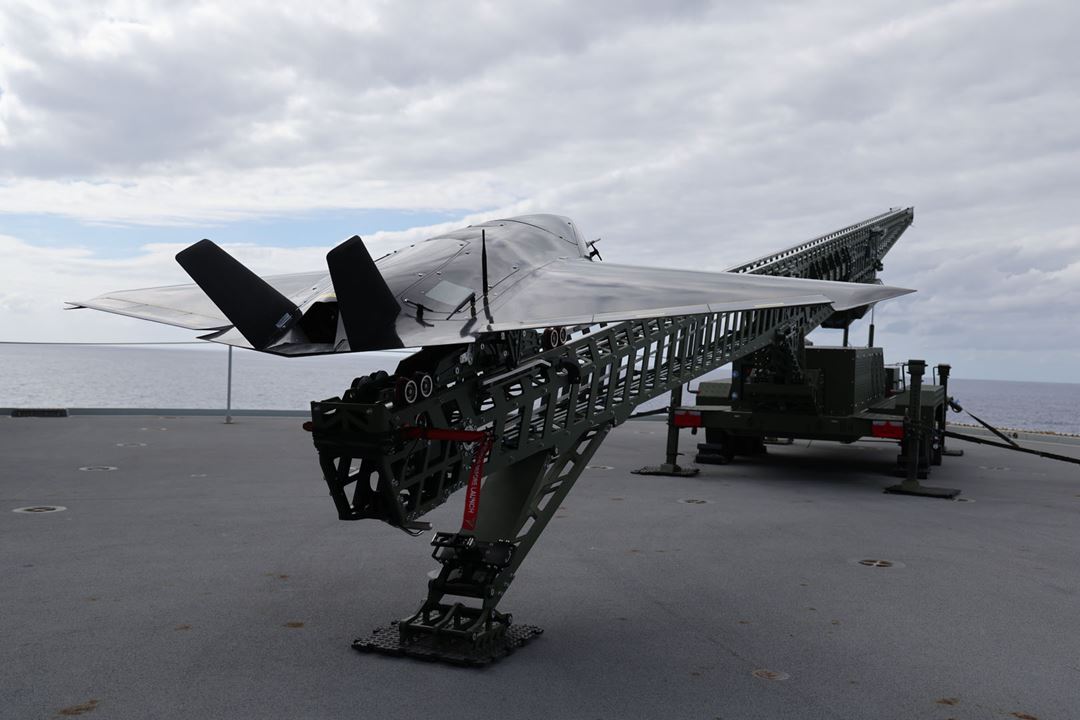
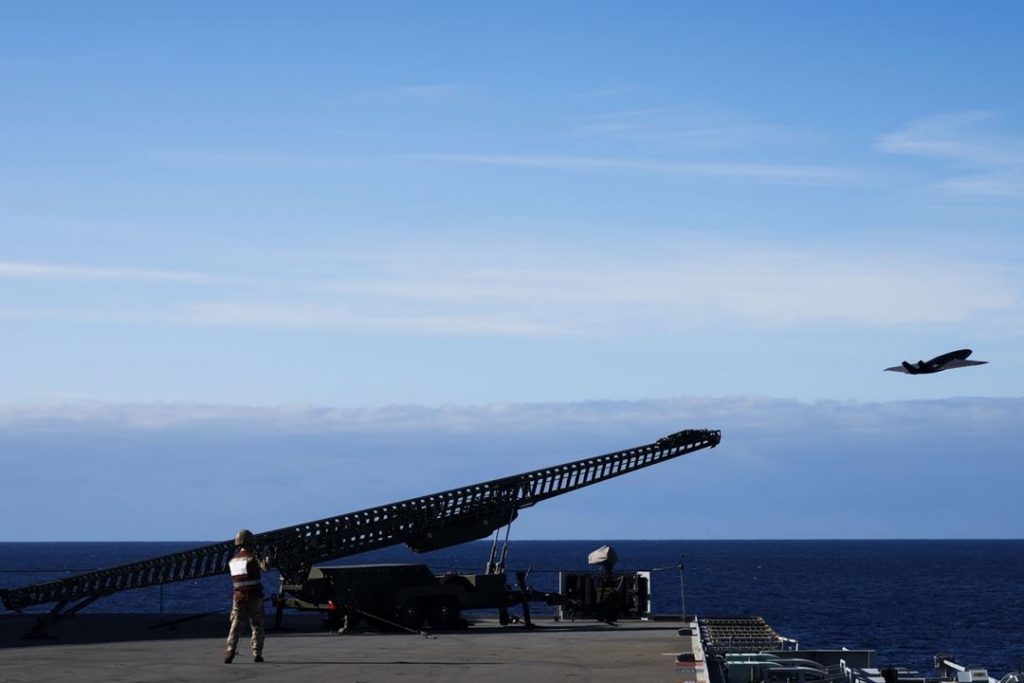
UK-built Nyan strike drones have launched from HMS Queen Elizabeth for the first time, marking a new milestone in the Royal Navy’s plans to operate uncrewed systems alongside its carrier-based aircraft.
Four Nyan One-Way Effector aircraft, designed and manufactured by BAE Systems’ Callen-Lenz in Wiltshire, launched during Exercise Neptune Reach B in the North Atlantic in October. All four successfully hit their designated strike points, according to BAE Systems.
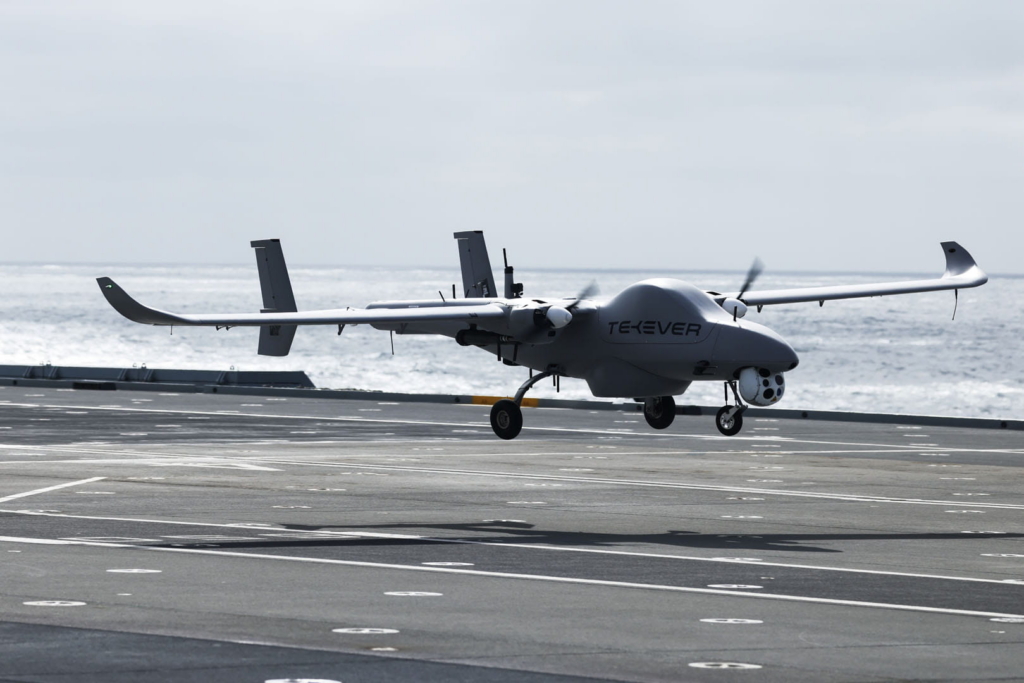
The carrier also hosted a separate demonstration by Tekever’s AR5, which completed its first take-offs and landings aboard a Royal Navy aircraft carrier during Heavy Lift Challenge 3.
The trials explored how different types of uncrewed aircraft could extend the carrier force’s reach, support its logistics and provide additional surveillance and strike options alongside the F-35B.
Nyan moves from experimental vessel to aircraft carrier
The Nyan launches formed part of Project Vantage, a collaboration between the Royal Navy, British Army and Royal Air Force intended to accelerate the testing and fielding of maritime strike drones.
They followed the aircraft’s first launch at sea from the Royal Navy’s experimentation vessel, XV Patrick Blackett, during Exercise Neptune Reach A earlier this year.
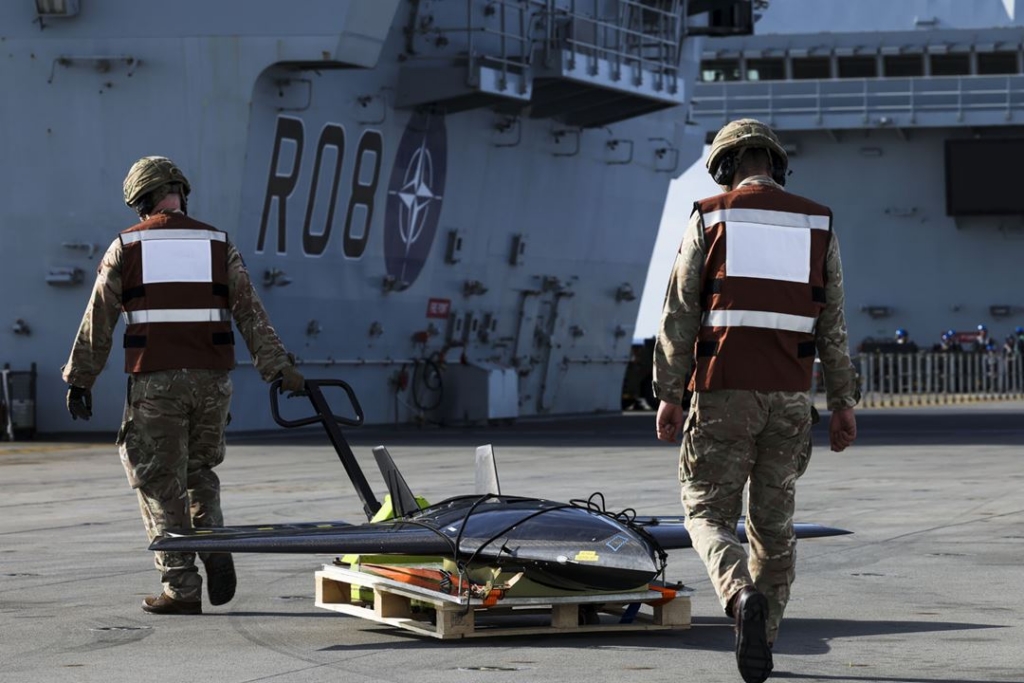
Moving to HMS Queen Elizabeth allowed the team to assess how the system could operate safely from a much larger and more complex maritime aviation platform.
Lieutenant Commander David Burton, the Royal Navy’s capability sponsor, said the trials were generating evidence to guide future decisions about maritime one-way effectors.
“Conducting these activities from HMS Queen Elizabeth allows us to explore how uncrewed strike drones might operate alongside other crewed and uncrewed capabilities within a maritime task group,” he said.
“The lessons identified will directly contribute to Maritime Aviation Transformation and our vision for a Hybrid Navy that delivers greater operational choice and effect.”
The announcement represents a trial milestone rather than confirmation that Nyan has entered routine operational service aboard the carrier.
A UK-developed precision-strike system
With a wingspan of 2.9 metres, Nyan is a compact, jet-powered uncrewed aircraft designed to deliver precision strikes. As a one-way effector, it is intended to expend itself during its mission rather than return for recovery.
BAE Systems describes the platform as having a flexible payload bay and modular architecture, allowing upgrades during its service life. The company also lists operations without satellite navigation among its capabilities, alongside potential roles as a decoy and a means of prompting enemy air defences to reveal themselves.
The carrier demonstration builds on testing across the armed forces. The British Army used Nyan during Exercise Spring Storm in Estonia in May, while the earlier maritime trials examined its operation from a moving naval platform.
In a July update, Callen-Lenz chief executive Matt Foster said more than 1,000 aircraft had been produced, underlining the manufacturing activity already behind the programme.
Commenting on the carrier launches, Foster said: “As operational requirements evolve, we continue to invest in uncrewed systems that can provide affordable, scalable combat mass and increase the impact of existing capabilities.”
Nyan forms part of BAE Systems’ expanding uncrewed aircraft portfolio through its FalconWorks advanced research and technology business.
Tekever AR5 demonstrates carrier launch and recovery
While Nyan demonstrated an expendable strike capability, Tekever’s AR5 explored how a reusable fixed-wing drone could support maritime operations.
According to Tekever, the aircraft departed its Flight Operations and Training Centre at Atouguia da Baleia in Portugal and flew for approximately 90 minutes to reach HMS Queen Elizabeth.
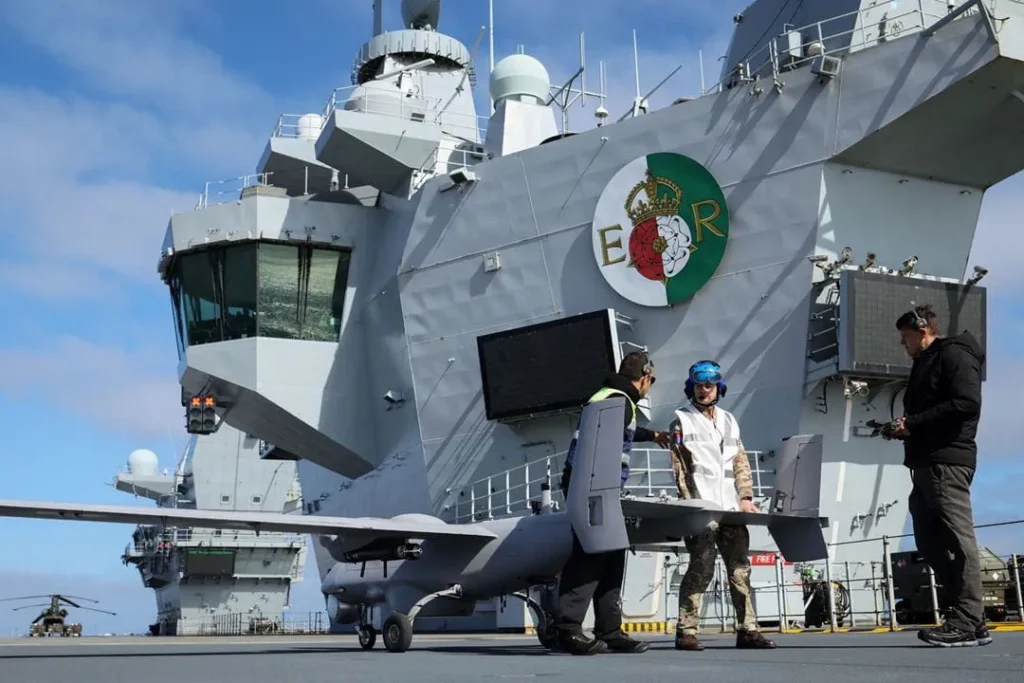
It then completed two landings and two take-offs from the flight deck before returning to Portugal on a flight lasting approximately two hours.
The Royal Navy says the AR5 has a seven-metre wingspan and can carry an 80kg payload. The trials explored potential roles in logistics and intelligence, surveillance, target acquisition and reconnaissance, known collectively as ISTAR.
Tekever’s director of platforms, Tiago Nunes, said: “Operating an AR5 from a carrier for the first time marks an important step in bringing more proven capabilities into naval operations.”
UK manufacturing underpins wider drone ambitions
The AR5’s carrier demonstration comes as Tekever expands its UK industrial footprint and prepares to supply the same aircraft family to the British Army.
Tekever says AR5 manufacturing will be centred at its Swindon facility, supported by its UK engineering, training and operational activities and a consortium of UK SME partners.
Separately, its five-year, £400 million Overmatch investment programme covers research, infrastructure and defence technology, including artificial intelligence and autonomy. The investment programme is distinct from the Corvus procurement contract.
The two carrier demonstrations show how investment in aircraft development, manufacturing and systems integration can support several military requirements: expendable strike systems, persistent surveillance and the movement of supplies.
Building the Royal Navy’s hybrid air wing
The trials sit within the Royal Navy’s ambition to combine crewed and uncrewed aircraft in a hybrid carrier air wing, increasing operational choice while reducing the need to expose personnel to some missions.
The Defence Investment Plan provides more than £5 billion for autonomous systems by 2030. This includes almost £250 million for Project Pantheon, developing a hybrid carrier air wing and supporting trials of jet-powered drones alongside the F-35B force, and at least £210 million for low-cost, long-range one-way attack drones across the three services.
The next task is to translate the evidence gathered at sea into decisions about future capability and integration. For Callen-Lenz and Tekever, the October trials have demonstrated two different ways in which uncrewed aircraft could contribute to that future force.
Sign up for our newsletter and get our latest content in your inbox.
Similar Reads


Sign up for our newsletter. Select all sectors relevant to you.
Related