

AdaCore sees defence demand grow as US pushes memory-safe programming


Software tools specialist AdaCore says demand for its memory-safe programming technologies is accelerating across US aerospace and defence programmes as Washington pushes contractors to move away from vulnerable software languages.
US defence software shift
AdaCore develops programming and verification tools for safety-critical systems and reports growing demand from US aerospace and defence programmes as the Pentagon and other government agencies tighten expectations around software security.
The company has a UK centre of excellence for safety- and security-critical software, AdaCore Ltd, based at Yeovil Innovation Centre, specifically to support the British aerospace and defence sector and collaborates with UK industry and the Aerospace Technology Institute.
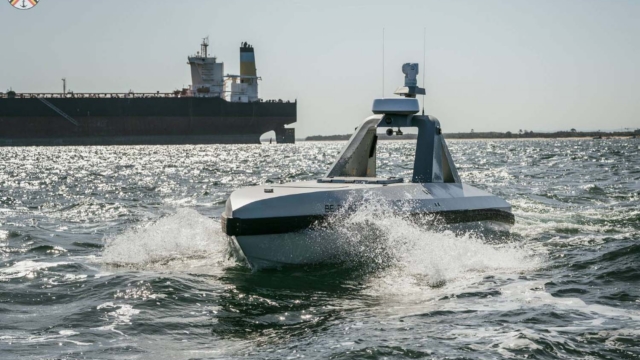
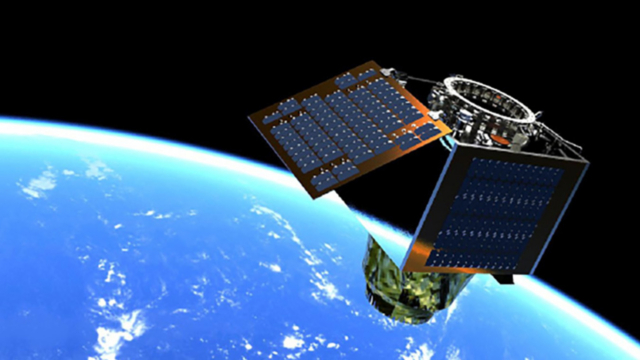
AdaCore has seen a significant increase in design wins across US defence programmes using its Ada, SPARK and Rust development toolchains. Projects include avionics flight-control systems, autonomous unmanned aircraft, command-and-control infrastructure, secure communications platforms and next-generation satellite programmes.
US government agencies are encouraging defence contractors to transition away from memory-unsafe programming languages such as C and C++ in favour of languages designed to prevent many common software vulnerabilities.
US policy is driving procurement decisions
According to AdaCore, the National Security Agency (NSA), Cybersecurity and Infrastructure Security Agency (CISA) and the White House Office of the National Cyber Director (ONCD) have all published guidance encouraging the use of memory-safe programming languages for critical infrastructure and national security software.
The company says this policy environment is creating growing demand from defence primes and programme offices seeking software development tools that support both certification requirements and secure-by-design principles.
Unlike commercial software, military aircraft, weapons systems and satellite platforms often remain operational for decades, making software vulnerabilities difficult—or sometimes impossible—to correct once systems have entered service.
Independent research backs the trend
The company’s announcement coincides with new independent research from VDC Strategy, which surveyed more than 500 embedded software engineers and development managers working across sectors including aerospace, defence, automotive and medical devices.
Among the findings:
- More than 85% of engineers said programming language choice directly affects safety and security.
- SPARK, Rust and Ada ranked as the three best languages for safety and security out of 26 evaluated.
- Ada projects were four times more likely to finish ahead of schedule than projects using C.
- Memory-safe languages were associated with lifecycle maintenance savings of 60% or more.
The report also found that projects using memory-safe languages typically incurred development costs two to four times lower than comparable projects developed in C or C++.
“Memory-safety vulnerabilities remain one of the most significant sources of software defects, and our research shows that language choice is a powerful and often underused lever for reducing risk and cost,” said Chris Rommel, Executive Vice President at VDC Strategy. “The schedule and lifecycle cost differences we observed between memory-safe languages and traditional alternatives were substantial and consistent.”
Formal verification for defence software
AdaCore’s portfolio centres on Ada, its formally verifiable subset SPARK and support for Rust—all languages designed for software where failures cannot be tolerated.
“Our customers in aerospace and defence cannot patch their way out of a software defect once a system is fielded, so correctness has to be built in from the start. Memory safety is increasingly seen as a baseline requirement, not a nice-to-have,” said Quentin Ochem, President and CEO of AdaCore. “The independent research released alongside these design wins confirms that this is not only the safer path, it is also the faster and more cost-effective one.”
SPARK enables developers to mathematically prove the absence of entire classes of runtime errors before software reaches operational platforms, while Rust prevents many memory-related vulnerabilities during compilation. According to the company, these capabilities are increasingly valuable for avionics, autonomous systems and other defence applications that must comply with standards such as DO-178C.
AI adds another challenge
The VDC research suggests the importance of software verification will only increase as artificial intelligence becomes more widely used to generate code.
![At PC-C6, ARL is experimenting to provide Army warfighters and leaders the ability share and engage in real-time decision-making planning using AI-supported COA-GPT software. U.S. Army illustration by Evan Jensen with AI elements. Google (2026). Gemini (1.5 Pro) [image generator]. Gemini Enterprise (genai.mil).](https://www.adsadvance.co.uk/wp-content/uploads/2026/07/1000w_q95.jpg-6.webp)
More than 55% of engineers expect AI-generated software to increase on future projects, while respondents identified security and regulatory compliance as their biggest concerns. Users of Ada and SPARK also reported higher confidence in AI-generated code than developers using C and C++, reflecting the role of formal verification in validating automatically generated software.
Sign up for our newsletter and get our latest content in your inbox.
Similar Reads



Sign up for our newsletter. Select all sectors relevant to you.
Related