Amazon to acquire Globalstar

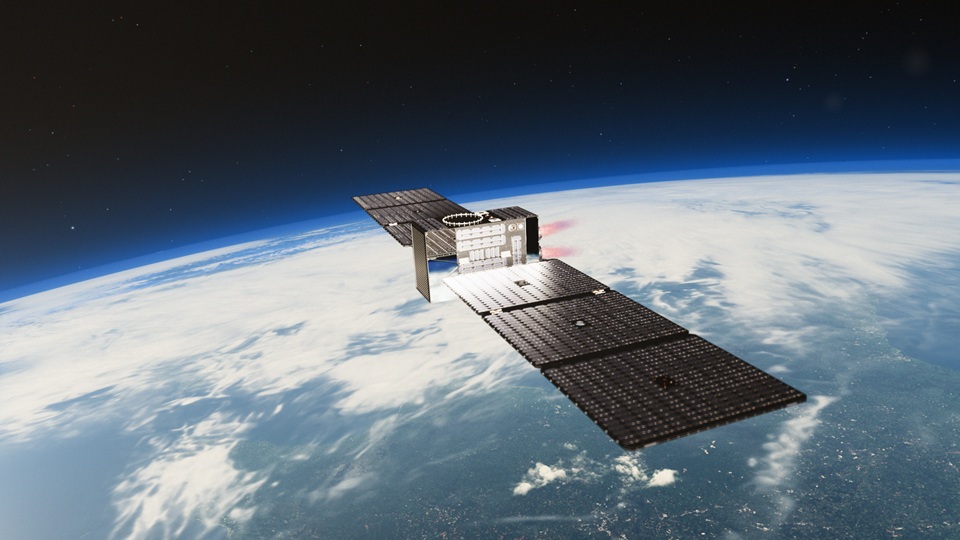
Image courtesy Amazon
In addition, Amazon and Apple announced an agreement for Amazon Leo to power satellite services for iPhone and Apple Watch1, including Emergency SOS via satellite. The new capabilities are part of Amazon’s long-term vision for space-based connectivity and Amazon plans to work with mobile network operators (MNOs) and additional partners to deliver on that vision and extend reliable, high-speed connectivity to customers, no matter where they are in the world.

“There are billions of customers out there living, travelling and operating in places beyond the reach of existing networks and we started Amazon Leo to help bridge that divide,” said Panos Panay, Senior Vice President of Devices & Services, Amazon. “By combining Globalstar’s proven expertise and strong foundation with Amazon’s customer-obsession and innovation, customers can expect faster, more reliable service in more places, keeping them connected to the people and things that matter most. We’re excited to support Apple users through the Leo D2D system and look forward to working with mobile network partners to help extend coverage to every corner of the planet.”
Amazon acquires Globalstar
Globalstar is a mobile satellite services (MSS) operator, a pioneer in non-geostationary orbit (NGSO) satellites and D2D technology and a provider of critical and emergency communications to customers around the world. As part of the agreement, Amazon will acquire Globalstar’s existing satellite operations, infrastructure and assets, including MSS spectrum licenses with global authorisations. Combining Globalstar’s spectrum and established MSS capabilities with the scale, performance and reach of Amazon Leo will enable Amazon to deliver continuous connectivity for consumer, enterprise and government customers around the world - whether they’re living or working in remote areas or simply moving in and out of traditional cellular networks. Globalstar’s existing satellite fleet and its new satellites with expanded capabilities will operate alongside the Amazon Leo broadband system and Amazon’s planned direct-to-device satellite system.
“We have long believed low Earth orbit satellite constellations offer the most effective path to truly connect users and devices anywhere and anytime,” said Paul Jacobs, CEO, Globalstar. “For more than 30 years, Globalstar has executed on this vision through sustained, long-term investment in technological innovation, operational excellence, and development of globally harmonised spectrum across both satellite and terrestrial applications. The combination with Amazon Leo will advance innovations in digital connectivity that will benefit our customers and advance us toward a more intelligent, continuously connected world.”
Amazon Leo Direct-to-Device (D2D)
Beginning in 2028, Amazon Leo will deploy its own next-generation D2D satellite system, allowing Amazon to deliver more advanced voice, data and messaging services to mobile phones and other cellular devices. The Leo D2D system will offer substantially higher spectrum use and efficiency than legacy direct-to-cell systems, which translates into faster speeds and better performance for customers. It will also integrate seamlessly with Amazon’s first- and second-generation Leo systems, forming a powerful, unified network that combines fixed and mobile satellite services to support a wide range of customers and use cases. The complete Amazon Leo network will include thousands of advanced satellites in low Earth orbit and have enough capacity to support hundreds of millions of customer endpoints around the world.
Amazon Leo to power Apple satellite features
In addition to the agreement with Globalstar, Amazon and Apple signed an agreement to provide satellite connectivity for current and future iPhone and Apple Watch features. Globalstar currently partners with Apple to power satellite service on iPhone 14 or later, as well as Apple Watch Ultra 3, allowing users to text emergency services, message friends and family, request roadside assistance, and share their location. With the new Amazon-Apple agreement, Amazon will continue to support iPhone and Apple Watch models currently using Globalstar’s existing and planned upcoming low Earth orbit satellite constellations, being manufactured by MDA Space, and collaborate with Apple on future satellite services using Amazon Leo's expanded satellite network.
“Since launching more than three years ago, our groundbreaking safety service Emergency SOS via satellite has helped save many lives around the world—from a scout troop stranded on a winter hike in British Columbia, to a woman who was airlifted to safety in Colorado after her car rolled down a 250-foot cliff,” said Greg Joswiak, Senior Vice President of Worldwide Product Marketing, Apple. “Apple and Amazon have a long and proven track record of working together through Amazon’s core infrastructure services, and we look forward to building on that collaboration with Amazon Leo. This ensures our users will continue to have access to the vital satellite features they have come to rely on, including Emergency SOS, Messages, Find My, and Roadside Assistance via satellite, so they can stay safe and connected while off the grid.”
The agreements with Globalstar and Apple will promote innovation and competition across the space, satellite, and telecommunications sector, and support efforts to close the digital divide globally.