BA targets reducing single-use plastic on flights
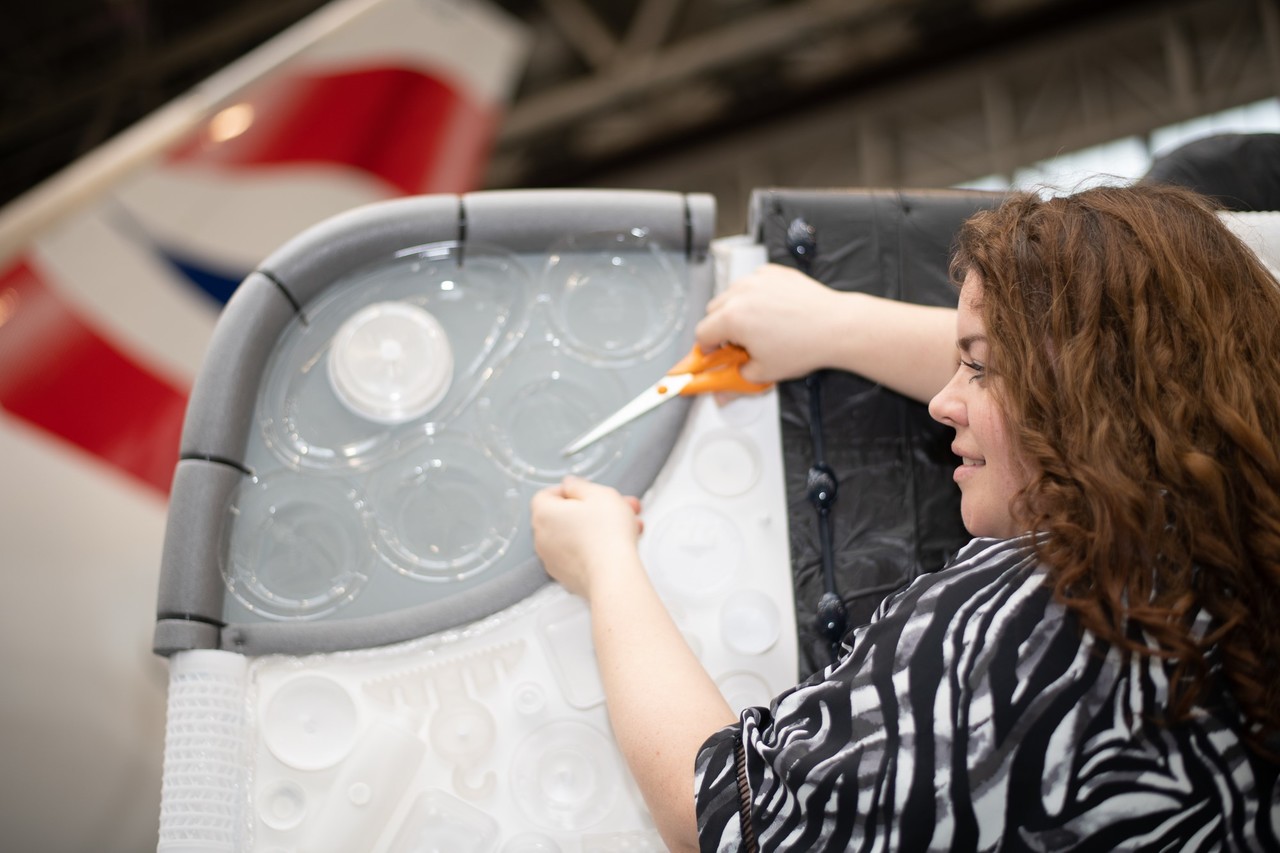
Above:
Eco-artist Sarah Turner created a giant suitcase made from a thousand pieces of waste plastic.
Images courtesy British Airways
The airline has already rolled out initiatives to remove 25 million individual items of single-use plastic on board each year, equivalent to 90 tonnes, and has now set itself an ambitious target to increase this by more than 700%.

British Airways has been working closely with its suppliers to identify alternatives to single-use plastic items, and this year it will replace as many as possible with recyclable or re-usable items or items from sustainable sources. To date, the airline has achieved the following plastic reductions:
- Swapped plastic stirrers with bamboo alternatives
- Reduced plastic packaging on Club World amenity kits
- Swapped plastic wrapping for all bedding and blankets for paper wrapping (currently being rolled out across all cabins)
- Removed plastic wrapping on headsets and instead placed these inside paper charity envelopes in World Traveller cabins
- Water bottles on board are made from 50% recycled plastic
- Removed inflight retail plastic bags
The target also includes finding alternatives to single-use plastic cutlery, tumblers, cups, toothpicks and butter packaging on board. The airline described the process of making these changes as complex, with a significant amount of research required to ensure that the alternative products sourced are credibly sustainable, offer the same hygiene levels as their plastic counterparts and do not outweigh the items they replace.
Kate Tanner, British Airways’ Customer Experience Manager said: “Our customers have told us that they want to see these changes and we’re pleased to have made real strides in our journey to becoming more sustainable. We’ve spent a long time researching how to make sustainable changes without causing environmental impact elsewhere. For instance, we are looking at the amount of water and detergent needed to wash metal cutlery and how often it needs to be replaced versus using plastic or bamboo cutlery.
“We’ve looked at how we ensure blankets and other items can be kept clean without a plastic covering and the lifespan of all the new items compared to the existing ones. Some potential replacement options may be heavier, which would then have an impact on the weight of the aircraft and therefore on our emissions, so we must ensure we are making the right choices on all replacements.”
The airline has a team of more than 170 War on Waste cabin crew champions who promote best practice among crew and identify potential new initiatives to improve waste reduction and recycling practices on board. British Airways says it now expects its suppliers to offer sustainable alternatives as standard and will be making continual changes to its onboard products as they become available.
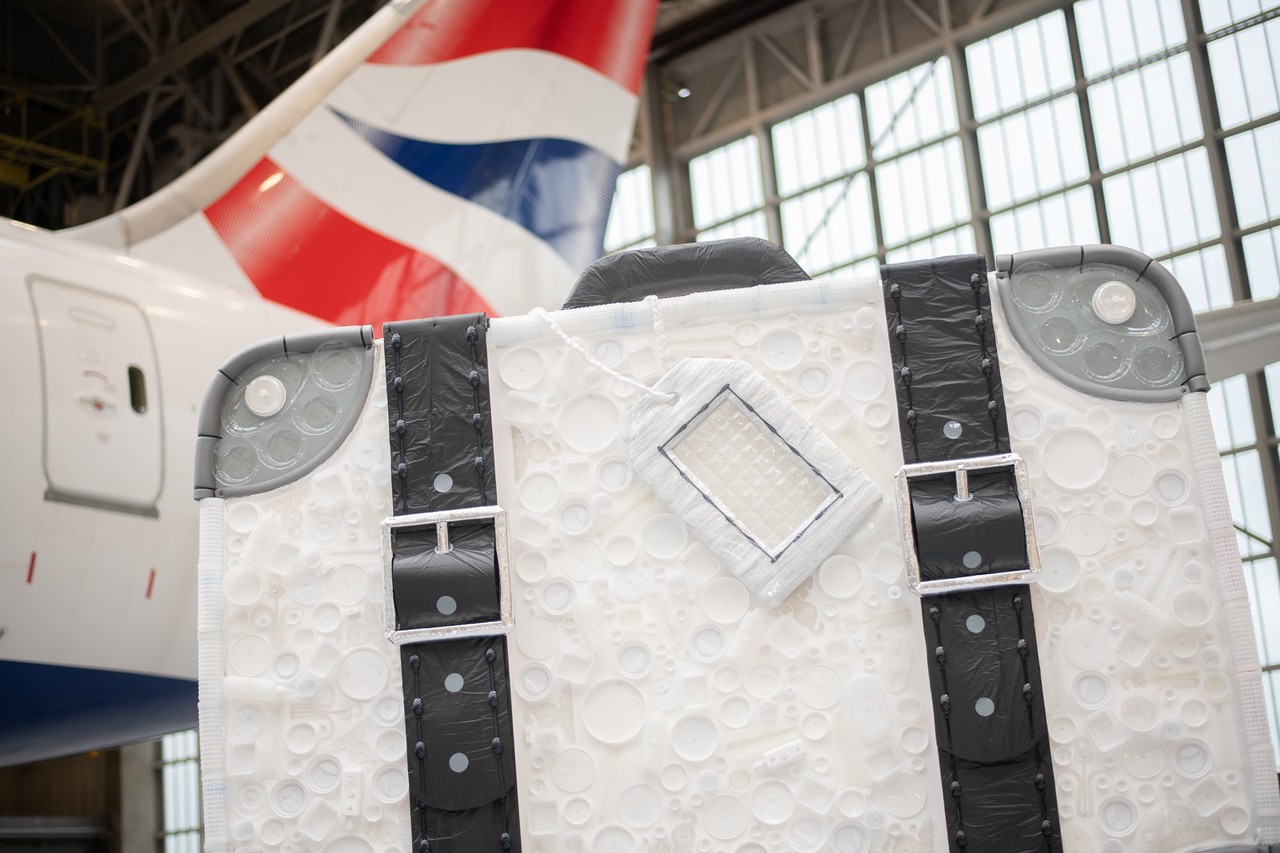
To mark the new target British Airways commissioned eco-artist Sarah Turner to create a giant suitcase made from a thousand pieces of waste plastic, including 160 spoons, more than a dozen plastic stirrers, drinks lids, plastic wrap, bubble wrap, catering dishes and covers and bottles. The sculpture, which represents the 30,000 suitcases worth of plastic waste being removed, is currently on display at British Airways' Headquarters near Heathrow.
British Airways is committed to reducing its environmental impact. In October 2019, the airline committed to achieving net zero carbon emissions by 2050. From January this year, British Airways began offsetting carbon emissions on all its flights within the UK and is investing heavily in new, more fuel-efficient aircraft and in the development of sustainable aviation fuels.