Opinion: The battlefield has expanded; Defence thinking must expand with it


Ted Colbert is Senior Partner at XeleratedFifty, the global innovation incubator. He spent 15 years at Boeing, most recently as President and CEO of Boeing Defense, Space & Security. He is a member of the National Academy of Engineering and a former chairman of the board of the Aerospace Industries Association.
For most of my career, defence had a clear meaning. Across the industry, and in conversations with government and business leaders, we all knew what we were defending: our borders, our airspace, our sea lanes. We knew how we defended them, too: with aircraft, with ships, and with talented men and women trained to operate them.
That clarity has gone. The meaning of defence has shifted profoundly in recent years, and so has the inventory of things a nation must protect. A modern nation has to defend its power grid and its fuel supply, the shipping routes its trade depends on, the minerals and computing power its industries run on, and even its citizens’ shared sense of what is true. Defending the nation’s borders was once the entire job. Now it is the first line of a much longer job description.
You don’t have to take my word for it. In 2022, Russia cut gas supplies to Europe, and household energy bills became an instrument of pressure on democratic governments. In 2023, China restricted exports of gallium and germanium, two metals most civilians have never heard of but without which you cannot build a radar, a satellite or an electric motor.
Attacks on commercial shipping in the Red Sea forced carriers to reroute around the Cape of Good Hope, adding thousands of miles to trade between Asia and Europe. Undersea cables in the Baltic have been damaged in circumstances that remain under investigation.
No border was crossed in any of these events, yet they were all attacks on something a nation depends on, and a test of defences.
Every generation of this industry has had to relearn what defence means. Air power forced the first great rethink; the atomic bomb forced another; space and the silicon chip forced a third. Each time, the people who built, flew and funded these capabilities broadened their idea of what needed defending, then built what the moment required.
This is our moment of redefinition. It will be judged as the others were: by how quickly we recognised it, and by what we built in response.
Energy, minerals and the industrial base
Let’s start by looking at what keeps a country running: the power stations and the fuel that feeds them, the metals and magnets inside every piece of equipment, and the web of suppliers that turns raw material into capability. Each has become concentrated in ways that would alarm any risk officer. A handful of countries dominate the processing of critical minerals.
Key components across defence and aerospace often trace back to a single qualified supplier, sometimes to a single factory. When one link fails, whether through coercion, accident or bankruptcy, the effects reach the flight line within months.
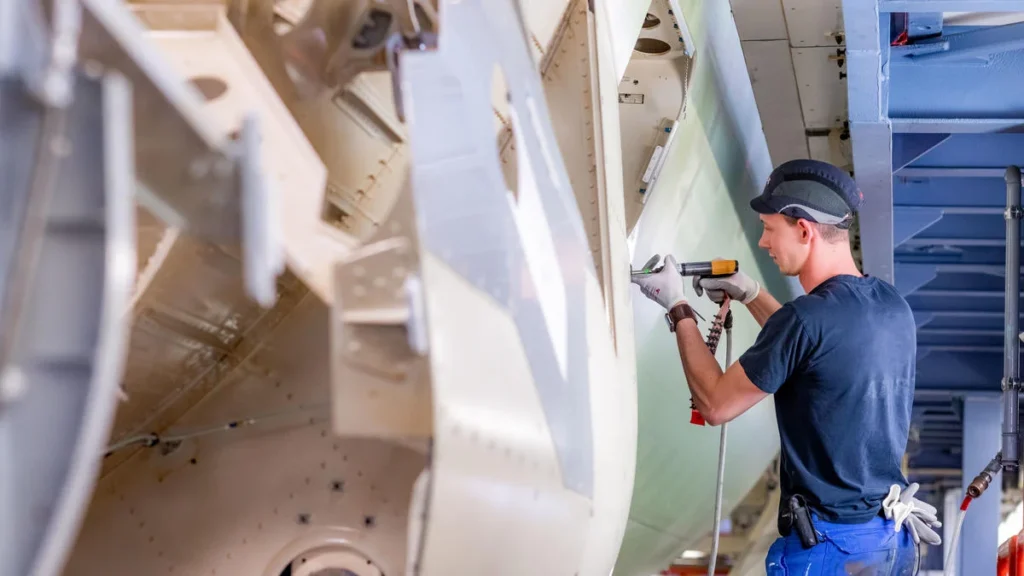
I saw this from the inside. During my years running major defence programmes, the question that kept me awake ran through the supply chain: could thousands of suppliers across dozens of countries deliver the right part at the right time, and what would happen if one of them could not? We spent years toughening up our platforms. Our adversaries spent that time studying what we depend upon and identifying points of failure.
Energy security, critical minerals and supply chain integrity belong in the defence conversation as first-order questions, with the same seriousness as force structure. A country that treats them as commercial matters, best left to the market, is planning for yesterday’s world and yesterday’s risks.
Data, chips and access to AI
The second area of expansion is digital, and it goes well beyond cybersecurity as conventionally understood. Consider three plain questions. Where is your nation’s critical data stored, under whose laws, and who has the power to switch it off? Can your industries and armed forces reach the most advanced AI models, and the semiconductors needed to train and run them, on terms that you control? And who actually manufactures the chips that everything else depends on?
The first question is about data sovereignty. The second is about compute security. The third has an uncomfortable answer: the most advanced chips on Earth are made overwhelmingly in one place, by a small number of companies, and every government now understands what that concentration means.
A nation locked out of frontier computing power falls behind everywhere at once, from intelligence and logistics to engineering and medical research. In the age of AI, access to compute is a strategic resource in the way oil was in the twentieth century, and it deserves the same level of national attention.
The orbital frontier
The third area of expansion is overhead. The orbital frontier has become a fiercely contested operational domain. We now have to deal with satellite jamming, GPS denial, and the looming shadow of anti-satellite weapons designed to blind a nation without crossing a border or putting a single boot on the ground.
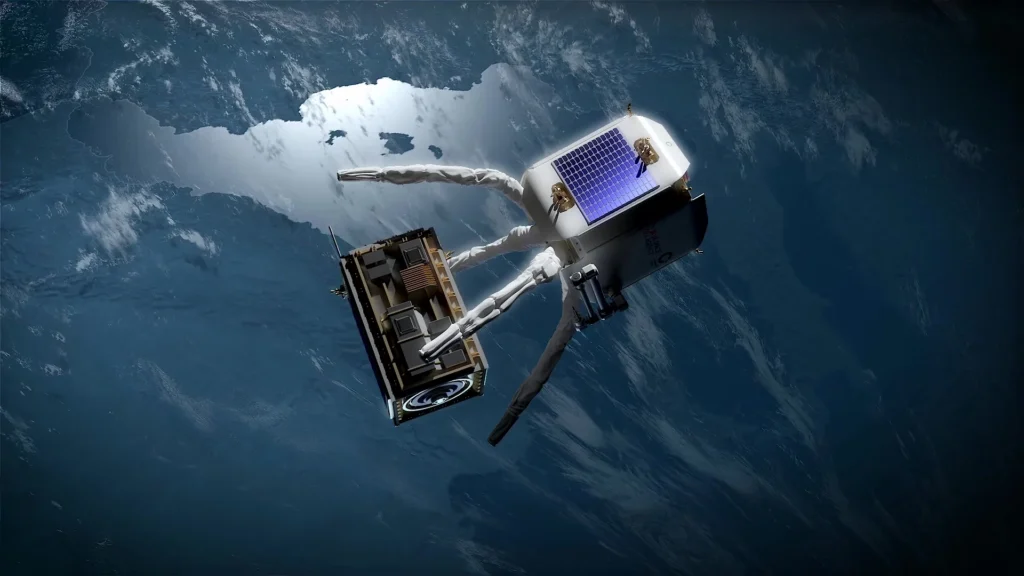
Whether the public realises it or not, modern civilian life, from financial markets and transport logistics to precision military targeting, has become completely reliant on space architecture in recent years. This means protecting these assets can no longer be treated as a niche aerospace concern. It is another pillar of national sovereignty and survival.
The information domain
The fourth expansion is the least tangible and, I would argue, one of the most complex to defend against, because it targets the foundation every other capability rests on: a society’s shared grip on reality.
Disinformation campaigns, synthetic media, and industrial-scale propaganda now run continuously, in peacetime, against civilian populations. Election interference has been documented across multiple democracies. AI has cut the cost of producing a convincing fake to almost nothing, while armies of social media bots provide the frictionless distribution engine to weaponise them at scale. The purpose of these campaigns is exhaustion: of trust in institutions, in elections, in the press, and in one another. A nation that cannot agree on what is true will struggle to agree on what to defend.
Most defence establishments were built to protect territory and not the integrity of public information. There is a lot of catching up to do, and every day that we wait, that gap is being exploited.
What this means and what we must do now
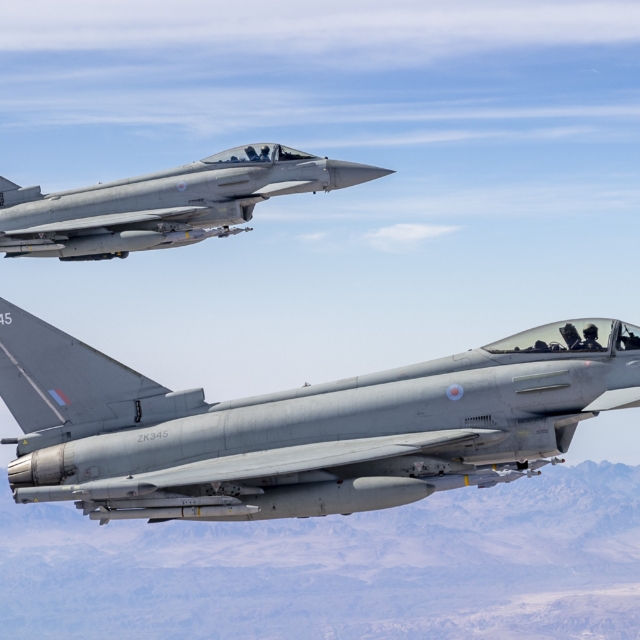
None of this is an argument against kinetic capability. Ships, aircraft, munitions and drones still matter enormously. But kinetic strength alone no longer adds up to national security, and sitting back to admire the problem is a luxury we do not have. Three things need to happen now.
Governments must reallocate capital. That means ring-fenced budgets for the newer domains, so that a brittle supply line, a vulnerable energy grid or a compromised orbital link is treated with the same fiscal urgency as a capability gap in air defences.
Procurement must speed up. Traditional timelines are too slow for an expanded, data-driven battlefield. Governments need rapid pathways, direct contracting and sprint programmes that reach deliberately beyond the usual suppliers, so that early-stage innovators can put solutions into service in months rather than years.
And we must all mobilise the next generation. Many of the people who will lead the defence of this expanded battlefield in the future are studying today, in computer science, materials engineering and satellite engineering.
Most will serve out of uniform, writing code, delivering breakthrough technologies, strengthening infrastructure and preserving the public trust on which everything else rests. National competitions, targeted fellowships and clear industrial pathways should be inviting them in now.
That bridging work, connecting breakthrough technology to the mission and giving it a credible route to scale, is why I chose to spend this chapter of my career at XeleratedFifty. The work of nurturing innovation and turning it into operational impact has never been more important.
A nation can now be weakened without a shot being fired, one dependency at a time. The reverse is equally true. Every supply chain diversified, every grid hardened and every citizen made harder to deceive is defence, as surely as anything on display at an airshow.
What we are defending is the freedom of ordinary people to live, raise their families and prosper, with the lights on, the shelves stocked, the vote counted and the news true. Earlier generations of this industry recognised their moment and rose to it. It is up to all of us to rise to ours.
Sign up for our newsletter and get our latest content in your inbox.
Similar Reads



Sign up for our newsletter. Select all sectors relevant to you.
Related