
General Atomics

Deploying a highly skilled workforce for defence

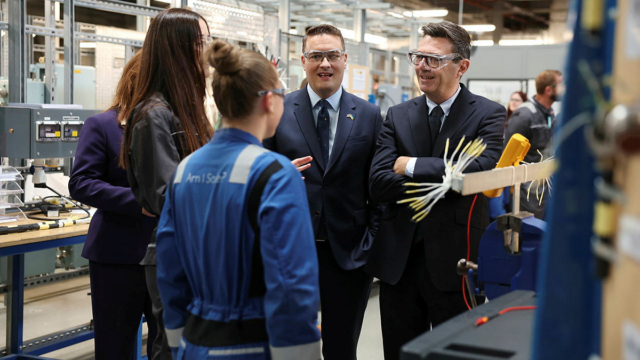
Gordon Woodward, Managing Director, M&E Global, provides insights into effectively developing a highly skilled workforce for the expanding defence sector.

Image courtesy M&E Global

As the European defence sector experiences unprecedented growth, maintaining a highly skilled workforce becomes paramount. Recent defence budget adjustments worldwide reflect a critical shift in military priorities. Driven by emerging security concerns, nations are significantly increasing spending. The US has led this trend, while European nations, too, are making bold moves to modernise their armed forces. As these budgets grow, so too does the demand for a highly skilled workforce capable of supporting advanced technologies and ensuring operational readiness in the face of new and evolving threats.

According to NATO, defence spending among European members increased by 4.3% in 2023, a sign of the continent’s commitment to bolstering its military capabilities. This spending surge, exemplified by Poland’s record-high defence spending of 4.12% of GDP in 2024, has been fuelled by heightened geopolitical instability, particularly in light of the ongoing Russia-Ukraine war, and NATO’s commitment to its members’ security.

However, this expansion brings with it a significant challenge: a shortage of skilled personnel in crucial areas. Modern military operations demand high levels of technical expertise, especially for maintaining sophisticated systems and machinery that support active and prepositioned military assets. This, aligned with the rapid advancement of technology in areas such as unmanned aircraft, has reshaped the landscape of defence. This presents an opportunity to address critical needs and play a vital role in securing the future of defence operations across Europe.

The expanding European defence sector
This surge in defence spending is expected to drive increased demand for personnel, particularly in logistics, transport, and maintenance. With more NATO assets prepositioned across Europe and a growing number of joint military operations, the need for trained and experienced workers is critical. The US Army alone increased its defence budget for Europe by $3.6 billion in the fiscal year 2024 , with its increased military presence in Europe, including assets like the US Army Prepositioned Stock (APS) and US Air Force Europe (USAFE), further expanding the workforce requirements.

Multinational operations and strategic asset deployments present both long-term opportunities and complex challenges for modern militaries. Meeting the demands of these endeavours requires robust and adaptable personnel. However, with a rapidly evolving defence landscape, the impact of Brexit and a narrowing talent pool, there’s a growing emphasis on retraining individuals from diverse backgrounds and hiring candidates from European countries to adapt to the sector’s needs.

Due to a shortage of ex-military personnel possessing the necessary technical skills, professionals from commercial engineering roles, for example, are being sought to fill critical roles – with on-the-job training opportunities equipping these professionals with the expertise required to operate advanced military systems. This focus not only helps bridge the skills gap but also ensures a consistent supply of talent prepared to meet the increasing demands of modern defence operations.

Investing in the workforce of tomorrow
The European defence sector is undergoing a profound transformation. With increased investment in advanced technologies and rising geopolitical tensions, the demand for a skilled workforce is more urgent than ever. As the European defence sector continues to grow, workforce development will be crucial to its success. By investing in the training, recruitment and retention of highly skilled professionals, the European defence industry remains competitive and operationally ready to support global military needs.

Yet while advanced technologies will play a vital role in the future of the defence sector, the true strength of the sector lies in the people who operate these technologies. Ensuring the right talent is placed is critical to harnessing the full potential of the burgeoning opportunities within the European defence industry.
 

Related

Rolls-Royce partners with Boeing and Lufthansa to test fuel-saving and noise-reduction technologies
Boeing eco Demonstrator Explorer Lufthansa 787-9
Rolls-Royce partners with Boeing and Lufthansa to test fuel-saving and noise-reduction technologies
Rolls-Royce, Boeing and Lufthansa are launching a flight-test campaign using a 787-9 to evaluate technologies that improve fuel efficiency and reduce noise.
Lockheed Martin Ventures opens London office with $100m UK and Europe fund
Lockheed Martin Ventures
Lockheed Martin Ventures opens London office with $100m UK and Europe fund
Lockheed Martin Ventures has chosen London for its first office outside the United States, with at least $100 million earmarked for UK and European defence technology start-ups.
Edinburgh Airport partners with Airportr for home and hotel baggage collection
Edinburgh Airport
Edinburgh Airport partners with Airportr for home and hotel baggage collection
Edinburgh Airport has introduced baggage collection through Airportr, allowing easyJet passengers to check in bags before arriving at the terminal.
Aerospace

16 Jul 2026

Storm Fighter to lead new RAF collaborative combat aircraft family
BAE Systems Tempest with loyal wingman drones
Storm Fighter to lead new RAF collaborative combat aircraft family
Why the RAF is now racing do develop not only a high-end CCA called Storm Fighter, but also a complementary family of smaller autonomous aircraft to fly alongside crewed fighters.
Defence Most Read

17 Jul 2026

RAF awards Boeing £127m E-7 sustainment contract as first aircraft nears service
RAF E-7 Wedgetail AEW&C aircraft
RAF awards Boeing £127m E-7 sustainment contract as first aircraft nears service
The £127.5 million sustainment award will support around 180 jobs in Scotland as the first RAF Wedgetail completes final testing and a second aircraft begins flying.
Defence Insights Most Read

16 Jul 2026

RAF confirms GCAP will require sovereign boom refuelling capability
6th generation fighter Tempest being developed under the global combat air programme (GCAP)
RAF confirms GCAP will require sovereign boom refuelling capability
Britain’s sixth-generation fighter will use boom rather than probe-and-drogue refuelling, forcing the RAF to address a longstanding gap in its Voyager tanker fleet.
Defence Most Read

16 Jul 2026

ESA selects Keysight to develop 5G NTN anomaly detection
6G network
ESA selects Keysight to develop 5G NTN anomaly detection
Keysight will serve as the prime contractor, collaborating with Sateliot to support key technical development and satellite mission integration.
Member News Space

16 Jul 2026

Lockheed Martin Ventures opens London office with $100m UK and Europe fund
Lockheed Martin Ventures
Lockheed Martin Ventures opens London office with $100m UK and Europe fund
Lockheed Martin Ventures has chosen London for its first office outside the United States, with at least $100 million earmarked for UK and European defence technology start-ups.
ADS surpasses 2,000 member organisations for the first time
ADS at Farnborough International Airshow
ADS surpasses 2,000 member organisations for the first time
ADS has passed 2,000 member organisations for the first time, following a record year of membership growth across aerospace, defence, security and space.
UK defence SMEs unite under new Spearhead delivery collective
Spearhead SME member representatives
UK defence SMEs unite under new Spearhead delivery collective
Twenty-eight UK-owned defence and security SMEs have formed Spearhead, offering government and prime contractors access to specialist capability through one contract and one accountable delivery team.
Lockheed Martin Ventures opens London office with $100m UK and Europe fund
Lockheed Martin Ventures
Lockheed Martin Ventures opens London office with $100m UK and Europe fund
Lockheed Martin Ventures has chosen London for its first office outside the United States, with at least $100 million earmarked for UK and European defence technology start-ups.
ADS surpasses 2,000 member organisations for the first time
ADS at Farnborough International Airshow
ADS surpasses 2,000 member organisations for the first time
ADS has passed 2,000 member organisations for the first time, following a record year of membership growth across aerospace, defence, security and space.