


Dowty brings British propeller expertise to CFM’s RISE Open Fan engine


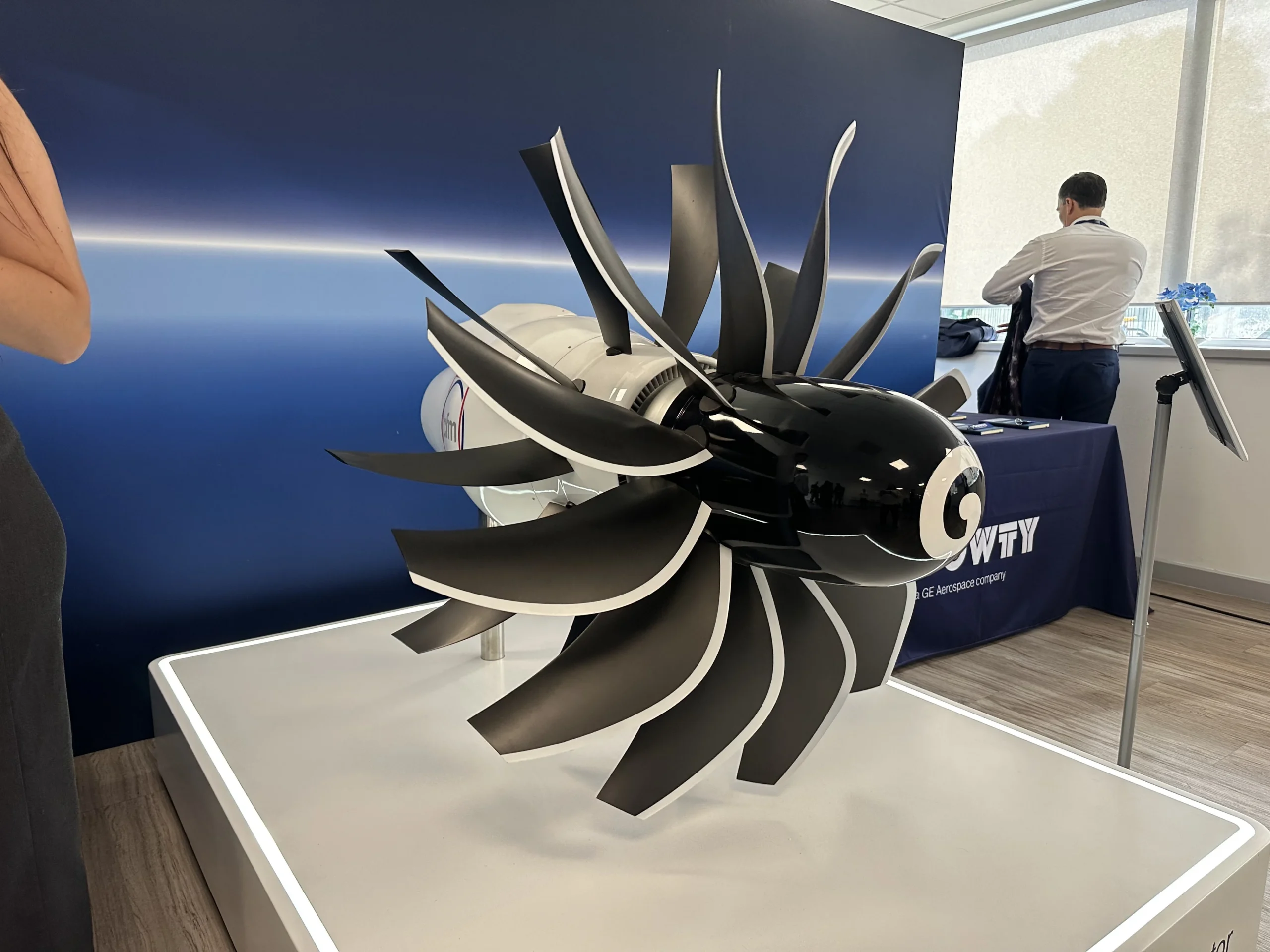
Gloucestershire based propellor expert Dowty will support the next phase of CFM’s Revolutionary Innovation for Sustainable Engines (RISE) programme.
Specifically, the company will employ its almost century-long expertise in variable pitch propellers for the Open Fan engine, the flagship technology demonstrator under development for the RISE programme.
Unveiled in 2021, RISE is a technology demonstration programme of CFM, a joint company owned by GE Aerospace and Safran Aircraft Engines. The Open Fan engine envisages a larger turbofan that does away with the casing and employs turboprop technologies for a targeted 20% efficiency improvement.
“Open Fan is the next step in the evolution of aviation propulsion to deliver durability and efficiency performance improvements,” says Arjan Hegeman, vice president for future of flight engineering at GE Aerospace. “The Open Fan architecture combines the best of our turbofan and turboprop experience, building on proven technology for highly reliable future products.”
Wholly owned by GE Aerospace, Dowty has benefited from at least £12 million of investment from its parent company to date.
Why Dowty is a natural fit for the Open Fan engine
When it comes to variable pitch propellers, no company does it quite like Dowty. From the Dash 8-400 to the C-130J, Dowty’s meticulously engineered propellers go to work in some of the harshest environments on Earth.
Dowty’s legacy traces back to the Hele-Shaw Beacham variable-pitch propeller, a 1920s British hydraulic pitch-change system developed with Gloster Aircraft Company.
The system allowed propeller blades to change angle in flight, improving takeoff thrust and cruise efficiency, and became part of the technical lineage that later fed into Rotol and, ultimately, Dowty’s modern propeller expertise.
In fact, the Dowty building ADS Advance visited this week sits on the very site of the former Gloster Aircraft Company. The former Gloster aerodrome at Brockworth is where Britain’s first jet aircraft, the Gloster E.28/39, carried out early taxi tests, and where the later Gloster Meteor was built and flown.
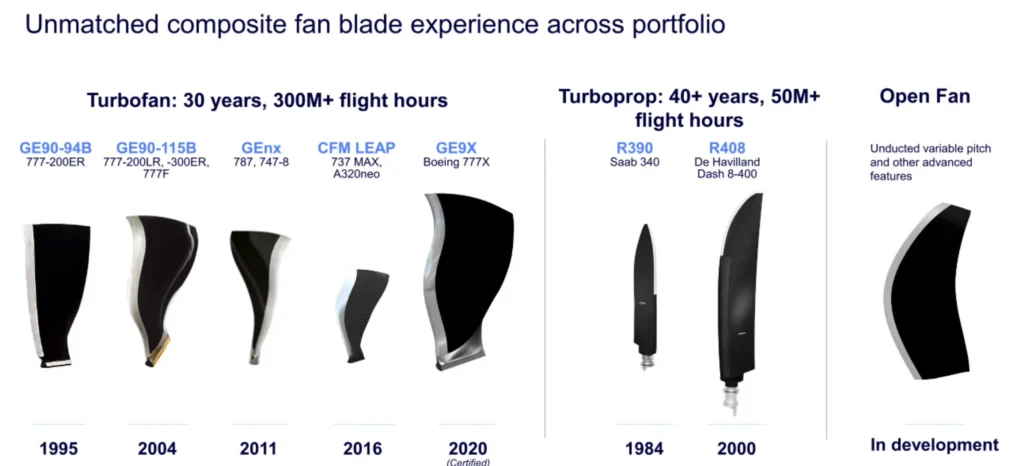
Over the years, Dowty has become a world-leading propeller manufacturer, building deep expertise in electronically controlled, all-composite propeller systems used across civil and military aircraft. That expertise can go a long way in assisting the development of the revolutionary Open Fan engine, a structure that is reliant on large, exposed, variable pitch fan blades.
Dowty technical director Jonathan Chesney said the company’s Open Fan role draws on more than 40 years of all-composite blade experience, as well as a longer heritage in pitch-change mechanisms.
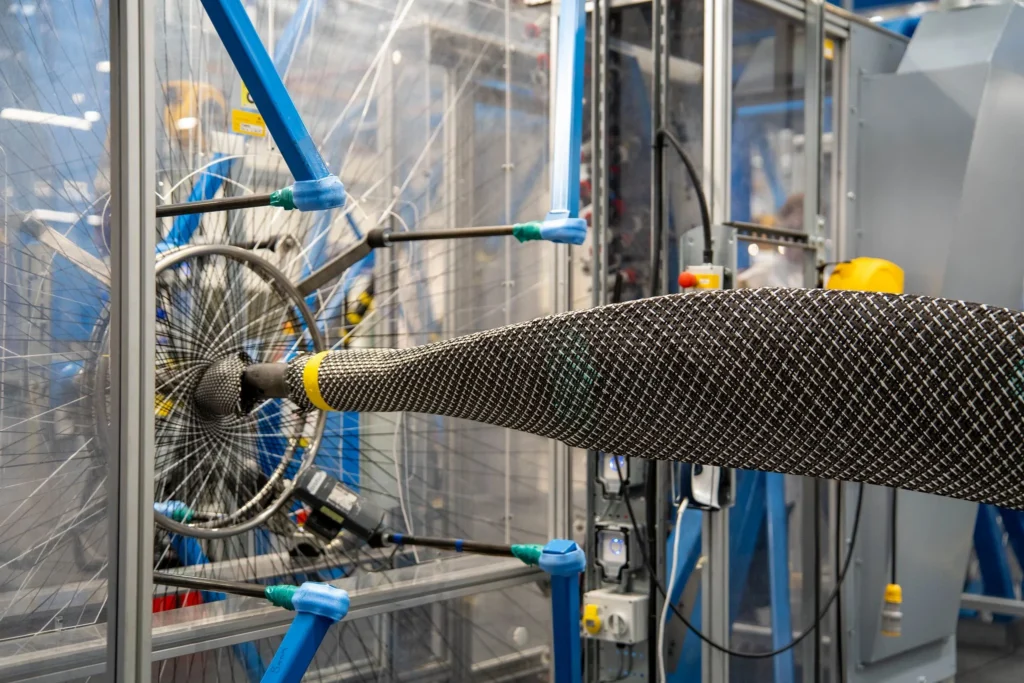
Dowty’s products have operated from smaller local airfields as well as demanding military environments, giving the company a deep understanding of blade durability and maintainability.
“We’re looking at over 40 years of experience with all-composite blades in those environments,” Chesney said. “It’s an environment where we’ve learned about what is required to make a durable product, to make a maintainable product.”

“Hopefully, now it becomes clear why we’re marrying these two capabilities together,” Chesney added. “We can address the challenges that are required to make that model into reality.”
As Dowty CEO Henry Johnston said, “If there’s one takeaway about Dowty I’d like you to have, it’s that we love propellers. We love designing them, we love manufacturing them, we love servicing them in support of our customers.”
How the RISE Open Fan engine will deliver efficiency improvements
Aircraft re-engining has been one of the biggest drivers of aviation’s efficiency improvements over the past few decades. Today, as airlines upgrade from A320ceos and 737 NGs to the neos and MAX lines, fuel burn drops by 16-20% per trip compared to previous generation engines, along with greenhouse gas emissions.
For years, these improvements have been driven by creating larger turbofans and therefore a higher bypass ratio. The CFM LEAP, for example, has a BPR of 11:1, compared with 6:1 for the previous generation CFM56.
The problem then is that, as the fans become larger, so too does the casing. This creates a huge amount of drag on the airframe, and therefore diminishing returns on the efficiency improvements.
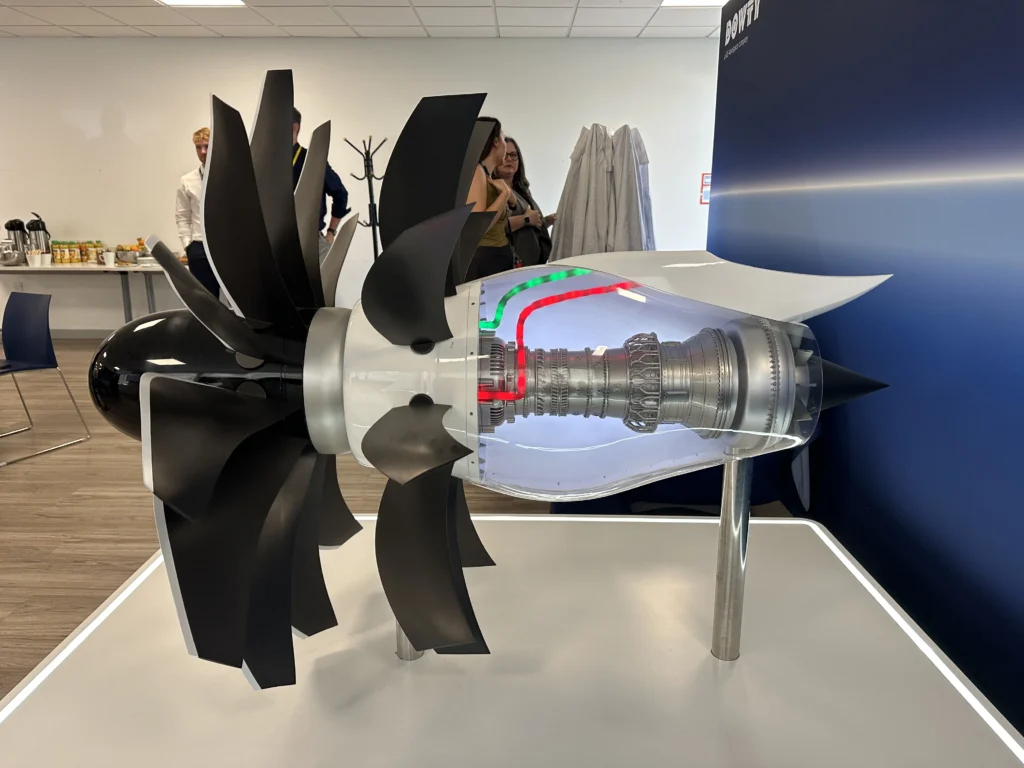
The Open Fan engine removes the casing, making it possible to have a fan of unlimited size, aurcraft dfependnet. It’s designed to be combined with a very compact core and a triple airflow arrangement that could see the BPR raching as high as 40:1 or more.
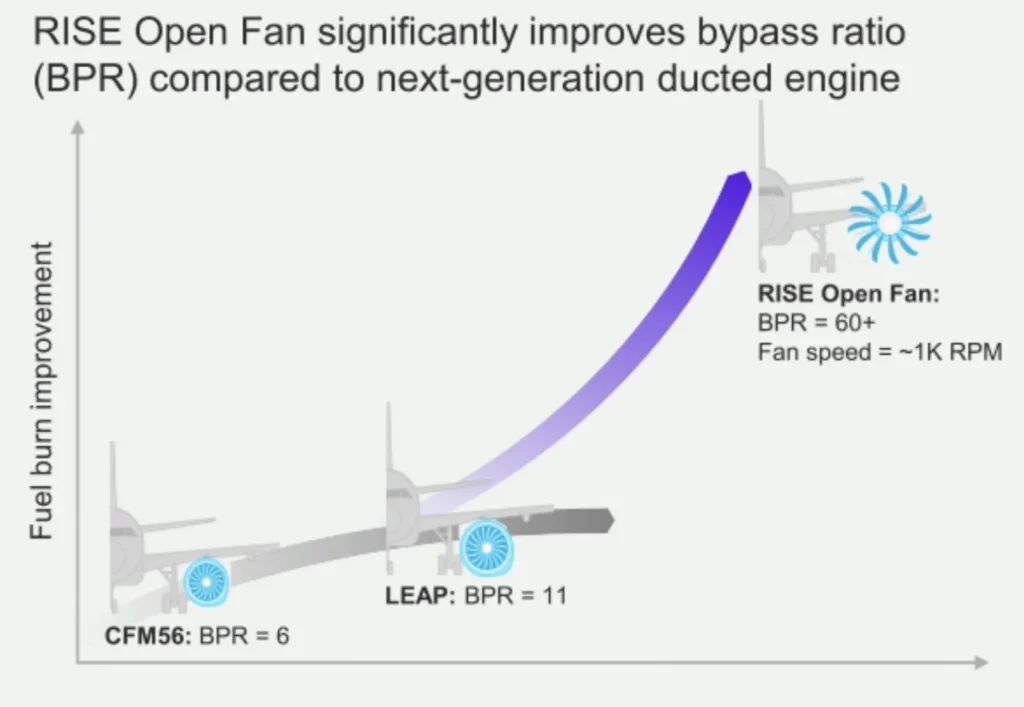
From the outside, the Open Fan engine looks challenging. Rotating fan blades are stacked on top of a set of static blades, all in front of an impossibly small core. But as Hegeman explained to ADS Advance in Gloucester this week, it’s actually all built on highly proven and low-risk technologies.
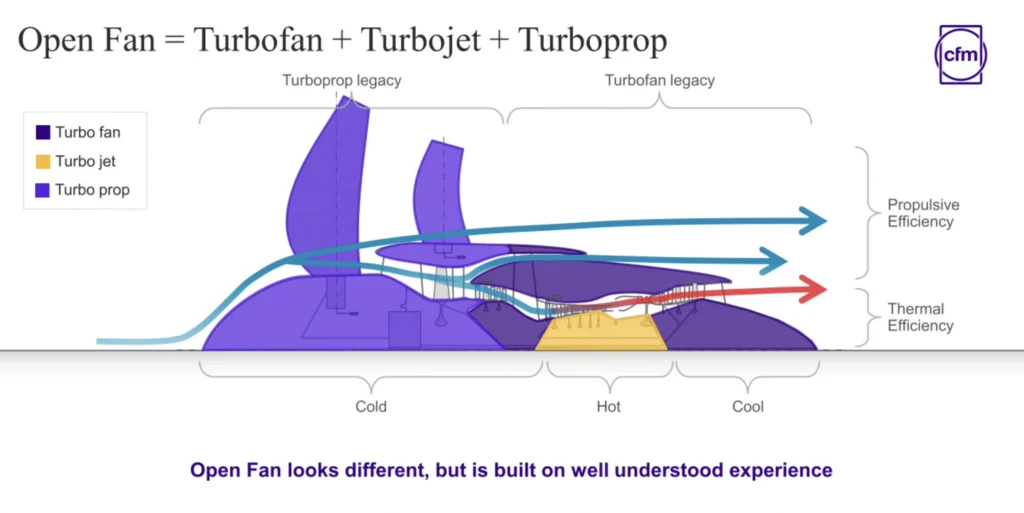
“We know how to do turbofans, and what we’re adding in front of it is a turboprop,” he explained. “The RISE Open Fan engine is realistically nothing new. We’re building on our turbofan experience, and we’re building on our turboprop experience. That’s all there is to it. It looks very different, which can be perceived as, oh, this is risky. It’s all new. It really isn’t.”
Bringing an expert in composite, variable pitch propellers into the mix is a natural evolution of the RISE open fan. Blades like these are a very different prospect from a normal turbofan blade, which rotate very fast and are protected by the case.
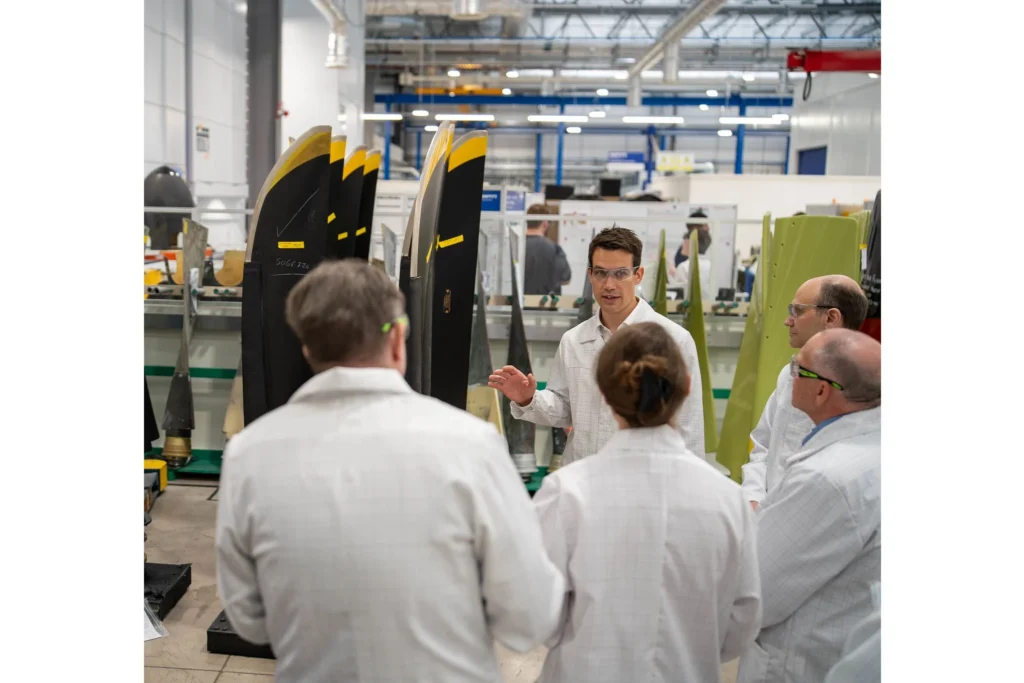
“Dowty is feeding into CFM all that experience on turboprop blades; slow-moving blades, very light blades, extreme high durability, while hitting the efficiency targets that we’re aspiring to on the Open Fan engine,” Hegeman shared. “What that is unlocking is this great combination and integration of technologies and experience across Dowdy and GE Aerospace turbofans.”
What’s next for the RISE Open Fan engine?
The next task for CFM is to turn this architecture into hardware – an Open Fan flight demonstrator for the next generation of narrowbody aircraft.
Hegeman said the programme is already producing empirical data and “hitting the milestones” set at the start of the decade, with that work intended to prove the technologies are mature enough to support future commercial engine programmes.
CFM is still looking to produce that demonstrator towards the end of this decade, with a view to making such an engine available in the late 2030s.
However, the engine is not being designed for today’s commercial aircraft, and won’t be suitable for retrofit on current aircraft.
The next chapter of RISE will therefore be written not just by engine makers, but by the aircraft manufacturers willing to design around Open Fan from day one.
Sign up for our newsletter and get our latest content in your inbox.
Similar Reads




Sign up for our newsletter. Select all sectors relevant to you.
Related