Dstl assesses robotic systems in hazardous incident recovery trial
Courtesy Dstl
Robots, not people, could respond to future high-risk incidents following a recent trial by Dstl.
Chemical, biological and radiological (CBR) substances can pose a significant risk to public health, especially in confined spaces which concentrate vapours and spills. Robots, however, allow the human operators to manage any contamination but remain at a safe distance away from any harmful substances.

This trial built on experience from a previous trial by deploying the machines in an operational setting and improving their technical capability.
Urban interior spaces pose numerous challenges, such as:
- low lighting
- obstacles
- high or difficult to reach surfaces
Drones can also struggle with interior airflow and navigation between walls and structures of the same colour.
Ian, Dstl’s technical lead, said: "This trial has allowed us to bridge the gap between research and the operational environment. Dstl has expertise in operational analysis, uncrewed vehicles and autonomy. We bring all these together to deliver cutting-edge science to improve UK resilience."
Specialist Equipment
Dstl worked with a range of innovative academic and industrial partners deploying specialist equipment in the Department for Environment, Food and Rural Affairs (Defra) funded trial. This included the following:
Multidirectional drone
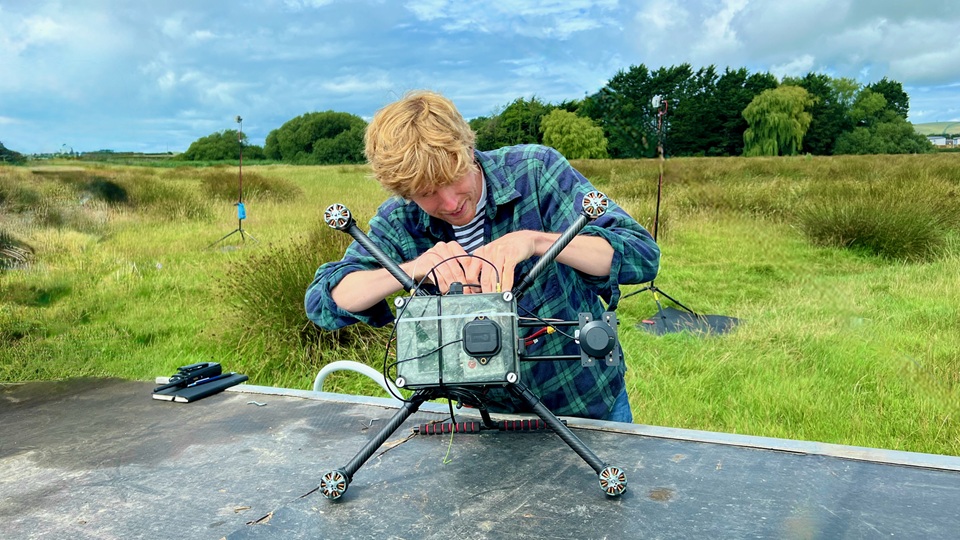
Autonomous devices have created a multi-directional drone with a swabbing system to test for contamination and apply decontamination spray.
Robot control software
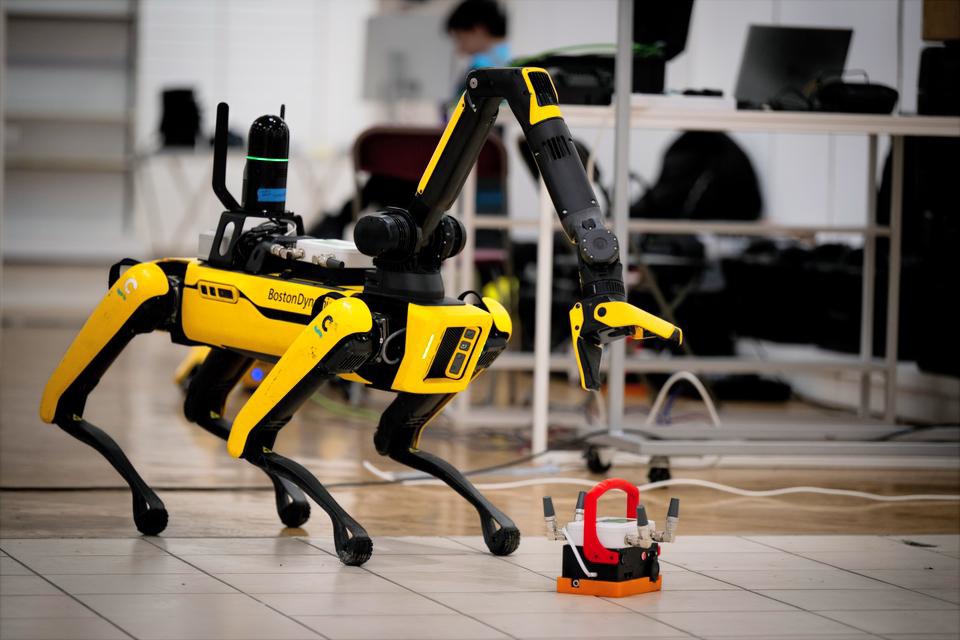
Createc have developed advanced robot control software to enable their fleet of robots to gather information and samples to deal with an incident including a drone, a robot dog and four-wheeled vehicles.
These vehicles are autonomous but can be switched over to remote control if required and they can:
- climb stairs
- open car doors
- use tools
Uncrewed ground vehicle
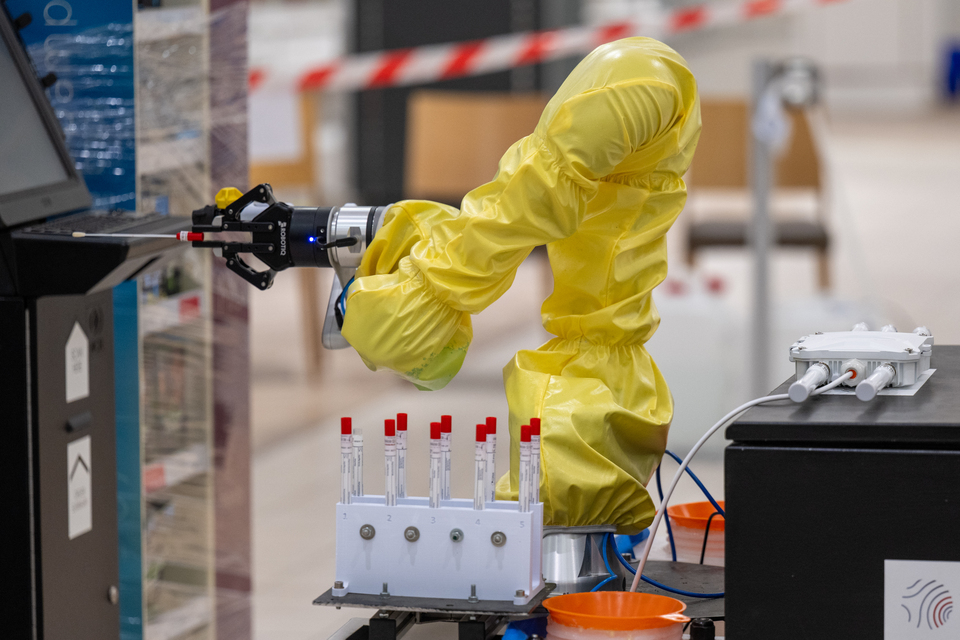
The University of Bristol is pioneering an uncrewed ground vehicle with a robotic arm that would work with a tethered drone to carry out decontamination with a spray system at a range of heights.
Ewen, Defra recovery science lead, said: "These sorts of trials are critical for us to deliver the best value for taxpayers’ money. Not only do they allow us to test our newly developed techniques and technologies in representative environments, but they often throw up exciting new possibilities and opportunities for development which would be far less apparent in a lab context.
Dstl and Defra partnership
This trial is the latest in a series for the Defra, the UK’s lead government department for recovery, who are responsible for the environmental remediation following a homeland CBR contamination event.
Defra has partnered with Dstl to establish a National Technical Advisory Group for CBR Recovery (NTAG-R). It will provide authoritative technical advice on the requirements and capabilities needed to conduct CBR recovery operations.