Dstl trials AI-powered drones for rapid explosives detection
Courtesy Dstl
The trial demonstrated that AI models can be rapidly retrained to recognise new threat types and adapt to different environments. Subsequently UK military personnel could be better protected on the battlefield as a result of these trials.
Conducted with 33 Engineer Regiment (Explosive Ordnance Disposal and Search) at their Essex base, the trial took place over several weeks and saw dozens of replica mines and ordnance placed across varied terrain and land environments.

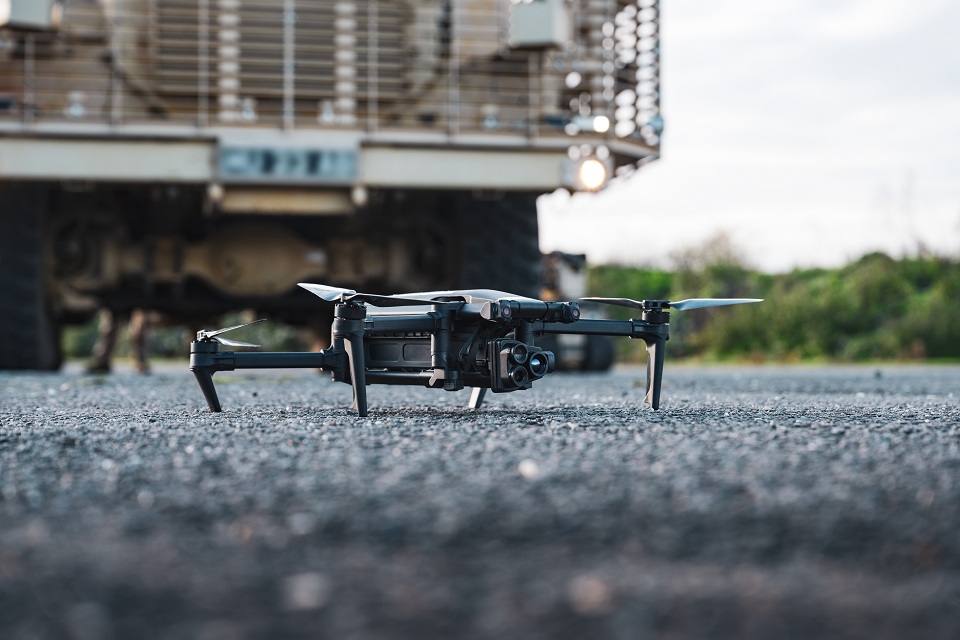
Data captured by sensors onboard small uncrewed aerial systems was relayed to Army operators, who used AI tools to locate and identify the munitions.
The trial also successfully demonstrated the ability to rapidly retrain AI models to recognise emerging threat types and adapt to different environments - a capability that is critical in fast-evolving modern warfare. This has also been seen in Ukraine, where drones and explosive devices are reshaping the battlefield at pace.
Through the Strategic Defence Review this government is doubling investment in autonomous platforms, from £2 billion to £4 billion this parliament.
Minister for Defence Readiness and Industry, Luke Pollard MP said: "This trial is exactly the kind of innovation the Strategic Defence Review calls for - harnessing AI, drones and autonomous systems to boost deterrence and make our Armed Forces stronger.
"We’re on a mission to exploit new technologies, removing our people from harm’s way while increasing the speed and effectiveness of their operations. This is defence innovation working at wartime pace, and it is delivering exciting results."
Dstl’s technical lead for the trial said: "The threat posed by explosive ordnance is constantly changing and so must the tools and techniques required to deal with it safely. Dstl brings a comprehensive understanding of the science and technology, as well as the specialist industry suppliers who provide the different elements.
"We are testing, adapting and demonstrating this technology so that, working closely with the end user, we can develop concepts that let our forces compete on the modern battlefield."
Major Mark Fetters, British Army Future Counter-Explosive Ordnance Capability lead, said: "The modern battlefield is littered with explosive ordnance. The equipment being developed by Dstl will allow EOD operators to conduct their mission faster and will remove people from the explosive hazard.
"We are also looking to understand how the capability will grow as other technologies mature. As different types of sensors become lighter, more power-efficient and smaller, they will be able to fit on to smaller uncrewed aerial systems - constantly improving the capability available to our EOD and Search personnel."
What the trial demonstrates
The trial demonstrates how AI, human-machine teaming, robotic and autonomous systems and advanced sensors can reduce risk to Armed Forces personnel.
Next steps
Building on these results, further trials will take place this year to mature the technology and guide the procurement of a deployable capability that can be placed directly into soldiers’ hands.
The government has committed to the British Army delivering a tenfold increase in lethality over the next decade by harnessing:
- firepower
- surveillance technology
- autonomy
- digital connectivity
- data
The trial is part of a broader transformation of UK defence capability, driven by lessons from the conflict in Ukraine and set out in the SDR.