
General Atomics

Engineering the swarm: how software is powering autonomous defence systems

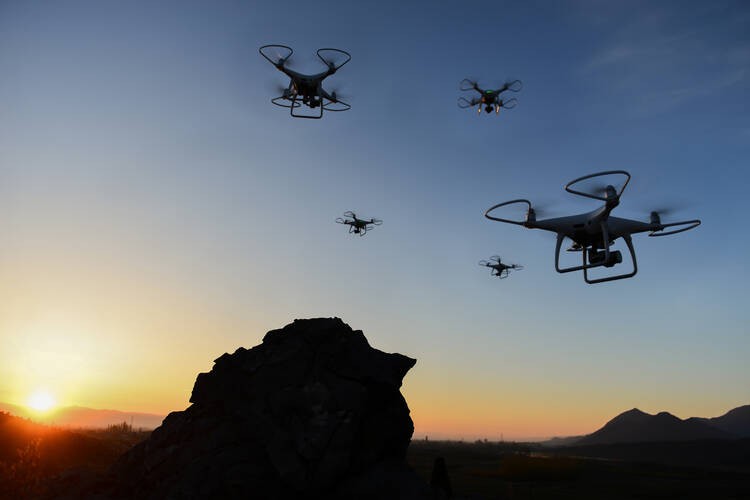
Across skies, seas and battlefields, a new kind of formation is emerging: one made not of pilots and platoons but of intelligent machines acting in perfect coordination. Autonomous swarms are redefining how nations project power, defend assets and respond to threats in real time, creating urgency to develop autonomous systems that can think, communicate and act as one.


Image courtesy PTC


Defence organisations across the globe are investing heavily in swarming autonomy. DARPA’s OFFensive Swarm-Enabled Tactics (OFFSET) programme has demonstrated swarms of hundreds of unmanned air and ground vehicles working together to complete reconnaissance and strike missions.

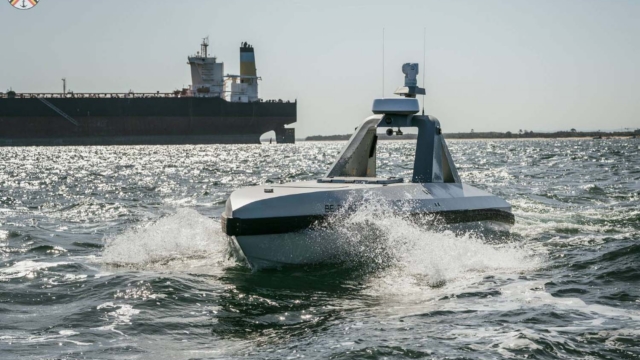
The Royal Navy is advancing its own autonomous initiatives, deploying AI-coordinated surface and underwater vessels for mine countermeasures through programmes like RNMB Ariadne and Thales’ autonomous minehunting system. Meanwhile, NATO and the European Defence Fund are investing heavily in software-defined swarming capabilities designed to adapt dynamically to emerging threats.

These programmes all point toward the same conclusion: defence superiority is being defined by software. As systems become more autonomous and connected, the real competitive advantage will come from the code that governs system behaviour and the data that drives decision making.

Engineering complexity at scale
Swarming autonomy changes everything about how defence systems are engineered. In a swarm, dozens of autonomous air, land, or maritime vehicles collaborate to achieve shared objectives. Each autonomous platform must meet multiple layers of requirements, from communications and cybersecurity to mission logic and human-machine interaction.

A single change in mission logic or communication architecture can produce cascading effects across the entire swarm, creating emergent behaviours that only surface once systems are tested or fielded. Layer in safety constraints and the need to continuously adapt to an environment and the engineering challenge only becomes more difficult.

Defining system behaviour before the build
Model-based systems engineering (MBSE) helps aerospace and defence organisations mitigate these risks by enabling a system-wide view of how autonomous systems are supposed to interact with each other. Teams can model communication flows, decision logic and mission behaviours in a connected SysML environment to analyse swarm dynamics and expose dependencies before physical testing.

Connecting the digital thread
A system’s behavioural insights only deliver value when they align with programme requirements and system baselines. To turn behavioural insights into a reliable, certifiable capability, systems models must stay connected to requirements, verification data and the broader product context.

Codebeamer enables this connected approach by unifying requirements, risk and verification evidence in a single controlled environment. 

When connected to PTC Modeler, teams can trace each behavioural model back to its originating requirement to understand how system changes affect safety, compliance, or mission objectives. Windchill completes the digital thread by managing configurations, change histories and system context across hardware and software domains to ensure that every update remains tied to the correct configuration and version of the system.

Validating multi-agent behaviour
Bringing behavioural models into simulation tools like MATLAB/Simulink, Ansys, or STK enables engineering teams to test mission scenarios and evaluate swarm performance under realistic conditions. When using these tools with PTC Modeler, systems engineers can validate collective behaviours earlier, refine system logic based on simulation results and maintain end-to-end traceability back to system requirements in Codebeamer and Windchill.

Supporting continuous innovation
Swarming technology is evolving quickly. Defence organisations are continuously refining algorithms, changing mission rules and upgrading platforms. PTC’s collaborative MBSE environment supports this agility through modular, open, reusable systems architecture that lets engineers update mission logic or add new capabilities without rebuilding the entire model.

Engineering the swarm
The capacity to design and coordinate autonomous systems with speed, security and accountability is shaping the next generation of defence. By integrating digital engineering tools that connect design intent, test data and operational insights, engineering teams can deliver adaptable systems while maintaining the highest levels of safety and compliance.

Related

Red Arrows return to UK after delayed Atlantic crossing
Red Arrows back in UK
Red Arrows return to UK after delayed Atlantic crossing
The Red Arrows have reached RAF Lossiemouth after their return from North America was delayed by poor weather in Canada.
Aerospace Defence

17 Aug 2026

Skyports and KNETCO sign deal to develop Kuwait’s first Advanced Air Mobility infrastructure
Kuwait City skyline
Skyports and KNETCO sign deal to develop Kuwait’s first Advanced Air Mobility infrastructure
A new strategic agreement will enable the foundations to be laid for Kuwait’s first Advanced Air Mobility (AAM) infrastructure ecosystem.
Aerospace Member News

17 Aug 2026

Royal Edinburgh Military Tattoo 2026: What to expect as RAF takes centre stage
Pictured here is the Royal Air Force's Red Arrows Aerobatic Display Team flying over Edinburgh City and Castle for the grand opening of The Royal Edinburgh Military Tattoo on Saturday 12th August 2023 The Royal Edinburgh Military Tattoo (REMT) is the largest military engagement event in Scotland and one of the largest in the UK, which is held over several nights during the month of August on the Esplanade of Edinburgh Castle. Bringing together stories through music, dance, poetry, spoken word and imagery, a cast of over 800 UK and international performers will present ‘Stories’ through vivid and eclectic range of expression. The Tattoo will host performers from Norway, The United States, Australia, Trinidad and Tobago and Switzerland alongside acts from across the Uk and Ireland. The military will take a prominent role in the show with the Royal Air Force being the lead service this year.
Royal Edinburgh Military Tattoo 2026: What to expect as RAF takes centre stage
The Royal Edinburgh Military Tattoo is underway at Edinburgh Castle, with more than 800 performers and RAF flypasts featuring in the 2026 show.
Aerospace Defence

17 Aug 2026

Red Arrows return to UK after delayed Atlantic crossing
Red Arrows back in UK
Red Arrows return to UK after delayed Atlantic crossing
The Red Arrows have reached RAF Lossiemouth after their return from North America was delayed by poor weather in Canada.
Aerospace Defence

17 Aug 2026

Royal Edinburgh Military Tattoo 2026: What to expect as RAF takes centre stage
Pictured here is the Royal Air Force's Red Arrows Aerobatic Display Team flying over Edinburgh City and Castle for the grand opening of The Royal Edinburgh Military Tattoo on Saturday 12th August 2023 The Royal Edinburgh Military Tattoo (REMT) is the largest military engagement event in Scotland and one of the largest in the UK, which is held over several nights during the month of August on the Esplanade of Edinburgh Castle. Bringing together stories through music, dance, poetry, spoken word and imagery, a cast of over 800 UK and international performers will present ‘Stories’ through vivid and eclectic range of expression. The Tattoo will host performers from Norway, The United States, Australia, Trinidad and Tobago and Switzerland alongside acts from across the Uk and Ireland. The military will take a prominent role in the show with the Royal Air Force being the lead service this year.
Royal Edinburgh Military Tattoo 2026: What to expect as RAF takes centre stage
The Royal Edinburgh Military Tattoo is underway at Edinburgh Castle, with more than 800 performers and RAF flypasts featuring in the 2026 show.
Aerospace Defence

17 Aug 2026

Royal Navy drone fleet could triple missile capacity in North Atlantic war
A Royal Navy warship has completed the first firing of new ship-busting missiles capable of taking out enemy vessels at ranges of more than 100 miles.
Royal Navy drone fleet could triple missile capacity in North Atlantic war
A former senior Royal Navy officer says war games testing Britain’s Hybrid Navy concept produced roughly three times the missile capacity for a North Atlantic conflict.
Defence

17 Aug 2026

SatVu’s space-based thermal intelligence reveals status of Texan LNG terminal
Golden Pass LNG terminal in Texas
SatVu’s space-based thermal intelligence reveals status of Texan LNG terminal
By using HotSat-2's MWIR sensor, SatVu has captured thermal data over the Golden Pass LNG terminal in Texas, with AllSource Analysis attributing thermal activity to the individual units and equipment within.
Member News Space

14 Aug 2026

MDA Space opens CHORUS Control Centre
Chorus: generated image.
MDA Space opens CHORUS Control Centre
With the opening of its new control centre, MDA Space has moved closer to operational readiness ahead of the launch of its CHORUS satellite constellation later this year.
Member News Space

13 Aug 2026

Intuitive Machines completes acquisition of Goonhilly and COMSAT
Ground station.
Intuitive Machines completes acquisition of Goonhilly and COMSAT
Intuitive Machines’ integrated ground-to-space network is set to be enhanced by the ground station assets and competencies at Goonhilly, which will remain a UK entity and gain expanded resources, technologies and global reach.
Member News Space

13 Aug 2026

UK security innovators invited to join S&P 2027 Immersive Experience
Security and policing conference call for participants for immersive experience
UK security innovators invited to join S&P 2027 Immersive Experience
UK companies and academia are being invited to showcase their technology as part of the live Immersive Experience at Security & Policing 2027.
Member News Security

17 Aug 2026

NPAS provides aerial support for emergency responses in West Midlands and Sussex
West Midlands wildfires
NPAS provides aerial support for emergency responses in West Midlands and Sussex
As part of multi-agency responses to wildfires in the West Midlands and a train derailment in East Sussex last week, the National Police Air Service (NPAS) delivered aerial oversights and intelligence to help coordinate the efforts of the emergency services on the ground.
Aerospace Security

17 Aug 2026

Turner & Townsend strengthens senior leadership team
Turner & Townsend
Turner & Townsend strengthens senior leadership team
A number of senior appointments have been made which are intended to add significantly to the company's specialist infrastructure and defence capabilities.