ESM-2 set to power Artemis II crew to the Moon
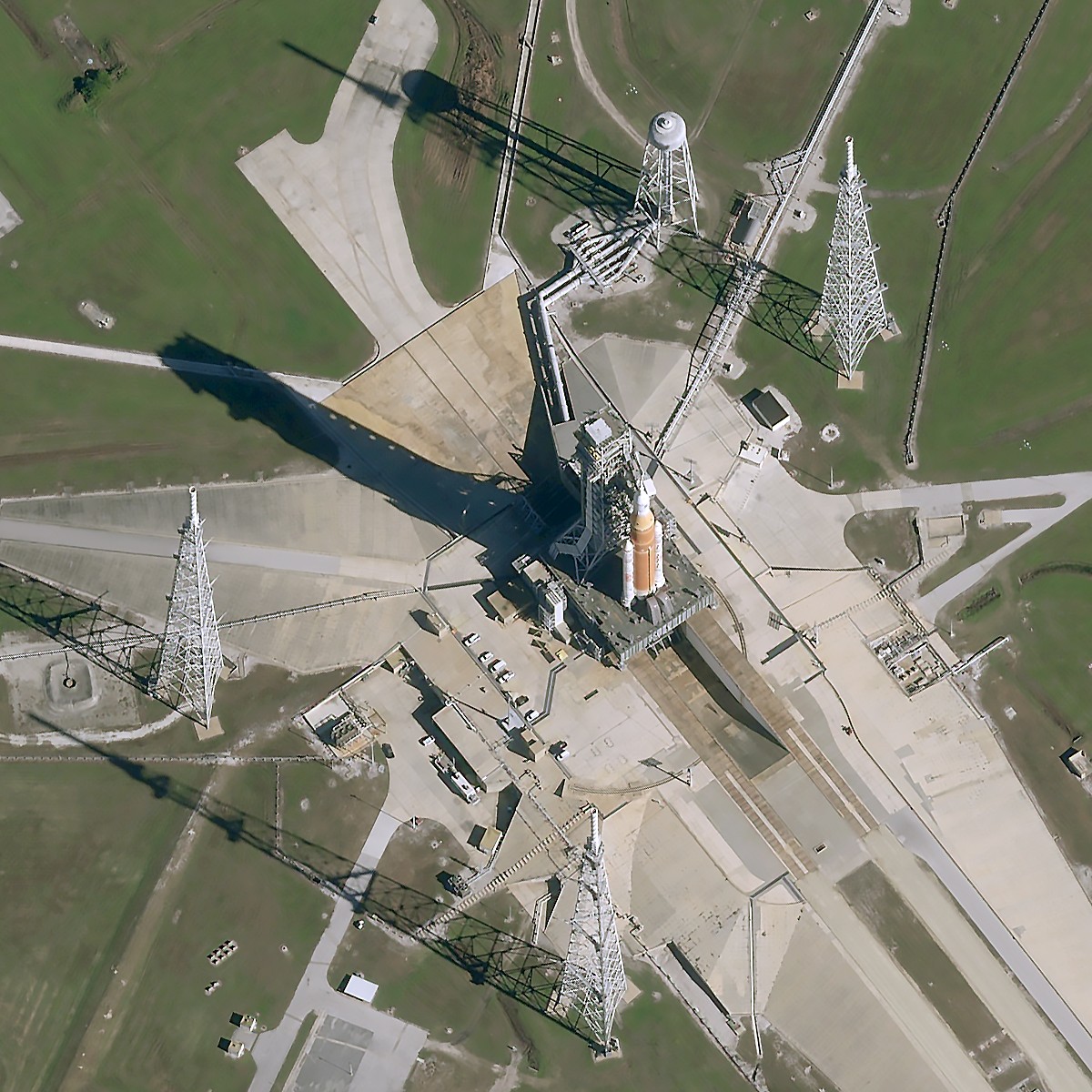
Above: Pléiades Neo image. SLS rocket with Orion ESM at its launch pad at Kennedy Space Center for its upcoming launch of the Artemis II mission.
©Airbus DS 2026
The ESM is built by Airbus on behalf of the European Space Agency (ESA). Functioning as the powerhouse of NASA’s Orion spacecraft, the ESM-2 will provide propulsion, power, thermal control and the vital air and water needed for the four astronauts to survive in Space.

The mission, scheduled to launch from Kennedy Space Center, will send NASA astronauts Reid Wiseman, Victor Glover, Christina Koch and Canadian Space Agency (CSA) astronaut Jeremy Hansen on a 10-day journey around the Moon. Unlike the uncrewed Artemis I test, this mission places human lives directly in the hands of European engineering.
"The transition from Artemis I to Artemis II is the shift from a test vehicle to a living space," said Marc Steckling, Head of Earth Observation, Science and Space Exploration at Airbus. "When Reid Wiseman and his crew throttle up the ESM’s engines to leave Earth orbit, they are also trusting the work of hundreds of engineers across ten European nations to take them to the Moon and bring them home safely."
While Artemis I proved the structural integrity of the vehicle, Artemis II marks the debut of the ESM’s active life support capabilities.
- Breathing and drinking: The ESM-2 carries 90 kg of oxygen and 240 kg of drinking water, which it will pump into the crew module to keep the astronauts alive.
- Thermal Control: As the spacecraft faces the extreme temperature swings of deep space, the ESM’s active thermal control system will regulate the cabin temperature, keeping the crew comfortable.
- Power Generation: The module’s signature four-bladed solar arrays will generate 11.2 kW of power - enough to supply the spacecraft and the new high-speed communication systems.
- Propulsion: 33 engines onboard the ESM to provide thrust and propulsion to manoeuvre Orion to its destination.
Artemis II introduces ground-breaking technologies that were not present on previous flights, heavily relying on the ESM’s precision.
- High-Speed Laser Communication (O2O): The ESM provides the stable power required for the new Orion Optical Communications System (O2O). This laser-based technology will transmit data back to Earth at up to 260 megabits per second, enabling the crew to stream 4K ultra-high-definition video of the Moon in near real-time-a leap forward from the grainy footage of the Apollo era.
- Manual Piloting Demonstration: The crew will manually fly the Orion spacecraft during a ‘proximity operations demonstration’ in Earth orbit. Commander Reid Wiseman and Pilot Victor Glover will use hand controllers to direct the ESM’s 24 reaction control thrusters, testing how the 13-ton module performs under human command before embarking on the lunar trajectory.
Exactly how close the Artemis II crew will fly to the Moon will depend on when they launch. The Moon will be in a different spot for each of the possible launch dates and the exact distance will change accordingly, ranging from 6,400 to 9,000 kilometres above the lunar surface. This is tens of thousands of kilometres closer than any human has been in more than 50 years.
When Orion flies behind the Moon, the Artemis II crew is expected to break the distance record set by Apollo 13 for the farthest any humans have ever been from Earth.
Airbus is already looking beyond this mission. ESM-3 in 2027 will test rendezvous and docking capabilities between Orion and commercial spacecraft needed to land astronauts on the Moon. Also, in 2028 ESM-4, destined to support the lunar landing of Artemis IV, is currently undergoing final integration at Kennedy Space Center (KSC). The ESM-4 was delivered to KSC in late 2025, while ESM-5 and ESM-6 are currently in production in Airbus’ Bremen cleanrooms with shipments slated for 2027 and 2028, thus ensuring a steady cadence for NASA’s long-term lunar presence.
The ESM is a cylinder approximately four metres high and wide. It has a distinctive drive system comprising one main engine (a repurposed Space Shuttle OMS engine), eight auxiliary engines and 24 smaller thrusters for attitude control. It is built by Airbus as the prime contractor for the European Space Agency (ESA), with final assembly in Bremen, Germany.