GMV to lead on new ESA Galileo system project
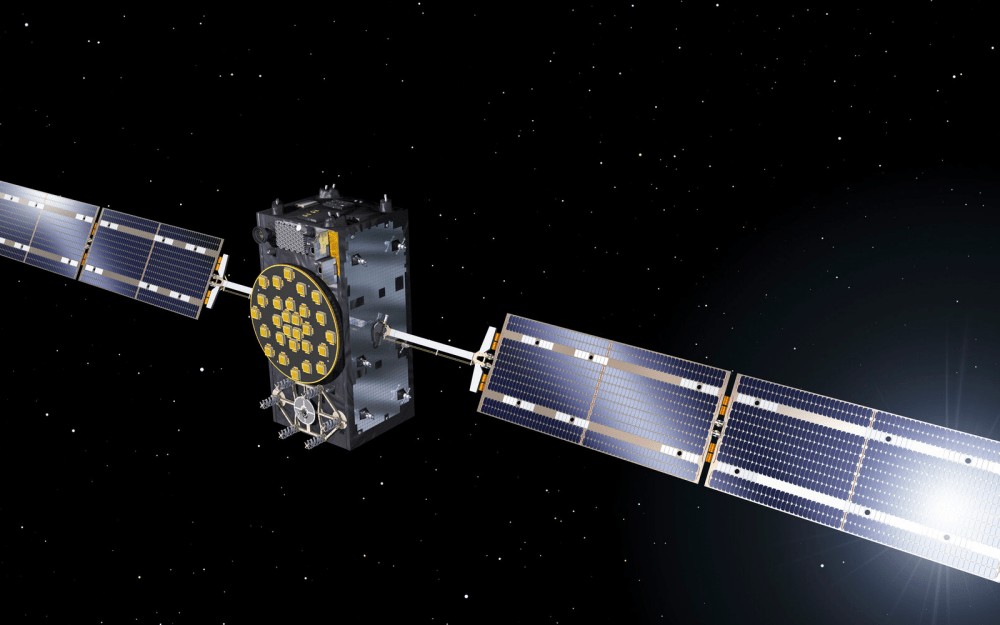
Image courtesy GMV / photo ESA Pierre Carril 2014
The project, called ACHILLES (Advanced Technologies Breadboarding for Low-Complexity Sensor Stations), reinforces GMV's position as a technology leader in satellite navigation systems.
GSS stations are part of the Galileo ground network and are essential to the system's operation. They receive and process the signals transmitted by the satellites, analyse their quality, identify errors and send the measurements and navigation messages received to the system control center. The objective of ACHILLES is to design a new generation of more compact, robust and low-cost GSS, capable of ensuring high accuracy and robustness of operation in adverse conditions.

To achieve this goal, the industrial consortium led by GMV will explore innovative technologies in various fields, such as smart antennas with spatial diversity and dual polarisation, configurable and wide-spectrum radio frequency chains, hybrid beamforming techniques and distributed architectures based on cloud computing. The integration of these new technologies will enable the creation of more flexible, scalable and robust stations that are resistant to interference, reflections and attempts to falsify the signal.
Two key partners — Fraunhofer IIS (Germany) and the Université Côte d’Azur (France) — will contribute their recognised expertise in advanced antenna engineering, focusing respectively on phased array technology and Luneburg lens-based multibeam systems. These innovative antenna solutions will be critical to achieving the performance, robustness and flexibility required by the next-generation Galileo ground infrastructure.
ACHILLES is part of the Galileo system evolution programme, one of whose objectives is to enable European industry to meet upcoming technological challenges, such as the development of new LEO-PNT positioning systems using low-orbit satellites. GMV is leading a LEO-PNT mission that will be transmitted by the Celeste constellation currently under development, the first satellites of which will be launched in the first quarter of 2026.

Collaboration with ESA remains fundamental to European technological and industrial growth. Investment in space projects has been shown to have a multiplier effect on innovation, the economy and the creation of highly skilled jobs, contributing to a more sustainable and competitive future.
This contract strengthens GMV’s collaboration with ESA and highlights the importance of investing in space technology as a driver of innovation, industrial growth and qualified employment, contributing to Europe’s technological autonomy and competitiveness.
GMV is a privately owned technology business group founded in 1984, with almost 4,000 employees, active in sectors including space, aeronautics, defence and security, which has subsidiaries in Spain, the USA, Germany, France, Poland, Portugal, Romania, the UK, the Netherlands, Belgium, Malaysia and Colombia.