

British Airways parent IAG invests in exosuit startup to ease strain of baggage handling


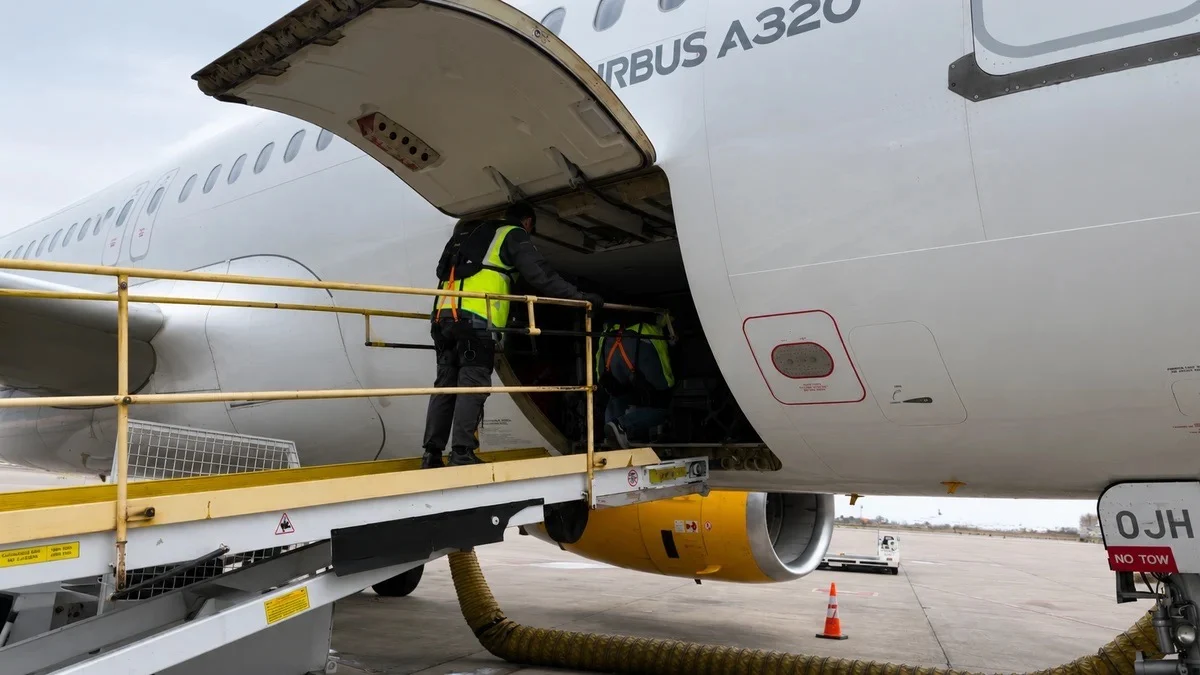
International Airlines Group (IAG), the parent company of British Airways, Iberia, Aer Lingus, Vueling and LEVEL, has invested in wearable robotics startup Verve Motion as it looks to reduce the physical demands placed on baggage handlers.
The investment is part of Verve Motion’s newly forged strategic partnership with HexArmor, which specialises in personal protective equipment (PPE) and the airline group. HexArmor will provide commercialization and distribution for Verve Motion’s SafeLift exosuit.
The investment, made through the group’s corporate venture capital arm, IAGi Ventures, forms part of a funding round that brings Verve Motion’s total capital raised to more than $55 million (£41.2 million).
IAG will evaluate the exosuit specifically for aviation ground handling to support baggage handlers’ shoulders during repetitive lifting tasks.
Exosuits designed for repetitive lifting
The SafeLift system from Verve Motion uses lightweight, soft wearable robotics packed into a backpack-llike container with a supportive harness. Sensors detect lifting movements and provide powered assistance, helping reduce muscular strain without restricting movement.
The company, co-founded and led by Spanish entrepreneur Ignacio Galiana in 2020, has deployed its technology across logistics, retail and manufacturing operations, where workers perform thousands of repetitive lifting movements every shift.
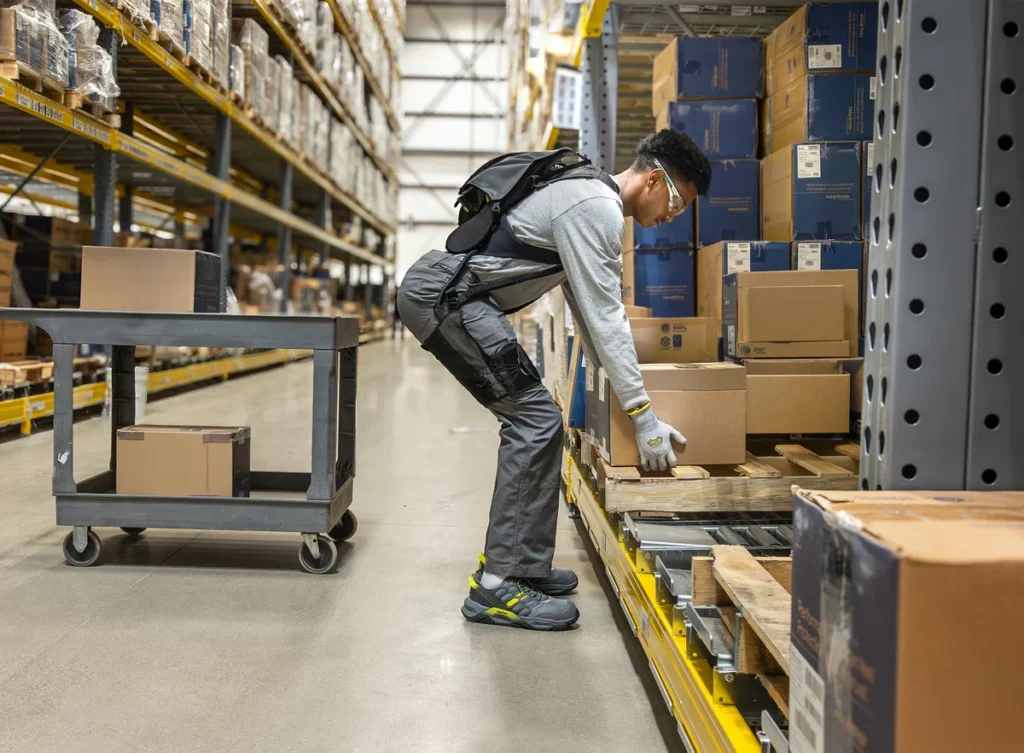
According to Verve Motion, customers have reported reductions in injuries of 60% to 85%, productivity improvements of up to 8%, and a typical return on investment within six months.
Under the partnership with IAG, the companies will evaluate the technology’s performance in airline baggage operations and cargo-handling environments.
The pilot project will analyse how these suits can facilitate repetitive package-lifting tasks and help optimise performance in ground operations and cargo activities.
Addressing one of aviation’s most demanding jobs
Baggage handling remains among the most physically demanding roles in commercial aviation, with employees repeatedly lifting heavy suitcases into aircraft holds, on baggage carts and onto conveyor systems throughout a shift.
“Verve Motion is exactly the type of company we want to support through IAGi Ventures: a company that applies innovative technology to solve real operational challenges,” said Nacho Tovar, IAG’s Director of Innovation.
Verve Motion co-founder and CEO Ignacio Galiana added: “IAG brings a unique perspective and deep understanding of the physically demanding nature of commercial aviation operations across its operating companies. Their commitment to deploying advanced technologies reflects the next generation of workforce innovation.”
Part of IAG’s wider innovation strategy
The investment is the latest made through IAGi, the airline accelerator programme first launched as Hangar 51 and rebranded as IAGi in 2025. The accelerator has supported more than 100 startups testing technologies across the group’s airlines. The organisation combines startup acceleration, technology deployment and venture capital investment to identify innovations that can improve operational efficiency, sustainability and customer experience across the group.
Recent IAGi projects have included artificial intelligence tools for aircraft maintenance planning, operational software and emerging technologies designed to improve airline efficiency.
The Verve Motion investment targets one of aviation’s most labour-intensive areas, where reducing workplace injuries could improve employee wellbeing and help airlines maintain productivity amid ongoing staffing shortages.
From military research to commercial aviation
Cambridge, Massachusetts-based Verve Motion was founded in 2020 as a spin-out from Harvard University’s Biodesign Lab.
Its wearable robotics technology originated from research funded by the US Defence Advanced Research Projects Agency (DARPA), which initially sought to reduce fatigue for soldiers carrying heavy loads. The company adapted the technology for industrial applications, including warehouses, manufacturing facilities and distribution centres.
The technology could eventually be deployed across IAG’s airlines, including British Airways, reducing fatigue and lowering the risk of musculoskeletal injuries for baggage handlers.
Sign up for our newsletter and get our latest content in your inbox.
Similar Reads



Sign up for our newsletter. Select all sectors relevant to you.
Related