Advancing UK Aerospace, Defence, Security & Space Solutions Worldwide
  • Home
  • /
  • Aerospace
  • /
  • IATA wants post-COVID-19 green recovery to embrace SAF

Aerospace

IATA wants post-COVID-19 green recovery to embrace SAF
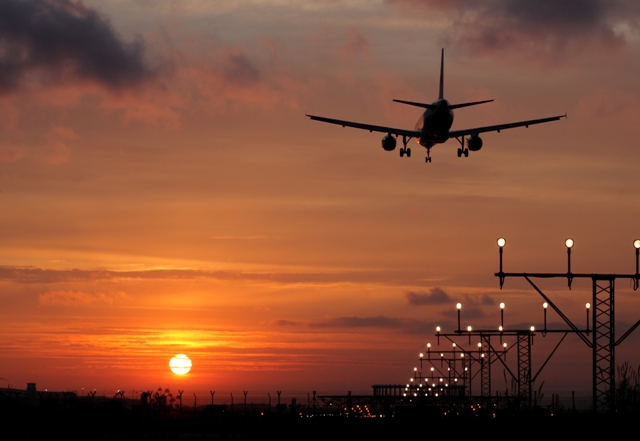
The International Air Transport Association (IATA) emphasised the aviation industry’s commitment to its emissions reduction goals and called for the International Energy Agency (IEA) to prioritise investment in sustainable aviation fuel (SAF) to help power aviation’s contribution to the post-COVID-19 recovery.

Image copyright Shutterstock

IATA’s call comes on the eve of the IEA Clean Energy Transitions Summit which will meet virtually to debate moves toward a low-carbon future. The IEA is well placed to promote SAF production with its stakeholders both in government and in the fuel industry.

The world must 'build back better' from the COVID-19 crisis with attention focused on investment in carbon reduction technologies and in SAF, which will create jobs at this critical time and boost aviation’s progress towards its goal to cut aviation emissions to half 2005 levels by 2050.

Advertisement
ODU RT

Current SAF production rates are too low for aviation to reach this goal despite SAF’s proven potential and airline efforts to date:

  • SAF can cut CO2 lifecycle emissions up to 80% compared with conventional jet fuel
  • SAF uses sustainable fuel sources which do not compete with food or water, or damage biodiversity.
  • Due to extensive testing and investment from airlines, SAF are certified as safe, sustainable, and ready-to-use.
  • Over 250,000 flights have already taken off with a blend of SAF.

“The enormous amounts of money that governments are investing in the economic recovery from COVID-19 are an opportunity to create a legacy of energy transition for the aviation industry. To achieve this, governments, the finance community and the fuel producers—both large and small—must work together with the goal of rapidly increasing production of affordable sustainable aviation fuel,” said Alexandre de Juniac, IATA’s Director General and CEO.

IATA estimates that current SAF production is 50 million litres annually. To reach a tipping point where the scale of production will see SAF costs drop to levels competitive with jet fuel, production needs to reach 7 billion litres or 2% of 2019 consumption.

Advertisement
Leonardo animated rectangle

“As much as airlines want to use SAF, production is well below the scale needed for prices to fall to competitive levels. Attaining the right price point is even more crucial as industry losses and debt levels rise. But if governments can use this unique time to combine a safe fiscal and regulatory framework supporting SAF production with the direct allocation of stimulus funds to SAF production, it is possible to reach the 2% tipping point in 2025. That would power greener flight, create jobs and fuel the economic recovery together,” said de Juniac.

IATA and the wider aviation community are ready to work with the IEA, governments and fuel companies to cut aviation’s emissions with SAF. “SAF is our biggest emissions reduction opportunity. The time is right to push it forward so that, together, we can achieve major carbon reductions on the way towards fossil fuel-free flight,” said de Juniac.




Advertisement
General Atomics LB
ITA Airways adopts Iris tech

Aerospace Space

ITA Airways adopts Iris tech

11 December 2025

Viasat has announced that ITA Airways is being equipped with Iris technology, paving the way to trajectory-based operations which can cut emissions and enhance airline efficiency.

Stansted records busiest ever November

Aerospace

Stansted records busiest ever November

11 December 2025

London Stansted had its busiest-ever November as it prepares for what is forecast to be a record-breaking festive season.

Report highlights potential of hydrogen in aviation

Aerospace

Report highlights potential of hydrogen in aviation

10 December 2025

Rolls-Royce, easyJet, Heathrow and University College London Air Transportation Systems Lab (UCL ATSLab), have published a report highlighting how hydrogen-powered aircraft could enable European and UK aviation to cut carbon emissions while supporting future growth.

CAA publishes NERL final proposals

Aerospace

CAA publishes NERL final proposals

10 December 2025

The Civil Aviation Authority (CAA) has published CAP 3164, a statutory consultation on final proposals for modifications to NATS (En Route) Plc’s (NERL) air traffic services licence conditions in support of the creation of a new UK Airspace Design Service.

Advertisement
Leonardo animated rectangle
TCS joins Airbus’ Skywise Partner Programme

Aerospace

TCS joins Airbus’ Skywise Partner Programme

10 December 2025

Tata Consultancy Services (TCS) has joined the Skywise Certified Partner Programme created by Airbus and will be using its expertise in generative AI, digital twins and quantum computing to develop unique, scalable, Skywise-aligned solutions for operators in the aviation sector worldwide.

IATA reveals airlines constrained by aerospace supply chain bottlenecks

Aerospace

IATA reveals airlines constrained by aerospace supply chain bottlenecks

9 December 2025

In its recently released global outlook, the International Air Transport Association (IATA) has updated its analysis of aerospace supply chain bottlenecks, noting that aircraft availability remains one of the most significant constraints on industry growth.

Advertisement
ODU RT