
General Atomics

CAA backs plan to open UK airspace to stratospheric aircraft

World Mobile Stratospheric will lead a CAA-funded project to develop the airspace framework needed for routine high-altitude aircraft operations above the UK.

CAA offices Gatwick
Photo: Copyright CAA

As a new generation of ultra-high-altitude aircraft moves closer to commercial deployment, the UK aviation sector is addressing a key challenge: how to integrate them safely into existing airspace.

A new programme, backed by the Civil Aviation Authority (CAA), aims to create the blueprint for routine stratospheric operations from UK airports.

Cambridge-based World Mobile Stratospheric (WMS), supported by airspace specialists envAero and Trax International, has secured funding from the CAA’s Airspace Modernisation Strategy Support Fund to deliver Project STRATA (Stratospheric Airspace Traffic Architecture) .

The seven-month programme, running from September 2026 to April 2027, will define how high-altitude aircraft can operate routinely and safely alongside today’s air traffic.

UK airspace “needs to be ready”

After more than a decade of development, high-altitude platforms like WMS’ Stratomast are approaching routine operation and UK airspace needs to be ready.

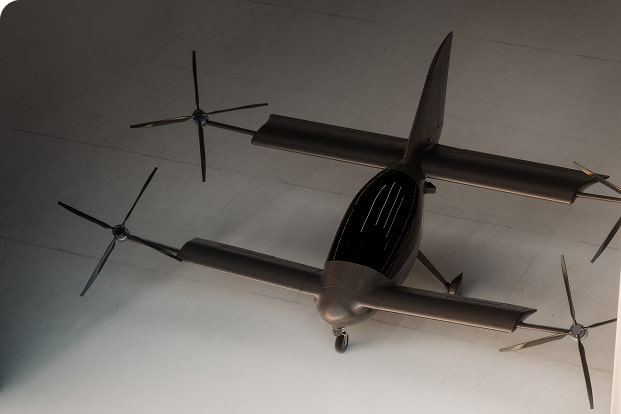
Stratomast is a liquid-hydrogen-powered, remotely piloted high-altitude platform designed for ultra-long-endurance, station-keeping operations at approximately 60,000 ft, above conventional air traffic delivering wide-area direct-to-device 4G and 5G mobile connectivity. Stratomast will also offer earth observation and sensing capabilities.

The programme builds on more than £100 million of development to date and successful demonstrations, including the world’s first 5G calls from the stratosphere.

Setting out a practical blueprint for routine high-altitude operations

At present there is no routine way for such aircraft to reach the stratosphere from UK airports. Project STRATA will produce an Airspace and Air Traffic Management (ATM) Integration Blueprint and Roadmap to set out the procedures, technologies, data services and coordination arrangements needed for routine high-altitude operations in UK airspace.

This project, endorsed by NATS, the UK’s en-route air navigation service provider, will engage regulators, airports, airlines, general aviation and the military. Its outputs will be shared with the CAA, NATS and the wider industry, giving every future UK high-altitude operator a head start. STRATA will also examine whether stratospheric platforms could be used to strengthen the wider aviation sector, by relaying surveillance signals (ADS-B) to improve coverage and safety for all airspace users.

How the project encompasses the wider aims of UK aviation

Project STRATA also strives towards the UK’s wider ambitions for cleaner aviation. Stratomast is powered by liquid hydrogen and WMS is already working with the CAA through its Hydrogen Challenge and Hydrogen Regulatory Sandbox on the certification and operational readiness of hydrogen-powered aircraft. STRATA’s airspace work will run alongside and remain consistent with that programme.

For the wider aviation community, the project is designed to protect what already works: predictable controlled airspace, no disruption to commercial flights and no transfer of costs onto existing airspace users as stratospheric operations begin to scale up.

Richard Deakin, CEO, World Mobile Stratospheric, said: “High-altitude platforms have the potential to transform connectivity, sensing and other critical services. The team at WMS is thrilled to be able to build on our thought leadership work for ICAO, to ensure the UK is ready to support routine stratospheric operations safely and at scale through this work on Project STRATA.”

The delivery team

WMS leads the project, bringing the operator’s perspective and a decade of high-altitude platform expertise, whilst envAero and Trax International will lead airspace, ATM and stakeholder engagement activities, helping ensure the resulting framework is practical, evidence-based and applicable across the wider high-altitude aviation sector.

Related

CAA reveals participants in next round of Hydrogen Sandbox
CAA Aviation House, Crawley, Gatwick.
CAA reveals participants in next round of Hydrogen Sandbox
Three organisations have been chosen to take part in the third round of the Civil Aviation Authority’s Hydrogen Challenge, which over the past three years has supported projects developing solutions to transform flight through the safe introduction of hydrogen to fuel manned and unmanned aircraft.
Aerospace

5 Sep 2026

Skyports partners with Oita Prefecture to develop Advanced Air Mobility network
Skyports Oita MoU signing September 2026
Skyports partners with Oita Prefecture to develop Advanced Air Mobility network
Skyports Infrastructure has partnered with Oita Prefectural Government to explore routes, vertiport locations and future air taxi services ahead of a planned 2028 launch.
Aerospace Member News

4 Sep 2026

Wales aerospace, defence, security and space sectors add £2bn to economy
Welsh flag
Wales aerospace, defence, security and space sectors add £2bn to economy
According to new ADS data, Wales’ aerospace, defence, security and space industries contributed £2 billion to the economy in 2025, and supported more than 18,500 highly skilled jobs.
HMS Queen Elizabeth begins NATO Allied Force Reaction role in Northern Europe
HMS Queen Elizabeth sails to strengthen NATO readiness in UK and European waters
HMS Queen Elizabeth begins NATO Allied Force Reaction role in Northern Europe
The Royal Navy's aircraft carrier is rebuilding operational readiness while taking on a key command role within NATO's rapid-response force.
Defence

7 Sep 2026

SubSea Craft unveils MARS USV modular payload cassette system
SSC MARS USV
SubSea Craft unveils MARS USV modular payload cassette system
The new payload cassette system for SubSea Craft's MARS USV is set to transforms payload integration for maritime operations.
Supacat begins building HMT Extenda vehicles for Czechia’s special forces
HMT
Supacat begins building HMT Extenda vehicles for Czechia’s special forces
Supacat has started production of 18 HMT Extenda vehicles for Czechia's special forces, with deliveries due to begin in 2027.
Defence Member News

4 Sep 2026

Wales aerospace, defence, security and space sectors add £2bn to economy
Welsh flag
Wales aerospace, defence, security and space sectors add £2bn to economy
According to new ADS data, Wales’ aerospace, defence, security and space industries contributed £2 billion to the economy in 2025, and supported more than 18,500 highly skilled jobs.
Open Cosmos selected for UK satellite communications framework
Earth from space.
Open Cosmos selected for UK satellite communications framework
Open Cosmos is to provide secure communications to the UK Government’s Tactical Communications (TacSys) framework, with the company’s LEO constellation supporting UK ambitions to build a resilient sovereign network to avoid reliance on mega-constellations.
Serco awarded RAF Fylingdales early warning radar contract
RAF Fylingdales
Serco awarded RAF Fylingdales early warning radar contract
As part of the contract, a new software analytical tool developed by Serco - with the RAF and UK Space Command - is set to enhance RAF Fylingdales' detection and tracking system.
SubSea Craft unveils MARS USV modular payload cassette system
SSC MARS USV
SubSea Craft unveils MARS USV modular payload cassette system
The new payload cassette system for SubSea Craft's MARS USV is set to transforms payload integration for maritime operations.
BMT launches Maritime Autonomous Systems e-learning course
eFleet
BMT launches Maritime Autonomous Systems e-learning course
As autonomous technologies rapidly evolve and the autonomy skills gap widens, BMT's maritime autonomy specialists have developed a new e-learning course to cultivate broader understanding of autonomy beyond specialist engineering teams.
Open Cosmos selected for UK satellite communications framework
Earth from space.
Open Cosmos selected for UK satellite communications framework
Open Cosmos is to provide secure communications to the UK Government’s Tactical Communications (TacSys) framework, with the company’s LEO constellation supporting UK ambitions to build a resilient sovereign network to avoid reliance on mega-constellations.