Pulsar’s Sunbird set to reduce mission fuel requirements

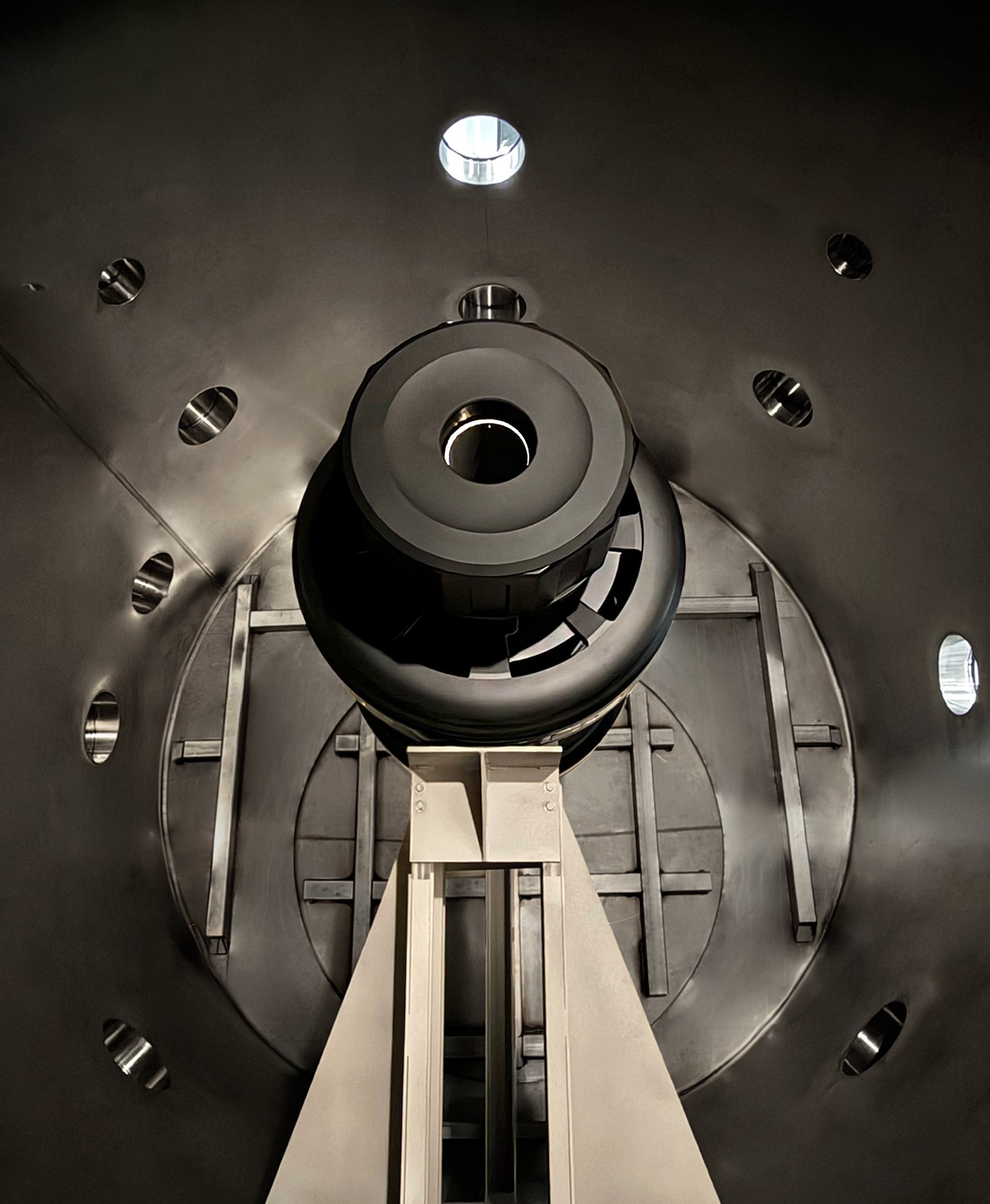
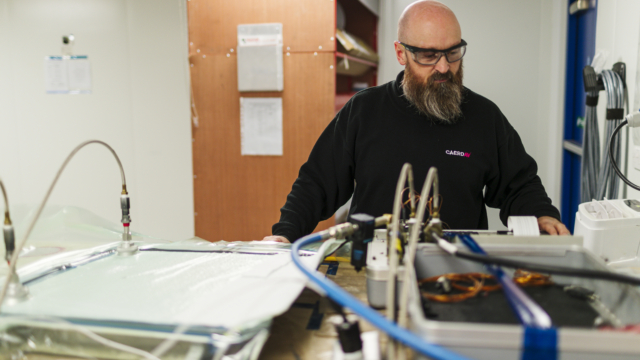
Above: Sunbird front view in Chamber.
Courtesy Pulsar Fusion
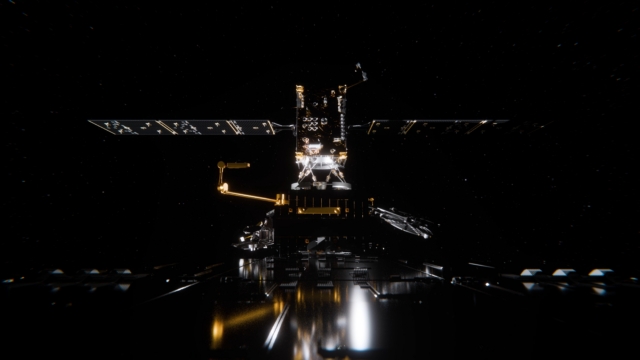
Rather than relying on heavy chemical propulsion systems launched from Earth, Pulsar’s approach stations a reusable tug in low Earth orbit. A crewed spacecraft launches lighter aboard a commercial rocket, docks with Sunbird and receives the full ~4.1 km/s delta-v needed for lunar transit, delivered by ultra-efficient fusion propulsion with a specific impulse of 10,000–15,000 seconds.
Key performance metrics
~900 kg of fusion fuel replaces approximately 8,600 kg of chemical propellant
Greater than 90% reduction in in-space propellant mass
~55% lower total launch propellant requirements (based on Pulsar modelling)
Sunbird offers additional advantages that extend well beyond propellant efficiency:
- Reusability – The tug remains in orbit for repeated missions
- Megawatt-scale onboard power – Enabling new operational capabilities
- Increased payload capacity – Freed mass budget for crew systems or cargo
However, these benefits come with a trade-off, namely low-thrust transit times measured in weeks rather than days.
Technical milestone
Pulsar Fusion achieved first plasma in its Sunbird test system in March 2026, marking a significant step toward operational fusion propulsion. This test marks an early step in development, demonstrating plasma confinement within the exhaust architecture of the Sunbird system. The experiment uses a combination of electric and magnetic fields to guide and accelerate charged particles through the exhaust channel.
The next phase of development will see Pulsar gather detailed performance data, including thrust and exhaust velocity, using a thrust balance, E×B probes and RPA measurements. This data will enable Pulsar to plan the first Sunbird mission.
The concept of in-orbit tugs could decouple launch operations from deep-space travel, cutting mission costs, enabling smaller launch vehicles and accelerating the transition to a commercial cislunar economy.
Sign up for our newsletter and get our latest content in your inbox.
Similar Reads

Sign up for our newsletter. Select all sectors relevant to you.
Related