Shell and Rolls-Royce sign MoU on aviation emissions reduction
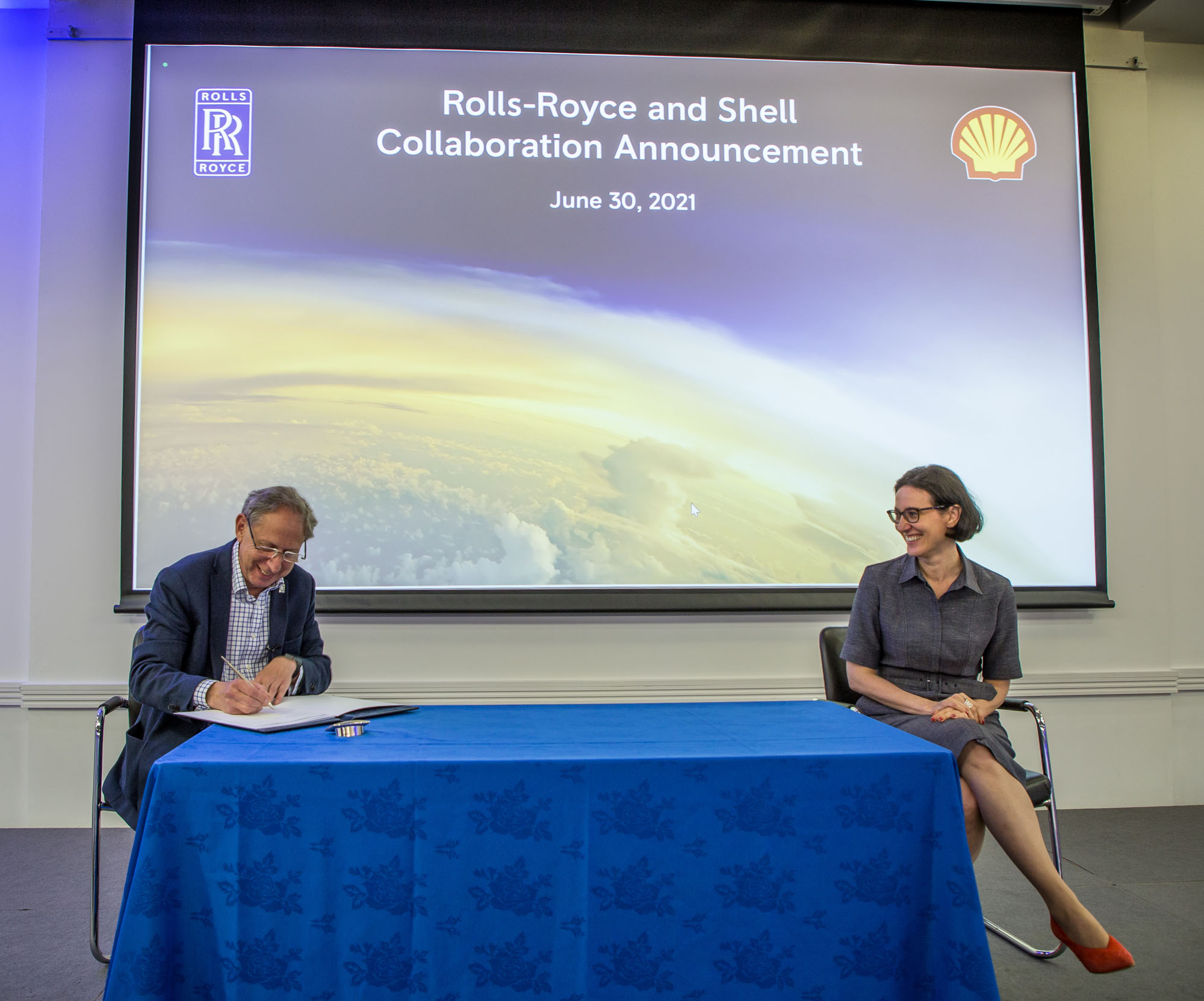
Image courtesy Shell and Rolls-Royce
The long-term agreement builds on more than a century of cooperation between the two companies and embodies a shared perspective that collaboration across the aviation value chain is necessary for the decarbonisation of the sector.
In recognition of the scale of the challenge, the MoU will expand and accelerate several existing areas of cooperation between the companies such as advancing the use of SAF. This includes Rolls-Royce’s new SAFinity service, for which Shell is the exclusive SAF supplier, and working together on demonstrating the use of 100% SAF as a full “drop-in” solution. This will see the companies explore opportunities to help progress the use of 100% SAF towards certification, building on Rolls-Royce’s ongoing 100% SAF testing programme.

“The heritage of collaboration between Rolls-Royce and Shell is a strong foundation for the future, particularly when it comes to our shared ambitions for achieving net zero emissions,” said Anna Mascolo, President, Shell Aviation. “Being from different parts of the aviation value chain means Rolls-Royce and Shell bring complementary expertise, experiences and ideas to the table. Wide-ranging cooperation can drive new solutions that will help the aviation industry and our customers navigate a pathway to net zero.”
“Supporting the decarbonisation of aviation while continuing to enable progress in flight are goals that Rolls-Royce and Shell both share,” said Paul Stein, Chief Technology Officer at Rolls-Royce. “We believe that working together on these aims can deliver benefits for both the development of new innovations as well as collaborating to find ways to unlock the net carbon emissions reduction potential of technology that is already in use today. SAFs will not only power large aircraft and business aviation, but also hybrid electric Urban
Air Mobility (‘Flying taxis’) and the forthcoming generation of hybrid fixed wing city hoppers, which is why we place such importance on the ramp up of SAF adoption across the industry.”
The MoU will explore opportunities for Shell and Rolls-Royce to provide decarbonisation solutions to meet their respective targets to achieve net zero emissions by 2050. This will include both companies contributing technologies and expertise to help reduce operational emissions. Shell will assess opportunities to support Rolls-Royce in reducing travel emissions through the supply of SAF, while Rolls-Royce will lend its technical expertise to advise Shell in its new fuels development, as well as innovative low carbon energy alternatives for new aircraft and power systems.
The MoU will also set the foundation for Rolls-Royce and Shell to work together to proactively engage industry bodies and forums to progress strategic policy issues, and address existing barriers associated with the aviation sector’s pathway to decarbonisation. As part of this, Rolls-Royce and Shell also expect to work closely with stakeholders from across the aviation community to help support wider progress towards net zero.
As part of the MoU, Rolls-Royce and Shell will assess broader opportunities for cooperation across aviation as well as infrastructure in other mobility sectors such as shipping and rail.