Stark Trek…

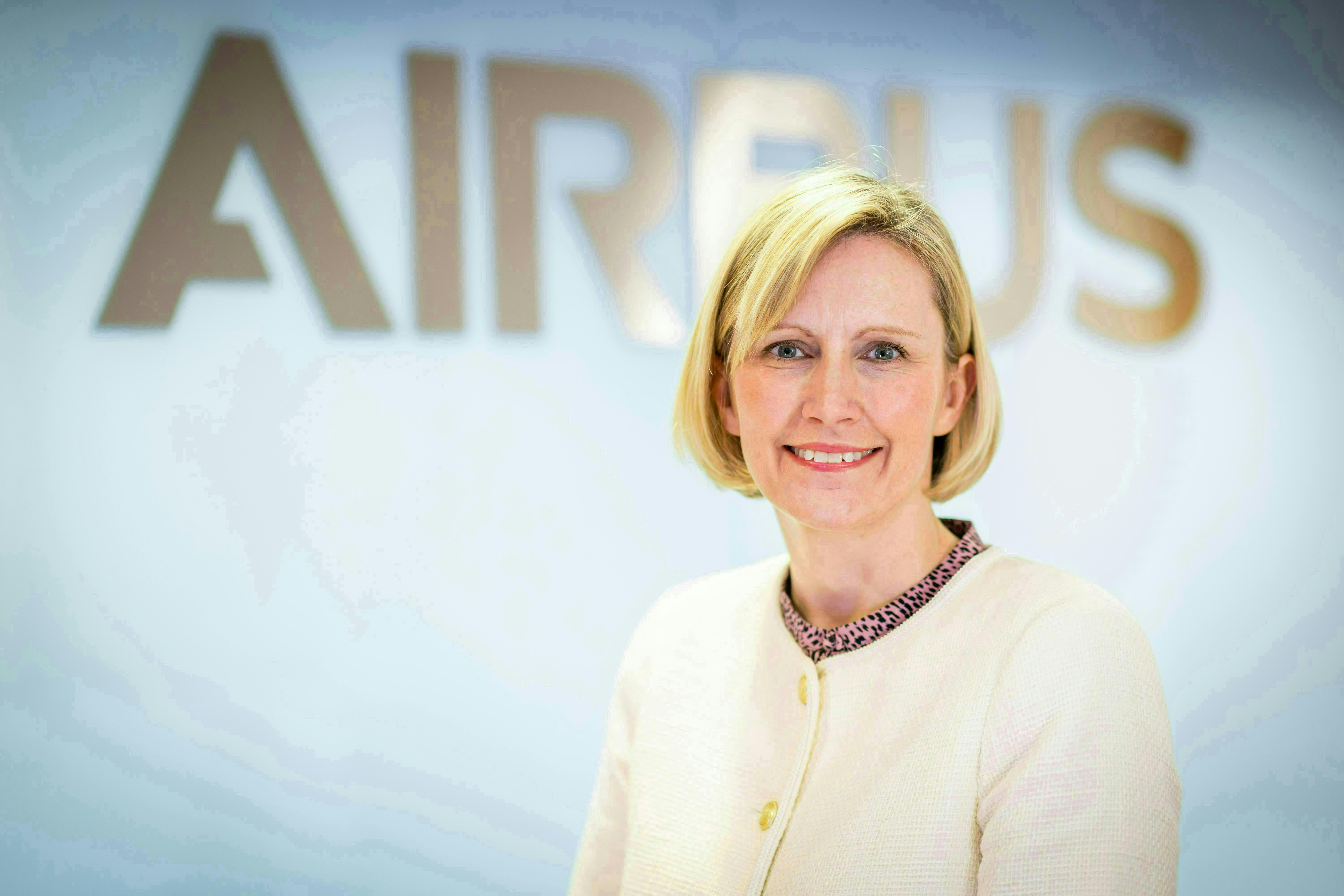
Image courtesy Airbus
Kata Escott said she is in no doubt: “There couldn’t be a more exciting time in space.
“Let’s cut to the chase – it seems to me that it’s now the first domain of modern conflict. If you lose the battle in space, you’re going to lose the war. And that position, I think, has evolved over recent years and is now very stark.
“I think it’s an exciting time to think about space because of the huge commercial and economic potential that we can see.
“I also think it’s exciting because it’s so fast-moving, not just in terms of the threats and how we respond to them but also the opportunity of how we can secure an advantage from space.”
Before joining Airbus in 2023, Escott was a civil servant, supporting governments across a range of national security priorities. Her CV is impressive. Since graduating from Oxford, she has held roles in the Cabinet Office at the centre of the UK government. She supported the National Security Council advising on the Integrated Review and AUKUS.
She also worked on the UK’s response to Russia’s invasion of Ukraine, led the government’s response to the 2013 Snowden intelligence crisis and was the chief of staff to the cabinet secretary from 2016 to 2019.
During her time in the Ministry of Defence, Escott advised ministers and chiefs on policy, operations and planning from the integrated civilian/military headquarters in Whitehall. She also led the 2021 Defence Review, which saw a major reset of UK armed forces and a £16.5 billion investment towards a modern, tech-enabled military.
In 2022, she was also a member of the senior leadership team charged with setting up the new Department for Science, Innovation and Technology (DSIT).
Escott said space has become much more integrated in the way that our government and the ministries around the world think about it: “I see that as a positive step.
“We are, of course, waiting eagerly for the Defence Investment Plan [expected in March] to see quite what the UK is going to invest in.
“And I see positive stuff about how government and industry are collaborating more closely to try and get to a shared view of what we need and how ready we need to be in space.
“Events around the world are bringing into sharp focus the need to not just talk the talk but walk the walk. With rising threats across the globe, for the UK to reliably protect our troops, space investment is crucial.”
But the UK is not alone, with Escott citing “loads of action” across Europe on space, with massive investments from Germany, France and Spain.
“There’s a huge uptick in the threat from space,” she said. “It’s one that we need to be ready for and we still have some way to go.”
Airbus has a solid history in space-based military applications. For more than 50 years, it has worked with the UK to deliver military satellite communications, including the Skynet satellite system. Skynet provides the armed forces with secure sovereign global communications for mobile voice, video, internet and broadcast – 17 NATO allies, including the US military, rely on it.
Airbus Defence and Space already has a contract to build Skynet 6A and, with Lockheed Martin, is awaiting news on the next phase of development: the Skynet 6 Enduring Capability project and its wideband satellite system. The preferred bidder is expected to be selected and a full business case taken forward in 2026.
But Escott has another viewpoint: “I think it would be great to get more of a public debate going about how we want to respond to any space-based threat and be ready for it.
“We’ve been thinking about partnership with the government and building closer connections so that we can respond together.
“It’s clear that the government doesn’t hold all the answers – and it doesn’t pretend to either. One of the things I have been keen to do is to try and break down some of the barriers that exist between government and industry to facilitate some of those conversations. We’ve got to get into a mindset of thinking about space as a system.
"What’s the sort of architecture that you need to set up to make that work? And what’s our shared R&D roadmap?
“We recently had a good session where we invited UK partners from across government departments to come into our factory and we had a great discussion about what our vision for space could be.
“I think there’s an important role for Airbus to help convene the sector in the UK for success. It’s partly why I took on the new role as Vice-President for Space at ADS.”
Moving on to commercial and research projects, Airbus announced last year that it has the contract to build the landing system for the Rosalind Franklin Mars rover, which Airbus also built and is due to launch in 2028.
Escott said: “The Russian space agency was developing that particular part of the mission but when the latest events in Ukraine began, that was obviously no longer tenable. And so we were delighted to win that part of the business for the UK.”
Airbus is also the prime contractor for the European Space Agency’s (ESA) Jupiter icy moons explorer (Juice) mission, which launched in April 2023. It built the spacecraft that will study Jupiter and its ocean-bearing moons –Ganymede, Callisto and Europa – for signs of habitability.
Escott also has responsibility for Airbus’s air power and connected intelligence businesses.
Airbus announced in October 2025 that it intended to merge its space business with those of Thales and Leonardo. If the deal gets regulatory approval it will create a single entity for satellite and space systems with £5.6 billion revenue and around 25,000 employees by 2027.
Escott said: “We’ll create a European space champion using a structure inspired by the successful MBDA model, ensuring we have a dedicated national entity to protect sovereign requirements. It will give us scale and much greater reach out into the global market. It’s a massive growth opportunity and we’re very excited about it.
“Airbus has about 3,000 people working on space in the UK at the moment and the next biggest company is probably about 250. So we’re a big part of the UK’s sovereign space capability.
“We also had a successful accelerator programme in 2024, where we invited a handful of companies to come into our buildings and they worked with us for 14 weeks to share our knowledge, understanding, expertise and heritage on space.
“We also shared where we see the future and where we’re investing our own resources. That was super successful and this month, with support from the UK Space Agency, we’re going to open our new Launchpad facility, which is an area of space in our Stevenage space headquarters that we’re opening up to companies who we think have potential to grow.
“The idea is to have a rotation of companies coming through for different periods. All of those companies will be connecting with each other but will also have access to a world-class lab, workspace and testing facilities as part of a no-cost residency.
“We also have our Community for Space Prosperity (Cusp) programme. It’s a mechanism through which we’re trying to connect the space community in the UK to inspire the next generation through outreach projects.
“The thing I’m struck by, having left government, is the importance of science and technology for growth and national security. And I’m committed to how the mission here at Airbus is aligned to that.”
Sign up for our newsletter and get our latest content in your inbox.
Similar Reads




Sign up for our newsletter. Select all sectors relevant to you.
Related