The evolving role of actionable intelligence in defence operations
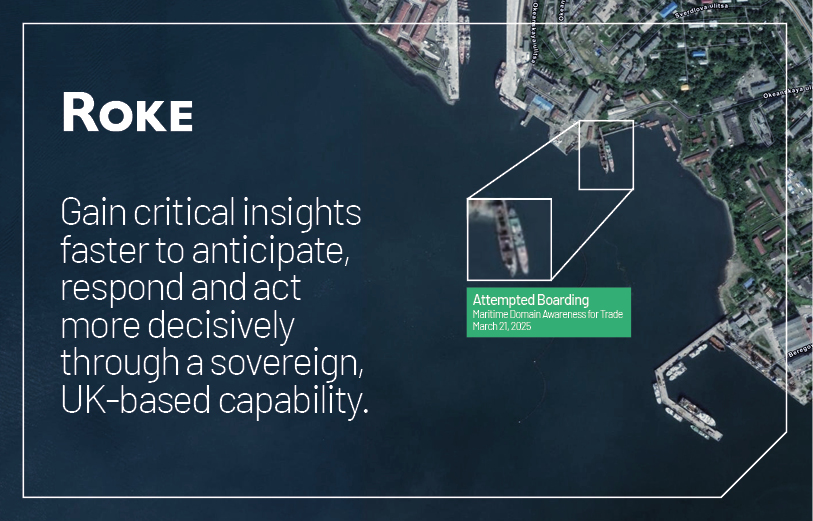
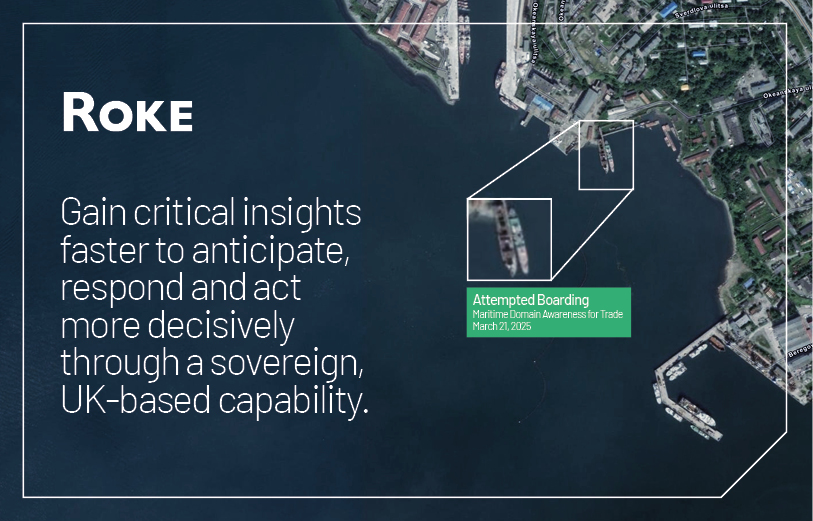
Above: For more information, or to book a demo of Crucible visit Roke’s website.
Courtesy Roke
What needs to be actioned against is nearly unrecognisable compared to even a decade ago. Sanctions evasion and shadow fleets, missile defence and military operations in high-risk regions, require decision-makers to have real-time, actionable intelligence to stay ahead of adversaries and keep people safe the world over.
Platforms used in the defence world need to provide situational awareness aligned with NATO frameworks and help defence organisations and government agencies make informed decisions in volatile operational environments. Bearing this in mind, along with new approaches integrating open-source intelligence (OSINT) and commercial data sources, is going to be crucial going forwards.
Analysts and organisations need to do just that and consider the use of comprehensive, curated intelligence solutions, that allow them to customise parameters, filter out noise and focus on mission-critical insights. Cutting out the drudge work for analysts might seem too good to be true but with advances in technology and artificial intelligence and machine learning (AI, ML) too good to be true is actually simply: true.

From Maritime Deception to Battlefield Intelligence
Maritime deception tactics, such as Iranian and Russian shadow fleet operations, hammer home the challenges of tracking hostile activity in contested environments. We all are aware that sanctions evaders use AIS manipulation, falsified vessel identities and ship-to-ship transfers to mask illicit activities, of course. However, this creates intelligence gaps that can have severe strategic consequences.
The recent US airstrikes in Yemen – prompted by Iranian-backed activities – highlight the need for multi-source intelligence fusion to anticipate threats before they escalate. Defence organisations cannot continue to rely on static intelligence reports. They need dynamic, adaptable tools that enable them to continuously monitor evolving security risks in real time taking into account multiple factors and showcasing them in easy to understand dashboards.
These dashboards provide the opportunity to deploy a force-multiplying capability, enabling defence users to not only track geopolitical hotspots with insights from hundreds of real-time data sources, including commercial conflict databases like ACLED but also to automate intelligence gathering to reduce the workload on analysts, freeing them up for higher-value strategic decision-making. In turn, that human-insight which is still so key and nuanced can deliver battlefield-ready intelligence to operational teams, allowing them to act with confidence in fluid, high-threat environments. Sounds good, right?
Human-Machine Teaming
Ask any defence analyst about intelligence data and you may see eyes glazing over. Spending hours manually pulling, fusing and interpreting information is an inefficient use of skilled resources and one that cannot continue if safety and security is to continue to be of paramount importance.
AI and ML enables the automation of data collection, report generation and trend analysis, ensuring that human analysts spend more time interpreting intelligence – rather than gathering it. Roke has been developing best practice frameworks for this for a number of years and has realised the best points are:
- A bespoke intelligence experience – users must be able to curate and filter insights rather than relying on static reports with pre-determined parameters.
- Access to a vast intelligence ecosystem – platforms must ingest commercial intelligence from hundreds of global data sources, as well as proprietary threat data.
- Expert support from platform providers – platform providers must supply not only the tools but also the specialist analysts needed for forensic deep dives.

Bridging the Gap
Timely intelligence can mean the difference between mission success and failure. Whether supporting missile defence research, planning operations in unstable regions, or monitoring adversarial activities: intelligence is strategic but actionable intelligence is non-negotiable.
As global security threats intensify, solutions that ensure actionable insights are achieved faster must be prioritised.
At Roke we work to three principles:
- Flexible, real-time intelligence tooling that integrates seamlessly into NATO-aligned situational awareness frameworks.
- Be a force multiplier for analysts, reducing cognitive load and increasing efficiency in threat assessment and operational planning.
- Be a sovereign, UK-based capability, ensuring that critical defence intelligence remains within trusted national security frameworks.
Threats are more widespread than before and far more varied in number. The right platforms that help develop the right information and intelligence have the very real potential to equip defence organisations with the intelligence edge they need to anticipate, respond and act decisively in an unpredictable world. We’re proud to be a part of that.
For more information, or to book a demo of Crucible, visit Roke’s website.
Sign up for our newsletter and get our latest content in your inbox.
Similar Reads





Sign up for our newsletter. Select all sectors relevant to you.
Related