UK hydrogen airport trial sets out roadmap for further studies

A new report into the UK’s first airside trial of multiple hydrogen-powered ground support equipment (GSE) has confirmed that hydrogen can be safely and effectively integrated into airport ground operations, whilst setting out a series of essential next steps needed to accelerate hydrogen adoption and decarbonisation across the aviation sector.


Image courtesy Regional & City Airports 


The Zero Carbon Turn project, led by Exeter Airport (part of Regional & City Airports) in collaboration with Cranfield University, TUI, ULEMCo, Boeing and MULAG and supported by the CAA as part of the Hydrogen Challenge Sandbox programme, brought together three different hydrogen technologies to support a live turnaround of a TUI Boeing 737.

Its objective was to demonstrate, test and evaluate multiple hydrogen-powered ground support technologies in a real airport environment to build operational knowledge, safety cases and evidence to support future hydrogen use and net zero ambitions at airports.

The trial, conducted at Exeter Airport, successfully demonstrated a hydrogen internal combustion tug, a hydrogen fuel cell baggage tractor and a hybrid hydrogen–diesel GPU operating together airside, achieving several UK firsts. 

Although the first regular commercial operations of hydrogen aircraft may still be some years away, there is a recognised need to lay the groundwork in terms of developing the regulatory framework and industry know-how to support hydrogen aircraft once they enter service.

Following its success, a further trial will take place at Exeter Airport later this month in partnership with Cranfield University and ULEMCo, using a hydrogen-powered GPU to simulate a series of aircraft turnarounds in winter conditions. The work is being funded by the Connected Places Catapult and will provide further insight into how hydrogen systems perform in real-world operating conditions.

Cranfield University has now published a technical report into last April’s Zero Carbon Turn project, setting out its achievements, key learnings and next steps.

While the report highlights the opportunity for airports to adopt hydrogen technologies to support decarbonisation initiatives in the very short-term, is also emphasises the need to shift from one-off demonstrations to longer, broader and more integrated trials.

Dr Thomas Budd, Associate Professor of Airport Decarbonisation, Cranfield University and author of the report, said: “This project delivered several UK firsts, but its greatest value lies in what it tells us about the road ahead. To prepare for hydrogen-powered aircraft and large-scale adoption of hydrogen GSE, the industry must expand research to further real-world conditions, explore storage and refuelling approaches and formalise knowledge-sharing across the sector. Airports want to decarbonise and GSE manufacturers are rising to the hydrogen challenge, but there is a pressing need to bridge the infrastructure gap."

Stephen Wiltshire, Managing Director or Exeter Airport, which is part of the Regional & City Airports group, said: “The Exeter trial has proven that hydrogen ground equipment works – and works safely – in a real operational environment. As the report highlights, regional airports like ours will be among the first to handle hydrogen-powered aircraft, and we are natural testbeds for developing these technologies. The priority now is to build on this progress. Our winter trial this month is an important next step in strengthening the evidence base for wider hydrogen adoption across UK aviation.”

The Cranfield report highlights a number of UK first from the Zero Carbon Turn project including:

  • The first concurrent use of multiple pieces of different hydrogen fuelled equipment at a UK airport.
  • The first time a hydrogen fuelled GPU has been used to power a commercial aircraft in the UK. 
  • The first time a hydrogen fuelled aircraft tug has been used with a commercial passenger aircraft in the UK.
  • The first application of a hybrid hydrogen/diesel dual-fuel piece of equipment at an airport.
  • The first application of green hydrogen (produced via electrolysis using renewable energy) at an airport in the UK.

Looking ahead, the report identifies the need to conduct longer-duration trials in varied, real-world conditions; the need to test alternative hydrogen storage and refuelling models; the need for a formal knowledge-sharing platform for the industry to avoid duplication and accelerate progress; and the need to refine regulatory pathways to accommodate further trials.

Download a copy of the report here.

Related

The Vickers VC10: The British airliner built for a different kind of flying
Vickers VC10
The Vickers VC10: The British airliner built for a different kind of flying
The VC10 remains a reminder of a time when British engineering took a different path from the competition and set a new level in design and comfort.
Aerospace

15 Nov 2026

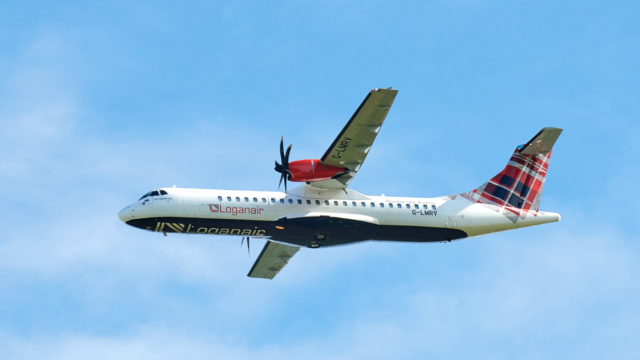
Why the UK has so few domestic flights outside London
With fewer regional routes, strong competition from rail and airlines favouring more profitable international services, flying outside London has become increasingly difficult.
Aerospace

15 Nov 2026

UK flights impacted by US nationwide ground stop as knock-on effects continue
Heathrow Airport
UK flights impacted by US nationwide ground stop as knock-on effects continue
The US Transportation Secretary blamed ageing infrastructure and overloaded TDM routers for the nationwide FAA ground stop.
Aerospace Security

14 Nov 2026

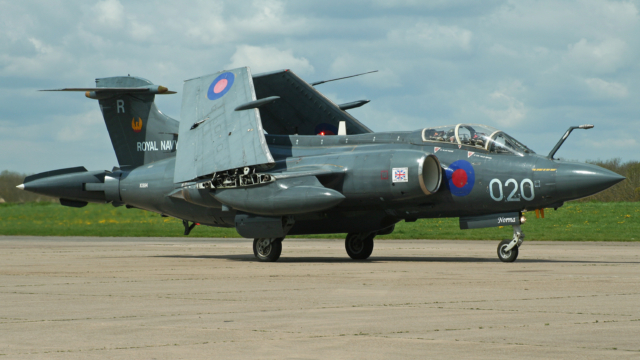
The history of the Blackburn Buccaneer: from Royal Navy service to the Gulf War
Blackburn Buccaneer
The history of the Blackburn Buccaneer: from Royal Navy service to the Gulf War
Few British aircraft enjoyed a second act quite like the Buccaneer, which proved its worth from the Cold War to Operation Granby.
Defence

14 Nov 2026

UK faces 41% rise in Russian naval activity as undersea threat grows
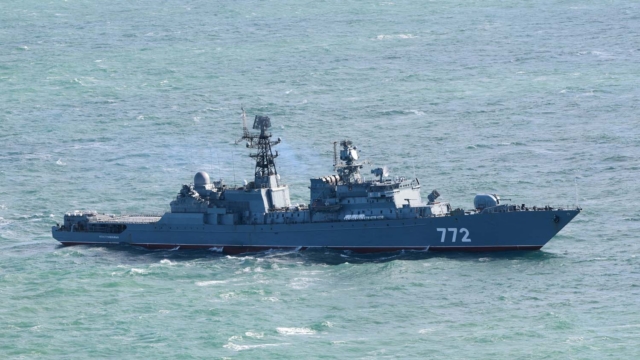
The Russian Navy's Neustrashimy-class guided-missile frigate is shadowed by an 815 NAS-operated Wildcat HMA2 as it transits the English Channel on 10 October 2026. Image: MOD Crown Copyright/Royal Navy
UK faces 41% rise in Russian naval activity as undersea threat grows
Russian naval activity around the UK has increased by 41% this year, prompting fresh warnings over threats to UK security, undersea cables and critical infrastructure.
Defence

13 Nov 2026

New facilities opened for Air C2 Force at RAF Leeming
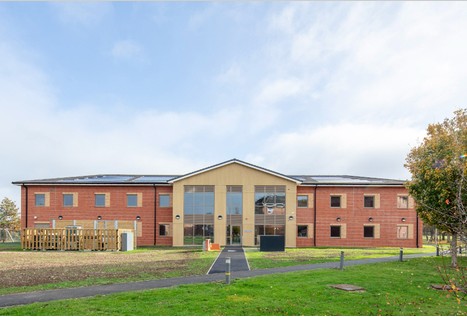
The new Single Living Accommodation building at RAF Leeming.
New facilities opened for Air C2 Force at RAF Leeming
Delivered under the MoD’s Defence Estate Optimisation (DEO) Portfolio, the opening of new sustainable infrastructure at RAF Leeming will allow the Air C2 (Command and Control) Force to complete their move to the station.
Defence Member News

13 Nov 2026

Protecting satellites is not enough to keep the UK’s critical services running
Steve Knibbs, director, Vodafone business
Protecting satellites is not enough to keep the UK’s critical services running
Protecting satellites alone cannot guarantee continuity. Steve Knibbs argues for resilience across the infrastructure supporting the UK’s critical services.
Insights Space

15 Nov 2026

Serco acquires QinetiQ’s US business
Satellite orbiting earth
Serco acquires QinetiQ’s US business
It was announced today that Serco's acquisition of QinetiQ’s US business has been agreed, substantially expanding the defence capabilities of Serco, whilst strengthening QinetiQ's balance sheet and enabling it to concentrate its resources on the UK, European, NATO and key allied defence and security markets.
Defence Member News Space

12 Nov 2026

UK military satellite Titania reaches orbit as MoD trials space-threat sensors
Titania Satellite
UK military satellite Titania reaches orbit as MoD trials space-threat sensors
The UK's second ISTARI military satellite, Titania, reaches orbit as trials launch for a three-site sensor network to monitor potential threats to spacecraft.
Defence Space

9 Nov 2026

UK flights impacted by US nationwide ground stop as knock-on effects continue
Heathrow Airport
UK flights impacted by US nationwide ground stop as knock-on effects continue
The US Transportation Secretary blamed ageing infrastructure and overloaded TDM routers for the nationwide FAA ground stop.
Aerospace Security

14 Nov 2026

Smiths Detection to supply Norwegian Customs with advanced mobile screening systems
Norwegian Customs
Smiths Detection to supply Norwegian Customs with advanced mobile screening systems
Advanced mobile vehicle screening systems from Smiths Detection will enable Norway to enhance its capability to inspect goods traffic across key border and customs locations.
Member News Security

13 Nov 2026

NCSC warns UK businesses of scams following global Microsoft outage
Laptop user pressing Windows key
NCSC warns UK businesses of scams following global Microsoft outage
Cybercriminals could exploit the global Microsoft outage, warns the NCSC, as an AI expert urges UK businesses to have a Plan B when systems fail.
Security

13 Nov 2026