Wayland Additive installs Calibur3 AM system for RAF
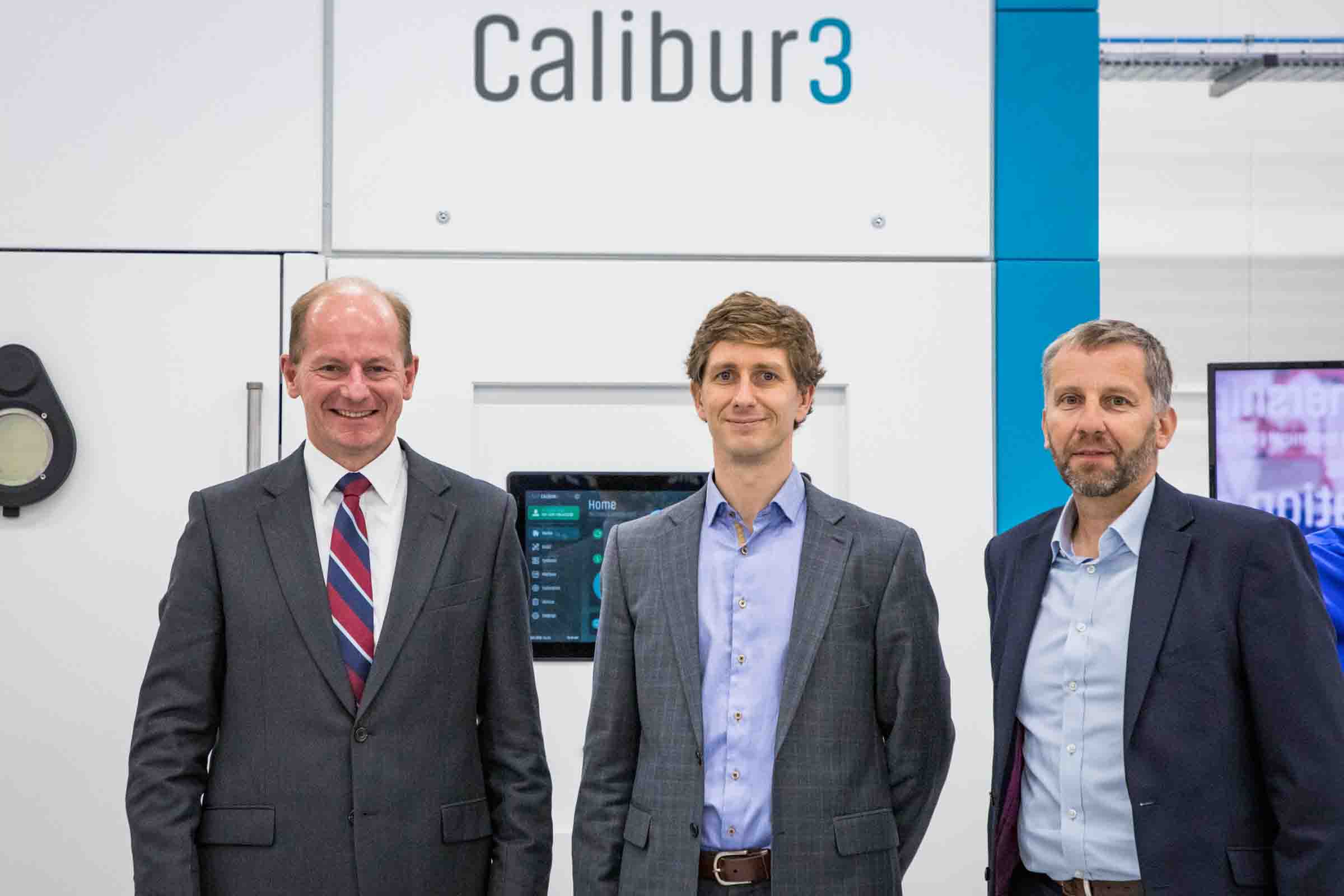
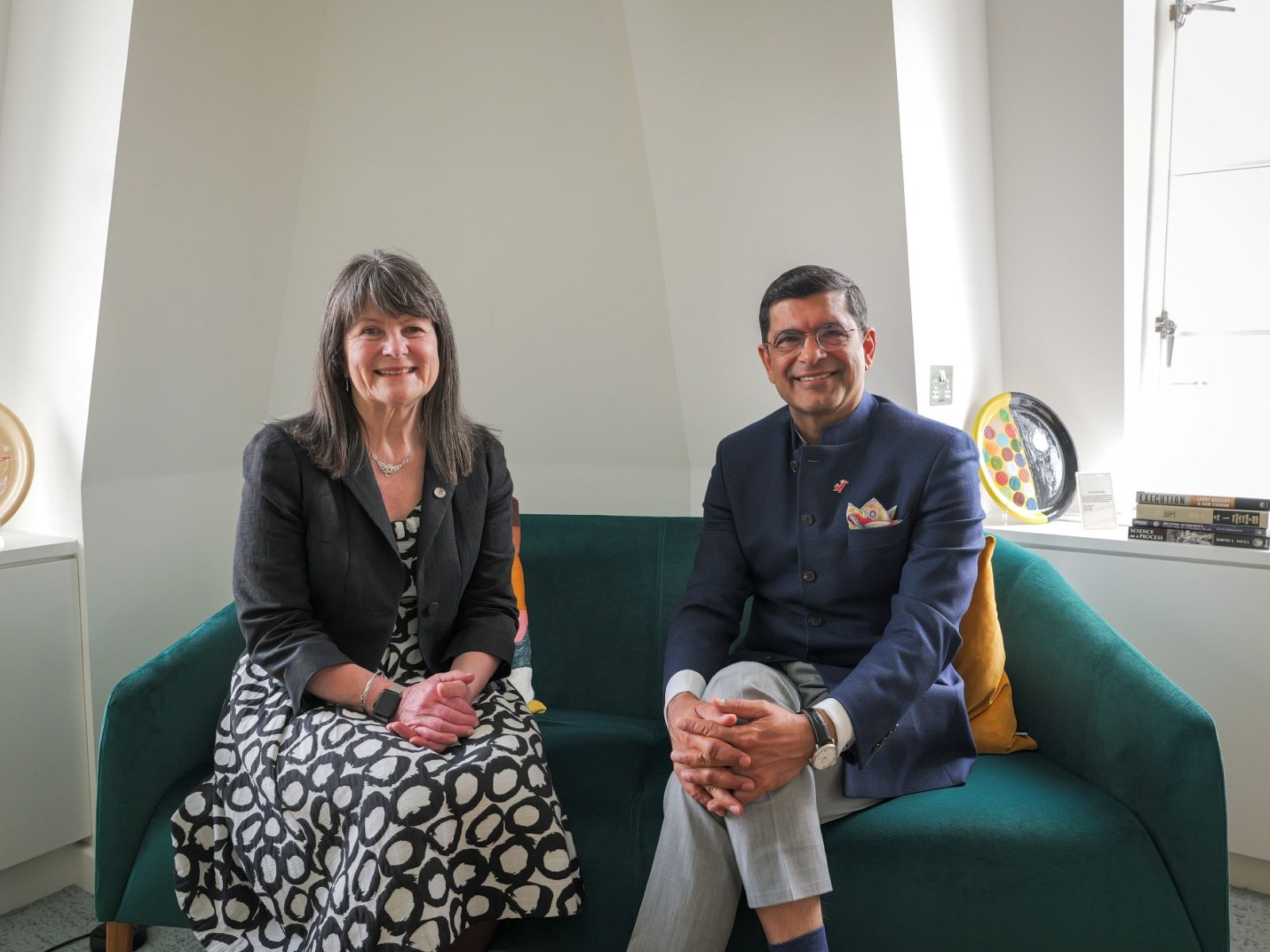
Above:
(left to right) Air Chief Marshal Mike Wigston CBE ADC, Chief of the Air Staff, Royal Air Force (RAF), Will Richardson CEO and Robert Weston Head of Product, Wayland Additive.
Courtesy Wayland Additive
Equipped with advanced 3D printing and scanning equipment, the opening of the new centre marks the Royal Air Force’s first steps into advanced component manufacturing.

The centre was formally opened by Air Chief Marshal Sir Mike Wigston, Chief of the Air Staff. Sir Mike noted that ‘success has many parents’ and praised the combined efforts of 71 (IR) Squadron, the RAF Rapid Capabilities Office and Project ASTRA in bringing ‘Project Warhol’ as it is known, to life.
Helen Close, Heritage Officer for the Women’s Engineering Society, spoke about the life of Hilda B. Hewlett. The first British woman to hold a pilot’s licence, she led the development of aircraft technologies as a manufacturer of military planes in World War One.
Squadron Leader Auchterlonie, Officer Commanding No 71 (IR) Squadron said: "Hilda B Hewlett was unquestionably a pioneering visionary, who embodied courage and a spirit of innovation. It is because of this, that we have proudly named our new facility after her."
Introduced by No 71 (IR) Squadron, additive manufacturing (AM) is a brand-new capability for the RAF and will ultimately provide a breakthrough in the RAF’s ability to design and produce its own aircraft spares on demand.
Will Richardson, CEO at Wayland Additive said: “The sale of our technology to the RAF is exciting for all involved. The Calibur3 has been developed to overcome common problems with metal AM, and uses the NeuBeam® process which delivers on all of the advantages of metal electron beam (eBeam) powder bed fusion (PBF) technology, while overcoming the troublesome issues that have traditionally limited wider adoption.
"The Wayland team comprises decades of experience with eBeam research, development, and implementation in the semi-conductor industry. This has allowed them to address and solve the charging issues that have, until now, restricted EBM processes, with the fully neutralized NeuBeam process.
"The RAF could one day use metal AM to design and produce its own aircraft spares on demand, which plays perfectly to the characteristics of our technology. We offer the ability to process a wider palette of metal materials allowing the production of lighter and stronger parts often used in aerospace applications as well as highly wear resistant parts.
"For the RAF, spare parts can be produced using the Calibur3 system in days not months — negating issues related to logistically challenging supply chains — at much lower cost, and without the need to stock an array of off-the-shelf spare parts.”
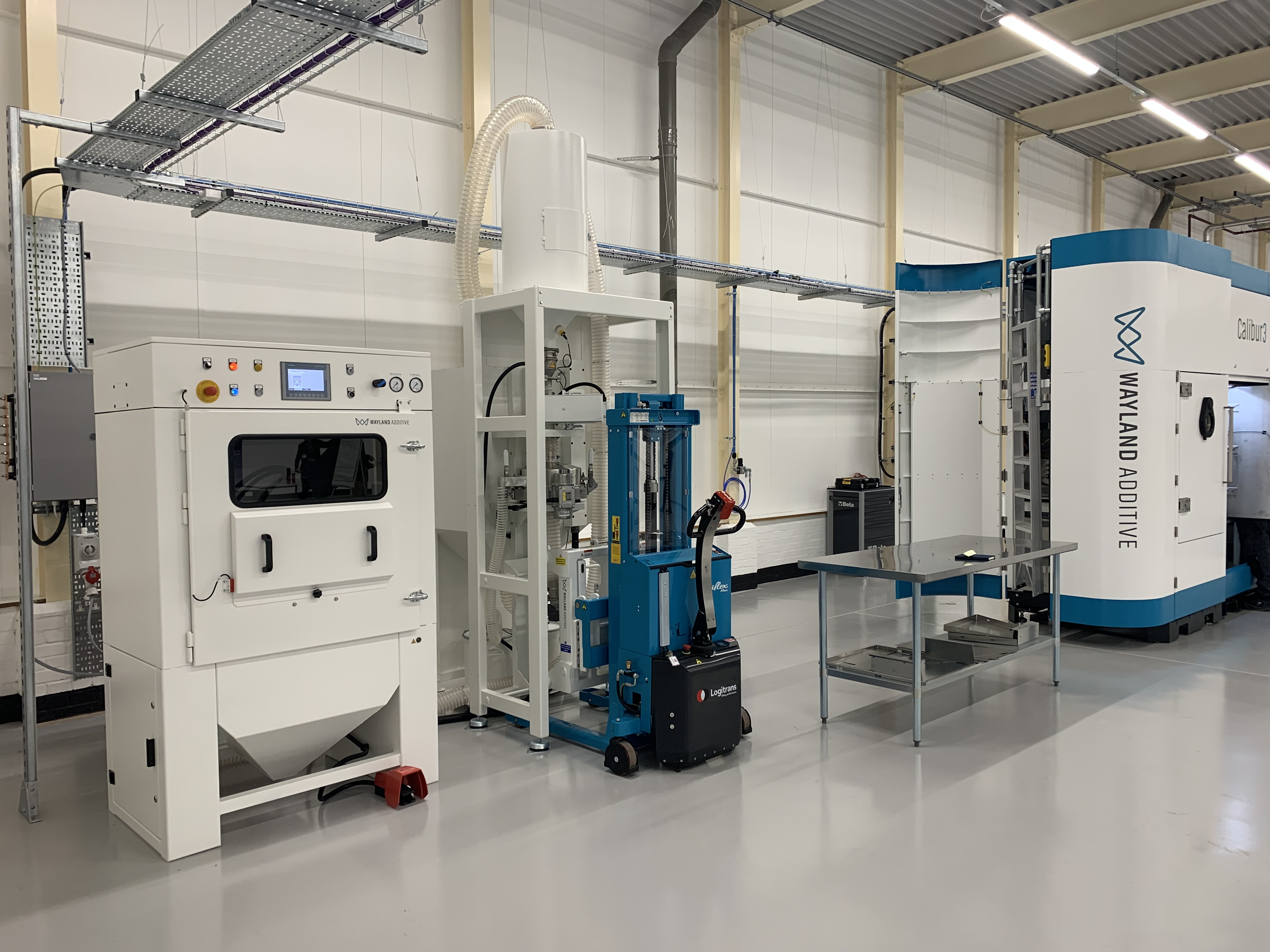
Above:
The Calibur3 metal AM system from Wayland being installed at the Hilda B. Hewlett Centre for Innovation.
Courtesy Wayland Additive
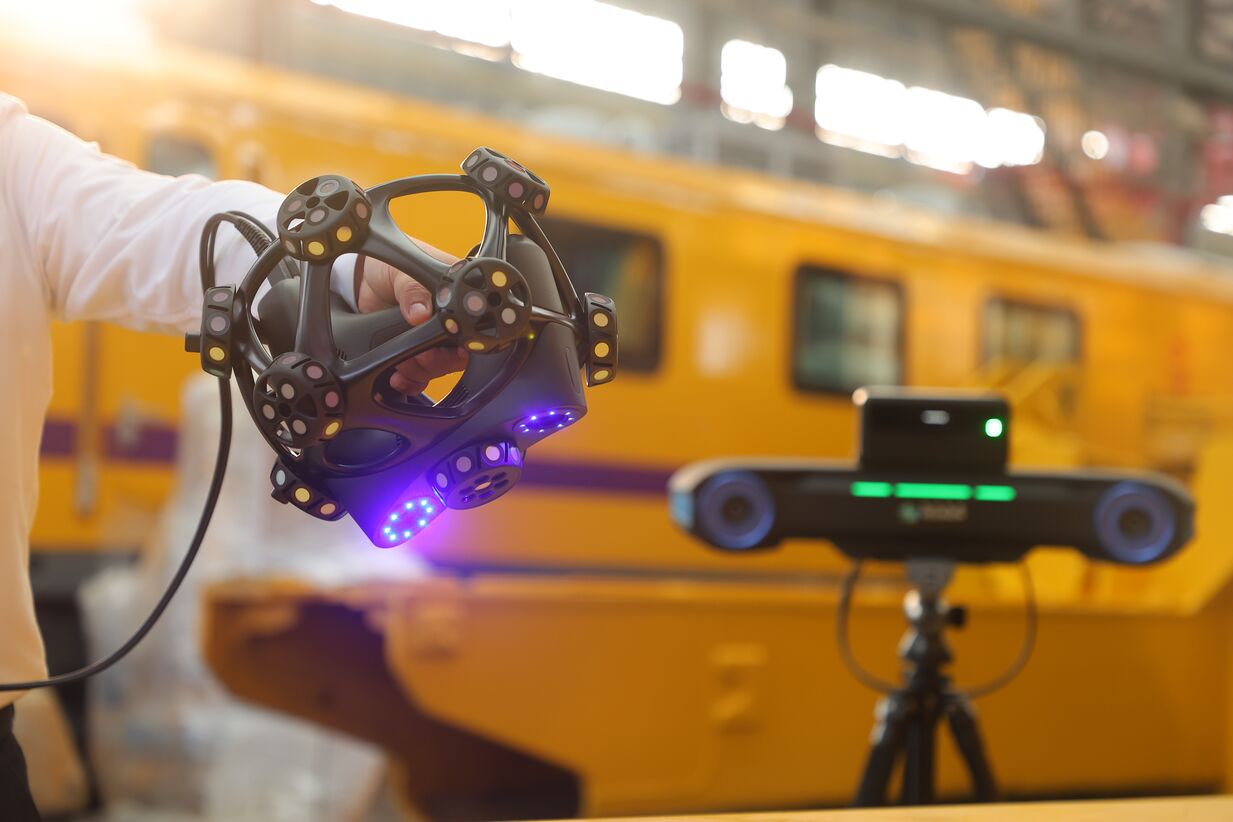
Residing in the Hilda B. Hewlett Centre alongside Wayland’s Calibur3 system is a Nikon HTX 540 CT scanner, which can examine objects in minute detail. In addition, Renishaw’s RenAM 500 metal printer and a Stratasys Fortus 450 polymer printer provide reliable 3D printing capabilities which perfectly complement the Wayland and Nikon machines. Working in metal or plastic, the new equipment can reproduce aircraft components with microscopic accuracy and precision.
Before any manufactured component can be fitted to an aircraft, however, months of rigorous testing lies ahead with every imaginable aspect of the additive manufacture process examined in scientific detail.
Squadron Leader Allen Auchterlonie, Officer Commanding No 71 (IR) Squadron said: “One day the Royal Air Force will be able to manufacture structural aircraft components on main operating bases, or even in deployed locations. We’ll be able to save money, but more importantly we won’t have to wait for spares to be delivered and we can get aircraft repaired far more quickly. The opening of this facility is a landmark in this exciting journey.”
The 71 (IR) Squadron is based at RAF Wittering and is a part of the A4 Force. Group Captain Nick Huntley commander of the A4 Force Elements said: “Additive manufacturing offers us enormous potential to repair and modify our aircraft quicker than ever before. Introducing any new capability into the RAF is a serious undertaking and the team at 71 Squadron have gone about this with professionalism and almost obsessive diligence. This is a genuine milestone; a real achievement and I am proud that this project has been led by the A4 Force.”
Wayland Additive continues to command a strong forward order book for the Calibur3 system and is focused on key application areas across industry, with a specific focus on the aerospace, medical, energy/power generation, motorsport/automotive, mining and mineral extraction and military and defence sectors.