Advancing UK Aerospace, Defence, Security & Space Solutions Worldwide
  • Home
  • /
  • Aerospace
  • /
  • ZeroAvia's SuperStack Flex LTPEM expands UAV & VTOL capabilities
Aerospace

ZeroAvia's SuperStack Flex LTPEM expands UAV & VTOL capabilities

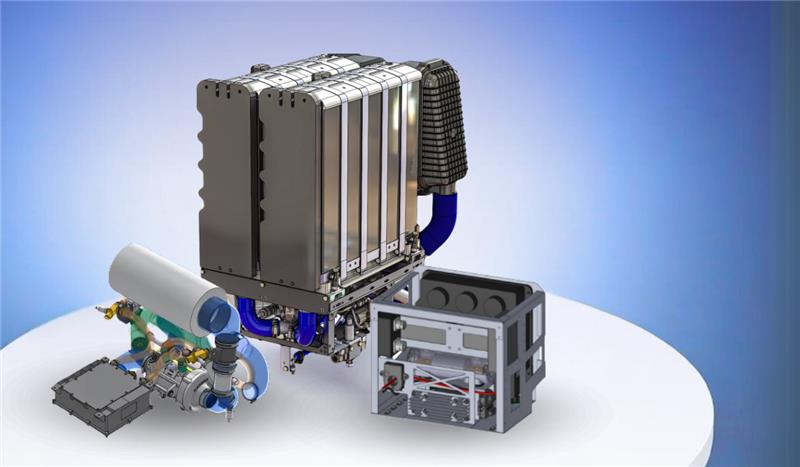
ZeroAvia's SuperStack Flex highly-customisable Low Temperature Proton Exchange Membrane (LTPEM) fuel cell architecture has achieved over 1.0kW/kg specific net power at a full system level, including thermal management system and has been successfully demoed in a 150kW net power configuration for a major customer.

Image courtesy ZeroAvia
 
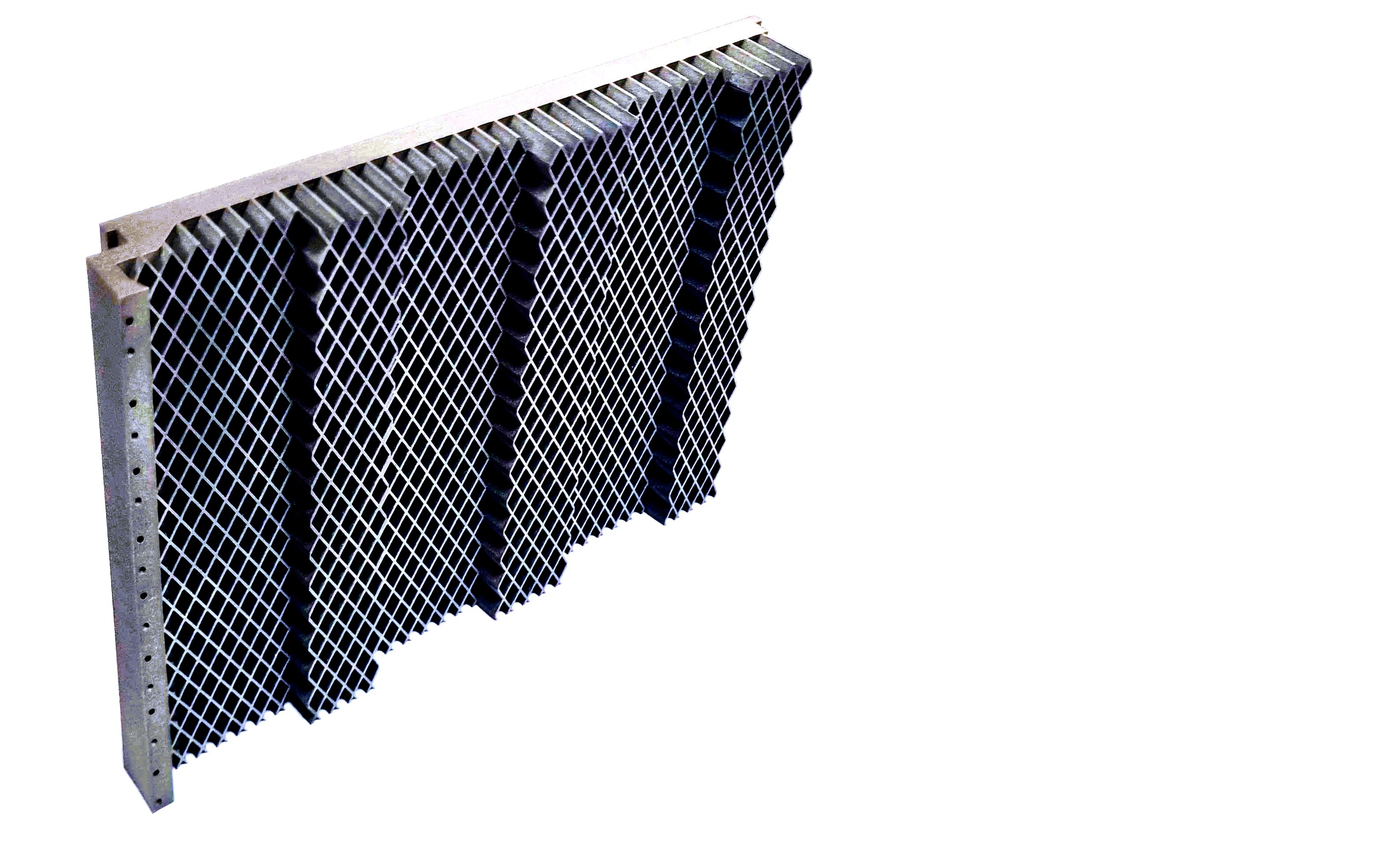
The industry leading testing results have been made possible thanks to ZeroAvia’s innovative use of additive manufacturing techniques and will expand UAV / VTOL capabilities of the systems, as well as opening new applications in aerospace and other sectors.  
 
Using selective laser sintering (SLS) powder-bed additive manufacturing processes, ZeroAvia has been able to perform high velocity cycles of design, build and test, and quickly combine typical parts or their functions into new monolithic structures. The key parts in the SuperStack Flex’s balance of plant – Anode, Cathode and Coolant Manifolds, thermal management, humidification and air compression systems – have been reduced from over 200 parts to less than 100, with ~50% weight and volume reductions. Fewer parts mean lighter, more compact, more reliable and less costly systems.   
 
The ZeroAvia SuperStack Flex is a modular fuel cell power generation platform that can be scaled up or down between 100kW and 600kW net total continuous power applications. The lightweight, aviation optimised balance-of-plant, has been developed as a best-fit approach for many Unmanned Air Vehicles (UAV) with further potential applicability across aerospace and in marine and ground vehicles.  
 
As well as its flexibility for different power requirements, the SuperStack Flex design enables separation of the core systems, meaning it can be highly versatile and efficient to integrate into different airframes, overcoming space constraints.  
 
The flexibility of the SuperStack Flex system enables customers to incorporate the technology and accelerate their R&D on fuel cell powered platforms. ZeroAvia’s focus on certification of its fuel cell engines and its traction with the CAA and FAA, provides confidence to customers working towards regulatory approval of their platforms.

Advertisement
Security & Policing Rectangle

Val Miftakhov, Founder and CEO,  ZeroAvia, said: “Our team has really knocked it out of the park and delivered some truly world-leading engineering here. We are creating step-change aerospace fuel cell systems at a fraction of the usual development time and cost. SuperStack Flex can be customised to an aircraft OEM’s precise custom needs, power requirements and aircraft layout, so we can get them flying on fuel cells quickly and thus improve the flight duration, lifecycle and the total cost of ownership of their aircraft.”

Advertisement
ODU RT

The breakthroughs in low temperature fuel cell technologies in the SuperStack Flex development closely follow other major milestones for ZeroAvia in early 2025: the company’s 600kW electric propulsion system (EPS) received its FAA G-1 issue paper and a first customer purchase of the standalone 600kw EPS.


Advertisement
ECS leaderboard banner
Wales to be UK launchpad for advanced autonomous tech

Aerospace Defence Security

Wales to be UK launchpad for advanced autonomous tech

20 February 2026

Thousands of skilled workers in Wales will be involved in the design, testing and manufacture of advanced autonomous technologies and unmanned systems, as a landmark £50 million Defence Growth Deal positions the nation at the forefront of Britain’s defence future.

NPAS increases aircraft available for deployment

Aerospace Security

NPAS increases aircraft available for deployment

19 February 2026

In January this year, the National Police Air Service (NPAS) was able to increase the number of aircraft that were available for operational deployment.

Alloyed secures ATI Programme funding to develop ABD-1000AM

Aerospace

Alloyed secures ATI Programme funding to develop ABD-1000AM

19 February 2026

Developer and manufacturer of advanced metallic components, Alloyed Ltd, has secured funding from the ATI Programme for an ambitious £1 million project to accelerate the development of ABD-1000AM, a next-generation nickel-based superalloy designed for additive manufacturing.

Birmingham Airport publishes new sustainability strategy

Aerospace

Birmingham Airport publishes new sustainability strategy

19 February 2026

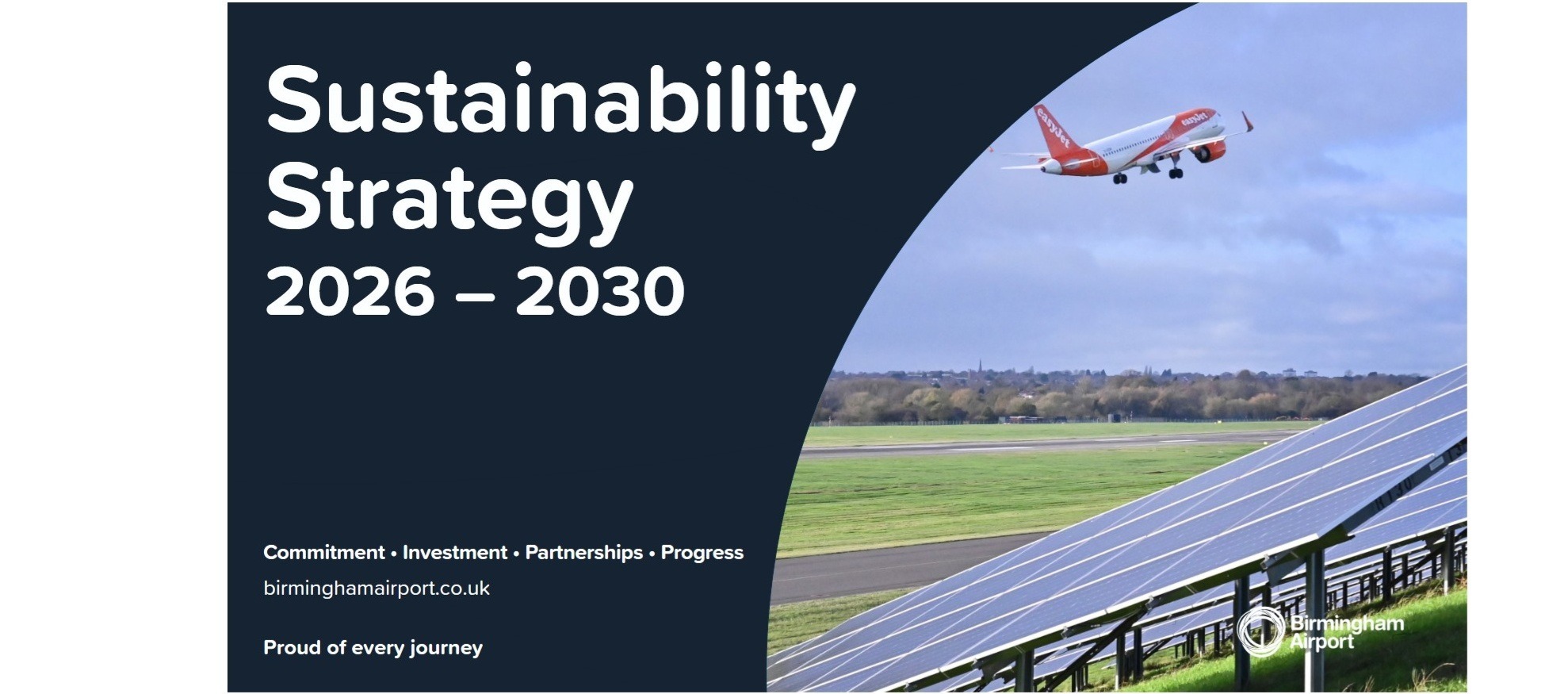
Birmingham Airport (BHX) has published its new sustainability strategy for 2026 to 2030, outlining the next strategic steps on its journey to becoming a more sustainable and socially responsible business.

Advertisement
PTC rectangle
UK hydrogen airport trial sets out roadmap for further studies

Aerospace

UK hydrogen airport trial sets out roadmap for further studies

18 February 2026

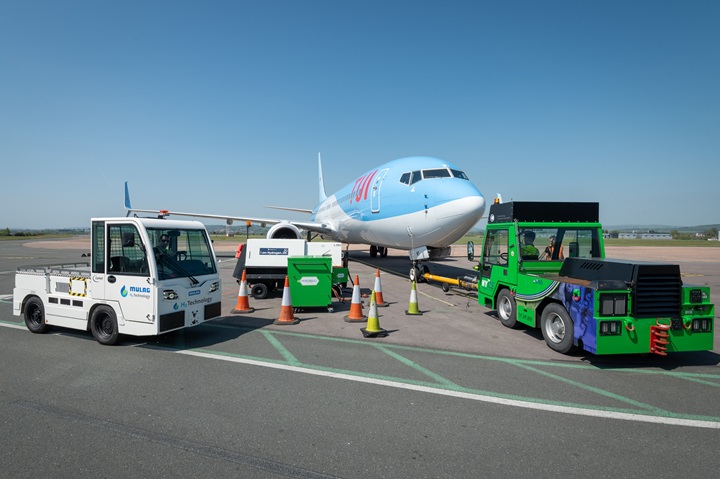
A new report into the UK’s first airside trial of multiple hydrogen-powered ground support equipment (GSE) has confirmed that hydrogen can be safely and effectively integrated into airport ground operations, whilst setting out a series of essential next steps needed to accelerate hydrogen adoption and decarbonisation across the aviation sector.

Kent collaborates on Pre-FEED study for Eq.flight SAF demo plant

Aerospace

Kent collaborates on Pre-FEED study for Eq.flight SAF demo plant

18 February 2026

Integrated energy services partner, Kent, has collaborated with Equilibrion during a successful bid for funding from the UK Department for Transport’s Advanced Fuels Fund (AFF) and with that funding for Equilibrion and its partners, Kent is delivering the Pre-Front-End Engineering Design (Pre-FEED) for Eq.flight, an advanced power-to-liquids ...

Advertisement
PTC rectangle
Advertisement
ECS leaderboard banner