Ground intelligence: The strategic reality beneath the strategic base

This is a guest post by Dave Cage, Business Development Manager at Lucion. Dave has more than 20 years’ experience in geotechnical engineering, asset management and infrastructure project delivery. With a background spanning ground investigation, earthworks design, project management and client liaison, he combines technical expertise with commercial insight to develop long-term client partnerships across the highways, rail and energy sectors. Dave holds a BSc (Hons) in Applied Geology and is also a STEM Ambassador, Mental Health First Aider and elected member of the National Highways Supplier Diversity Forum.

“This is the most dangerous period that I have known.”
When the Chief of the Defence Staff, Air Chief Marshal Sir Richard Knighton, made that statement on the BBC, it underlined the scale of the challenge facing the United Kingdom.
His warning that threats to the UK are greater than at any point since the Cold War comes during a significant period for defence planning. Escalating Russian activity, increasing airspace incursions and the need to prepare for longer, more demanding conflicts are reshaping the national conversation around readiness, resilience and mobilisation.
This follows the 2025 Strategic Defence Review, which placed renewed emphasis on readiness, resilience, mobilisation and the importance of the Strategic Base. It also comes as the Government has now published the Defence Investment Plan, setting out how major defence investment will be directed into capability, infrastructure, industry and readiness over the coming years.
Much of the public discussion has understandably focused on the most visible and compelling aspects of military capability, including weapons systems, drone technology, manufacturing capacity and modernised infrastructure. Less attention is often given to the enabling foundations that make those capabilities possible in the first place.
However, the Defence Investment Plan recognises that military capability cannot exist independently of the infrastructure that supports it. New capabilities require resilient bases, energy systems, utilities, logistics networks and operational estates capable of sustaining them over the long term.
But a more fundamental question is hiding beneath the surface. How much of the UK’s future defence capability depends not only on what we build, but on the ground we build it on?
The Strategic Base as a front-line capability
The Strategic Base is the network of critical infrastructure required to ready, deploy, sustain and recover military forces, while also defending against modern hybrid threats. It includes airfields, dockyards, training estates, fuel depots, logistics hubs, communications facilities and other assets essential to national defence.
Historically, this estate may have been viewed as a background support function. That is no longer the case. The Strategic Base is increasingly being recognised as a front-line capability in its own right, with the Strategic Defence Review calling for a more resilient, mobilised and whole-of-society approach to national defence. This shift in focus moves beyond military equipment and personnel to the physical infrastructure on which our military capability depends.

That shift matters. If the UK is to modernise, expand and strengthen its defence estate, it must understand the physical foundation beneath it. From runways and naval bases to ammunition depots, training areas and new strategic infrastructure, ground conditions can directly influence safety, resilience, programme delivery and operational performance.
Understanding the opportunities and constraints presented by geology, geotechnical conditions, contamination, groundwater, buried infrastructure and historic land use is therefore becoming a critical part of defence readiness.
The true cost of uncertainty
The Defence Investment Plan has brought renewed attention to the scale of investment now being directed into UK defence. It sets out major funding decisions intended to support military capability, strengthen the defence industrial base and move the UK towards warfighting readiness.
For those ambitions to be delivered effectively, investment in capability must be supported by investment in the physical estate that enables it. New facilities, upgraded infrastructure, expanded operational sites and more resilient assets all depend on having a clear understanding of the ground and buried environment from the outset.
Yet recent scrutiny from Parliament’s Public Accounts Committee has highlighted a recurring vulnerability across defence planning: uncertainty. In an era where Defence leaders are calling for faster delivery, greater readiness and more rapid mobilisation, reducing uncertainty becomes even more important.
The faster programmes need to move, the less tolerance there is for discovering critical information halfway through delivery. Ground intelligence, therefore, becomes an enabler of pace as much as an exercise in risk management.
Concerns have been raised around delays, contractor confidence, rising costs and the credibility of future capability delivery. While these issues are often discussed at a national budgetary level, the same principle applies directly to physical infrastructure.
Uncertainty rarely becomes cheaper over time. It usually becomes significantly more expensive.
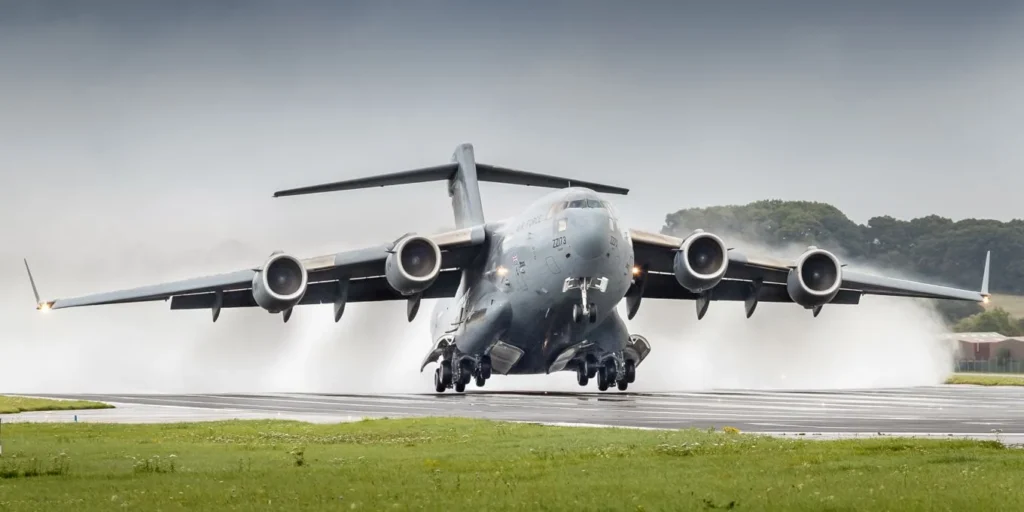
The longer unknowns remain unresolved in a construction or expansion programme, the greater their potential to affect budgets, timelines and, ultimately, operational capability. This is not simply a failure of modern planning. It is also the natural by-product of history.
Many UK defence sites have evolved continuously over decades, and in some cases, centuries. Infrastructure has been extended, repurposed, demolished and modernised across generations of conflict. Utilities have been diverted, fuel systems buried and old structures built over. Records have been archived, superseded, lost or forgotten, while critical site knowledge has often retired alongside the people who held it.
As a result, some of the greatest risks facing future defence infrastructure projects are not always linked to the underlying geology alone. They are legacy constraints, including:
- Undocumented utilities.
- Unknown buried structures.
- Unmapped historic ground hazards.
- Unexploded ordnance.
- Unknown contamination.
When multiplied across one of the largest and most complex estates in the country, these localised risks can quickly escalate into strategic vulnerabilities. The UK is actively preparing for a more demanding defence environment while still carrying the unmapped physical uncertainty of past conflicts beneath some of its most important military sites.
Why ground intelligence matters
Defence organisations place immense importance on intelligence. The purpose of intelligence is to reduce risk, expose hidden threats, improve situational awareness and support better decision-making. No responsible commander would willingly deploy forces into an operational environment with major gaps in situational awareness.
The same principle should apply to the ground beneath strategic assets.
Before a runway is extended, a munitions facility upgraded, or a naval base expanded, commanders, planners and project teams need to understand the hidden environment they are altering.
This requires moving beyond fragmented and compartmentalised information. It requires a joined-up understanding of the relationship between the natural ground, buried infrastructure, utilities, environmental constraints, topography and historical land use.
Ground intelligence is not just a technical exercise. It is a way of reducing operational, financial and strategic risk before it becomes embedded in a programme.
A strategic necessity
At Lucion, this is a challenge we encounter regularly across defence estates, operational infrastructure and nationally significant assets. True resilience cannot be built on fragmented information.
Through our group of companies, we help clients reduce uncertainty by integrating geospatial intelligence, utility mapping, ground investigation and environmental assessment into a clearer, unified risk profile.
As defence strategy redefines the Strategic Base as a front-line capability, and as new investment is directed into capability, infrastructure and readiness, understanding the physical foundation of UK defence is becoming a strategic necessity.
Every undocumented utility, unknown asset and incomplete record represents a potential operational risk.
Uncertainty is never neutral. It delays programmes, inflates costs and can directly affect national readiness.
Ultimately, though, readiness is the reduction of uncertainty before a crisis occurs. The question is no longer whether the UK can afford to map and understand the ground beneath its strategic assets. The question is whether it can afford not to.
Sign up for our newsletter and get our latest content in your inbox.
Similar Reads



Sign up for our newsletter. Select all sectors relevant to you.
Related