


Baker Dearing backs PM’s technical education reforms for 14-year-olds


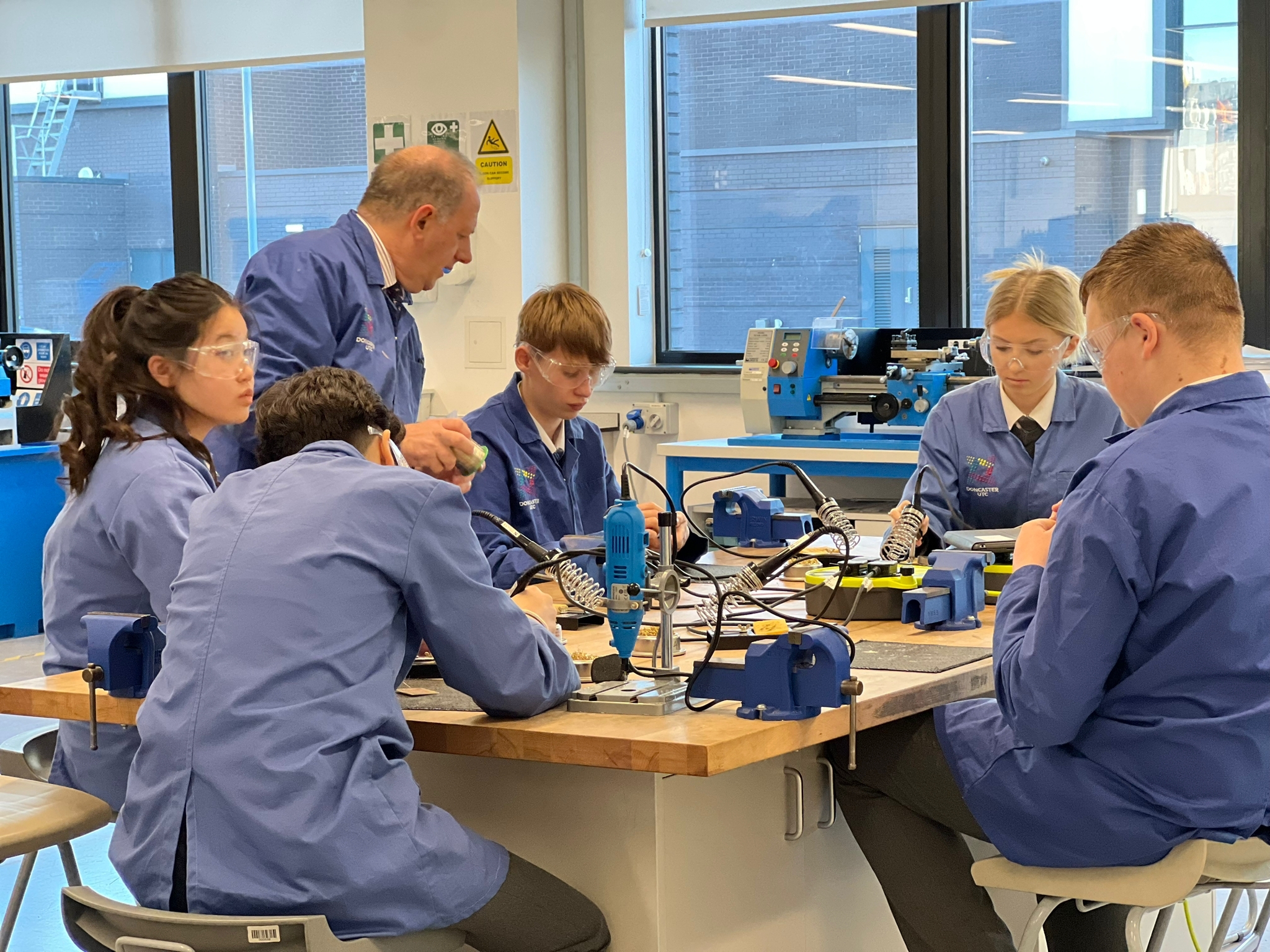
The Baker Dearing Educational Trust has welcomed the Prime Minister’s plans to give 14-year-olds access to technical education and employer-led learning. The Trust says the reforms build on a model that England’s University Technical Colleges (UTCs) have successfully delivered for nearly two decades.
UK government opens up technical training opportunities for Year 10 students
On Monday, the government announced that from Year 10, pupils will be able to combine core academic subjects with technical education, work experience and stronger links to local employers.
The reforms aim to put technical education on an equal footing with traditional academic pathways, with new local technical education routes expected to begin rolling out from September 2028.
Schools, colleges, employers and regional leaders will work together to shape courses that reflect local labour market needs, while Ofsted will also give greater recognition to high-quality technical education.

Kate Ambrosi, Chief Executive of the Baker Dearing Educational Trust, said the announcement validates the UTC approach.
“We are thrilled that the government is adopting a model of delivering high-quality technical education starting at 14 – which our network of University Technical College secondary schools has been delivering for nearly 20 years,” Ambrosi said.
UTC model already delivering employer-led education
The Baker Dearing Educational Trust supports England’s network of 44 University Technical Colleges, which specialise in science, technology, engineering, manufacturing, digital and creative subjects while working closely with universities and employers to design industry-relevant curricula.
Ambrosi said UTCs demonstrate how earlier technical education can improve employment outcomes.
“UTCs are developed with local employers from the ground up so the technical and employability skills and knowledge that students learn is relevant to their local industries,” Ambrosi said.
She also highlighted Baker Dearing’s UTC Sleeve initiative, which enables mainstream schools to introduce employer-led technical pathways alongside traditional academic study.
“We are already helping mainstream schools offer transformative technical education through our UTC Sleeve initiative. This is a technical pathway that sits beside the school’s academic route and, like the Greater Manchester Baccalaureate with which we have supported Andy Burnham, improves lines of sight between the classroom and workplace.”
Strong apprenticeship outcomes
Baker Dearing says the UTC model is already producing significantly better employment outcomes than national averages.
According to the trust:
- Around 20% of Year 13 UTC leavers progress to apprenticeships, compared with 6% nationally.
- Half of UTC apprenticeship starters in 2025 entered higher or degree apprenticeships, compared with 2% nationally.
- Only 5% of UTC leavers become NEET (not in education, employment or training), compared with 10% nationally.
Ambrosi said further action will be needed if the government’s ambitions are to succeed.
“This government has made an excellent start to building parity of esteem between technical and academic education. But we will need more apprenticeships, technical university courses, and bursaries for shortage occupations to meet this country’s skills needs and properly bring down youth unemployment,” she said.
Ambrosi added that schools will require sufficient resources to deliver the reforms effectively.
“Schools must also be provided with the proper funding, resourcing and guidance to deliver high-quality technical education that truly meets local employer need. Baker Dearing is ready to support ministers and schools to effectively implement these new pathways.”
What the Prime Minister announced
The government’s reforms aim to tackle youth unemployment and address persistent skills shortages across key sectors.
Under the proposals:
- Students from age 14 will combine English, maths and science with technical learning linked to regional industries.
- Schools will work directly with employers to provide work experience and careers guidance.
- Technical qualifications will receive equal recognition alongside academic routes.
- School accountability measures and Ofsted inspections will place greater emphasis on technical education.
- Regional mayors and local employers will help shape technical pathways around local economic priorities.
The reforms were prompted in part by concerns that more than one million young people across the UK are not in education, employment or training, with ministers arguing that stronger employer engagement from an earlier age can create clearer routes into skilled careers.
How aerospace, defence, space and security could benefit
For the UK’s aerospace, defence, space and security industries, the reforms could strengthen the long-term skills pipeline just as employers face growing shortages of engineers, technicians, software developers, manufacturing specialists and cyber professionals.
The essential skills required for work in advanced manufacturing, robotics, AI, digital engineering, electronics, precision machining, composite materials and systems integration can best be developed through employer-led technical education as well as traditional classroom learning.
Earlier engagement with employers could also help attract more students into careers supporting programmes such as the Global Combat Air Programme (GCAP), AUKUS, civil aerospace manufacturing, satellite production, defence electronics and cyber security, where companies continue to report recruitment challenges.
The aerospace sector forecasts long-term demand for skilled engineers and technicians. Aligning education with regional employers can reduce skills shortages and increase productivity.
UTCs already have strong partnerships with aerospace and defence employers including Airbus, BAE Systems, Rolls-Royce, Leonardo, GKN Aerospace, QinetiQ and many regional SMEs, giving students exposure to real industrial projects before they leave school. Expanding these models nationally could help create a broader pipeline of apprentices and technicians for industries that underpin both the UK’s economic growth and national security.
Sign up for our newsletter and get our latest content in your inbox.
Similar Reads