

UK MoD interest could see Vertical’s hybrid defence aircraft in service before Valo


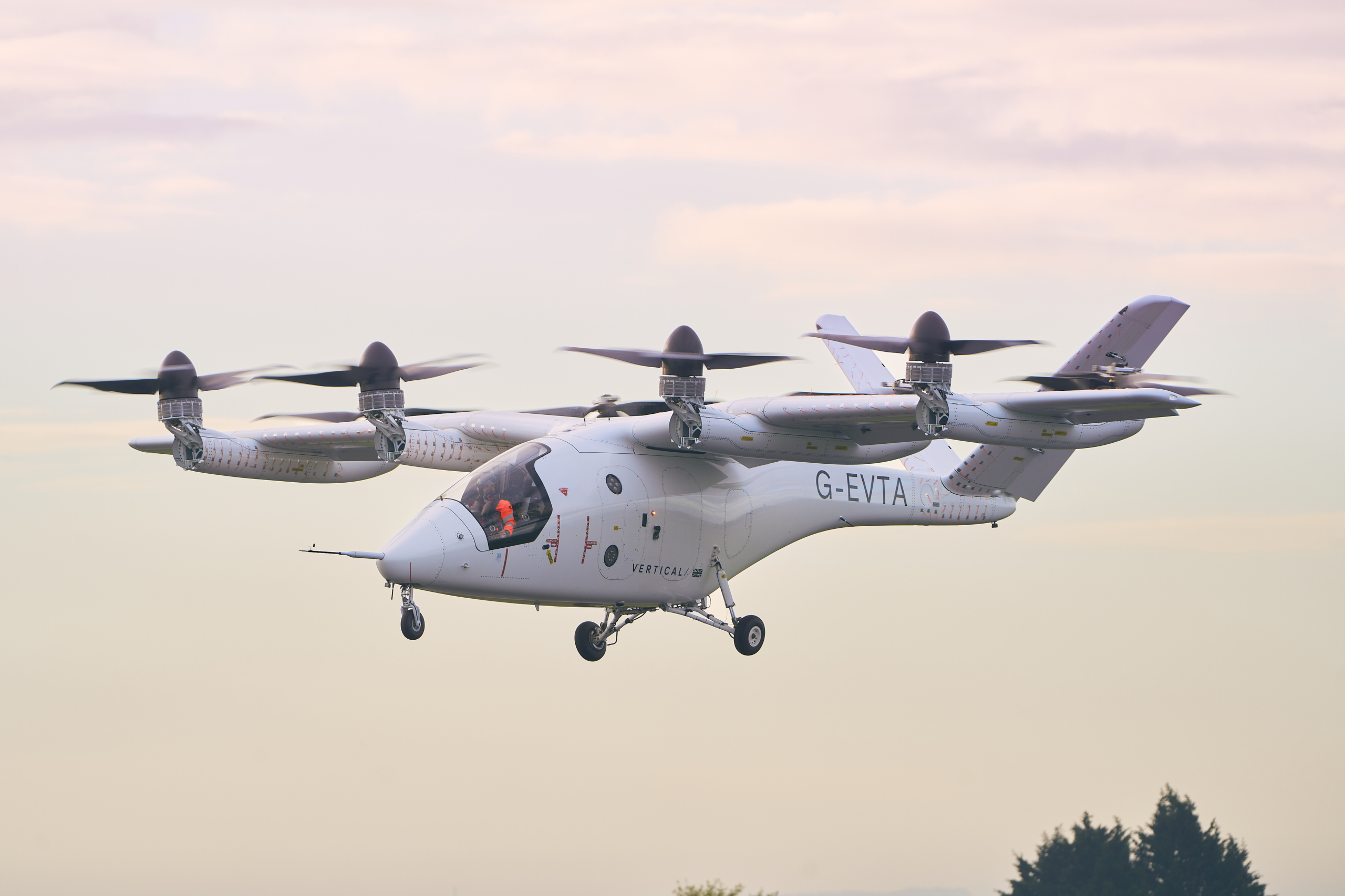
Vertical Aerospace could prioritise the military version of its hybrid-electric aircraft over the all-electric Valo if demand from the UK Ministry of Defence or another military customer supports an accelerated programme.
The company is currently developing battery-electric, hybrid-electric and increasingly autonomous versions of the same aircraft platform. Its battery-electric Valo remains the principal programme and is now targeting UK and European certification in 2029.
However, CEO Stuart Simpson told investors that the order could change.
“We could accelerate this and flip and go hybrid first,” Simpson said during Vertical’s first-half 2026 business update.
“We are well down the road with Valo as an all-electric. But should the UK government come in, or indeed any other military come in and say, ‘Look, we really want this now,’ we can absolutely pull that forward and deliver that either in parallel with the 2029 timeline for the electric or potentially even earlier, depending on certification requirements.”
UK MoD shows interest in hybrid and autonomous Valo
Vertical has secured up to £10 million in additional UK government funding through the Aerospace Technology Institute Programme. The company says that the UK MoD has confirmed its interest in its hybrid-electric and autonomous technology, although no order or funded acquisition programme has been announced.
The hybrid aircraft could support dispersed logistics, medical evacuation, surveillance, reconnaissance and electronic warfare missions. Its longer range and endurance would address missions beyond the practical limits of the battery-electric Valo.
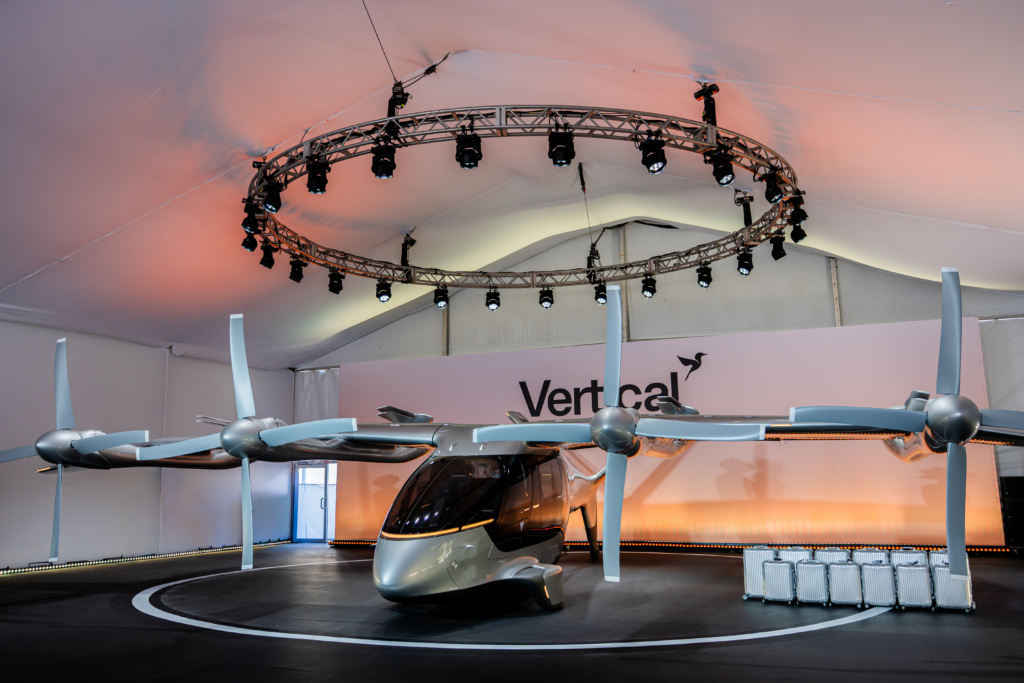
“The UK Ministry of Defence has also confirmed its interest in our hybrid electric and autonomous capabilities, reinforcing the relevance of this common platform strategy,” said Michael Cervenka, Vertical’s chief commercial and strategy officer.
Cervenka described the military aircraft as a derivative of the existing platform rather than an entirely separate design.
“We’ve got three aircraft from one platform,” he said. “We’ve got the pure civil battery-powered aircraft. That remains our core focus. Then hybrid really opens up two options for us. One is a civil variant, which looks incredibly competitive against some of the intermediate single and light twin helicopter market. Then it opens up defence options.”
Vertical’s hybrid Valo scheduled to fly in 2027
The hybrid propulsion system is already undergoing integration testing on Vertical’s HYPER rig at Cotswold Airport. These tests cover the turbine generator, electrical architecture, power management, control systems and responses to potential failures.
The current battery-electric aircraft carries eight battery packs. Vertical plans to remove four of those batteries and replace them with a gas turbine generator for the hybrid version.
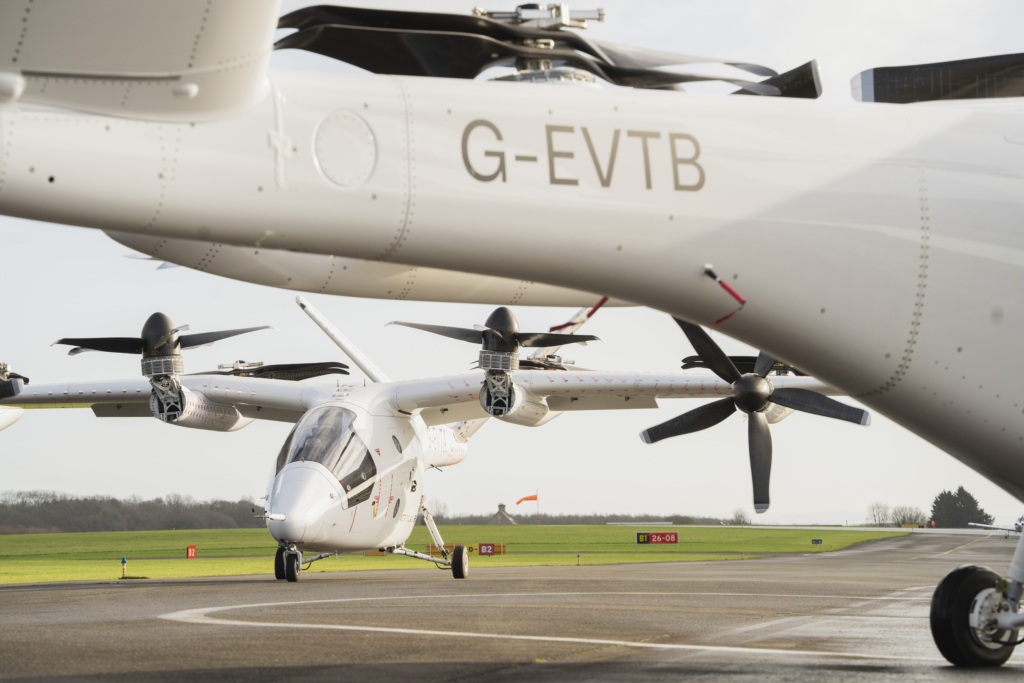
“We’ll be installing the hybrid into Aircraft 3 in Q1 or early Q2 next year,” Simpson said. “Then we’ll take it through its normal flight test procedures.”
“With what we’ve done, we’ve already proven that the aircraft can do transition with electric,” he continued. “This really just substitutes in a different powertrain. There is no huge technology challenge here. We know the powertrain works. We know the aircraft design works.”
Flight testing is expected to begin during the first half of 2027. Vertical also plans to announce a certification and industrialisation partner for the hybrid program within the next six months, including the company that will supply the gas turbine.
Autonomy partnership targets military logistics
Vertical is working with Near Earth Autonomy to integrate autonomous capabilities through the Honeywell Anthem avionics suite already fitted to the aircraft.
Near Earth has previously worked on autonomous aviation programs involving the US Army and Marine Corps, including logistics flights into unprepared landing areas.
“The real beauty we’ve got for Valo is that autonomy system from the beginning was designed to run on the Anthem avionics suite that we have on our aircraft,” Cervenka said. “Rather than having to bolt on additional boxes, essentially that can run on the compute that’s already being certified for Valo.”
Vertical said military applications could provide an earlier route for deploying the technology, while civil operations would move gradually from increased automation towards full autonomy.
“On the defence side, there are clearly a wide range of applications where the technology is already there,” Cervenka said. “We’ll have to go through the necessary approvals, but this is really an execution challenge.”
Sign up for our newsletter and get our latest content in your inbox.
Similar Reads



Sign up for our newsletter. Select all sectors relevant to you.
Related