

HMS Queen Elizabeth begins NATO Allied Force Reaction role in Northern Europe


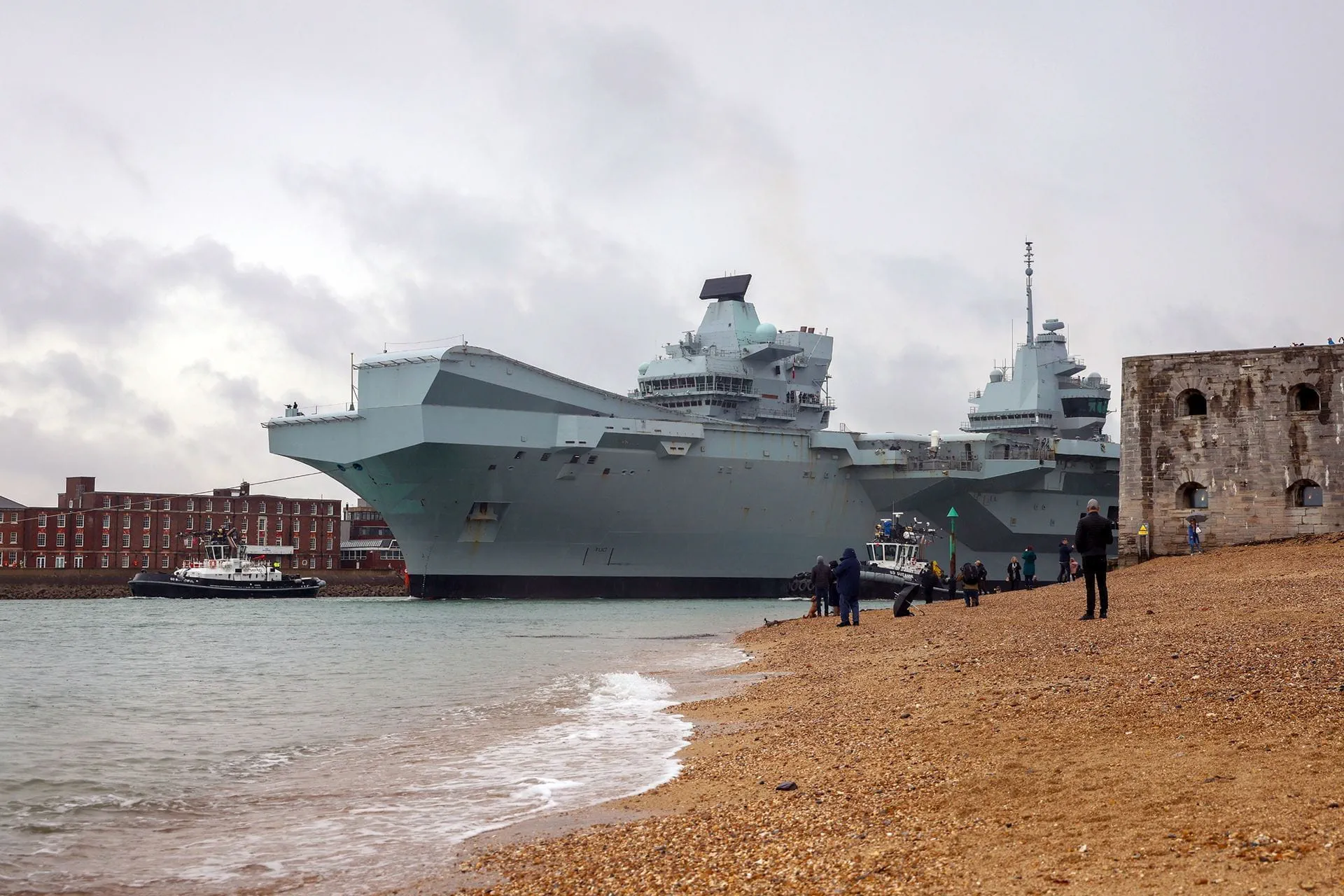
HMS Queen Elizabeth has sailed from Portsmouth for a three month deployment in UK and Northern Europe waters.
The 65,000-tonne aircraft carrier, with more than 800 sailors aboard, will train alongside allied forces after assuming the role of NATO’s Afloat Command Platform for the Allied Reaction Force in July. It is the first time either of Britain’s Queen Elizabeth-class carriers has performed the NATO role.

The deployment will see Queen Elizabeth undergo advanced training under the Royal Navy’s Flag Officer Sea Training organisation, covering the full spectrum of modern naval warfare. The carrier and its embarked battle staff will also rehearse the command of an allied naval force during a crisis.
The programme will continue into 2027 with participation in major NATO exercises. Queen Elizabeth is due to take over from sister ship HMS Prince of Wales as the UK’s flagship and high-readiness strike carrier in late 2027.
Queen Elizabeth takes on new NATO command role
The Royal Navy assumed responsibility for the maritime component of NATO’s Allied Reaction Force in July for a 12-month period. Queen Elizabeth will provide the command platform from which an embarked multinational staff can direct naval operations if the force is activated.
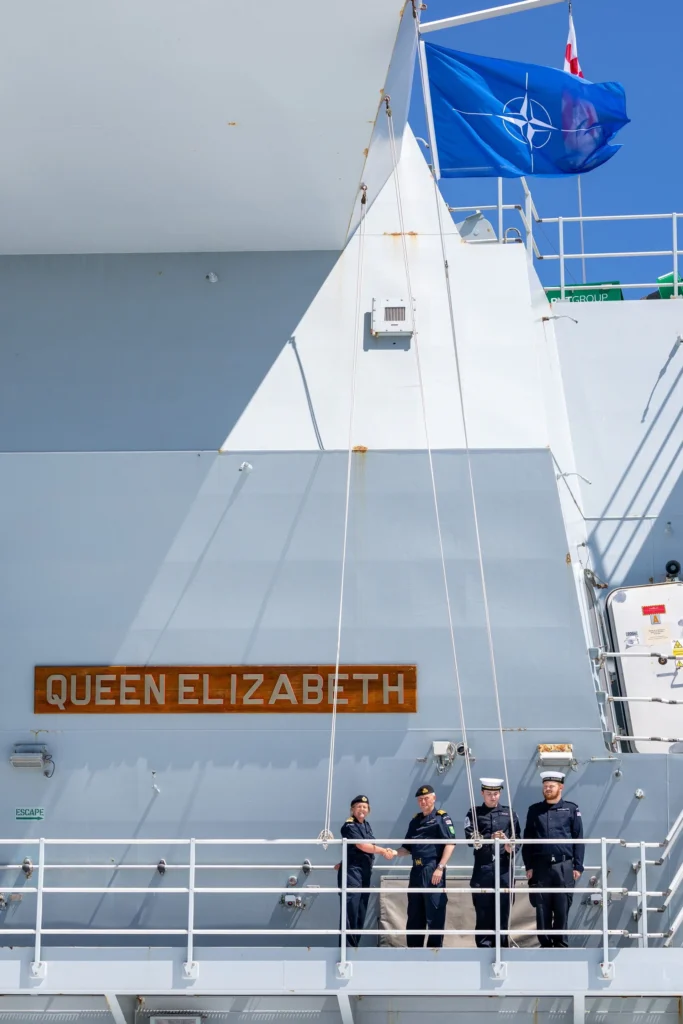
The carrier returned to Portsmouth in May following its second planned docking period at Rosyth and is now rebuilding its aviation and operational readiness.
“We’ve returned from summer leave rested and ready for the next phase of our training,” said Captain Claire Thompson, Queen Elizabeth’s commanding officer.
“Sailing this autumn is a key milestone for both our NATO commitment, as the Afloat Command Platform and also on our journey back to the Royal Navy’s ‘very high readiness’ aircraft carrier, a duty we will resume from our sister ship HMS Prince of Wales in 2027.
“Sailing with an embarked battle staff, integration and training is essential whilst relearning the skills required to conduct safe and effective aviation as we ensure that we are prepared to deliver operational activity at the heart of NATO should it be required.”
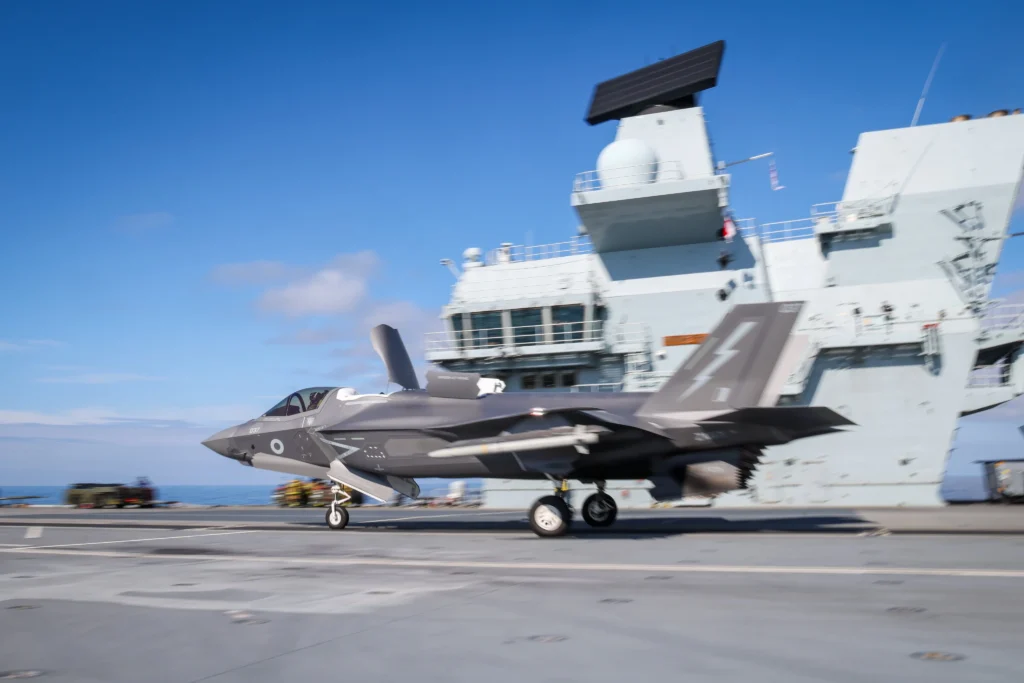
The deployment comes as Britain is also preparing changes to the way its carriers operate. The Defence Investment Plan has allocated £240 million to the development of new drones for a Hybrid Carrier Air Wing, including jet-powered uncrewed aircraft intended to operate alongside F-35 fighters.
Ukraine war shapes wider debate over NATO readiness
Queen Elizabeth’s departure comes days after former CIA director and retired US Army General David Petraeus called for Britain to take the lead in adapting NATO to the military lessons emerging from Ukraine.
Speaking during the Lord Speaker’s Lecture at the House of Lords on September 1, Petraeus argued that Ukraine has demonstrated changes in warfare that extend beyond the rapid adoption of drones, artificial intelligence and electronic warfare.
“Much of the discussion has understandably focused on individual technologies – unmanned systems, artificial intelligence, electronic warfare, cyber capabilities, precision strike, battle management systems, and others. Each matters. But the principal lesson is larger: the very concept of warfare is changing,” Petraeus said.
He said Britain was well placed to use its Strategic Defence Review and Defence Investment Plan to pursue a broader transformation of its armed forces and help drive similar changes across NATO.
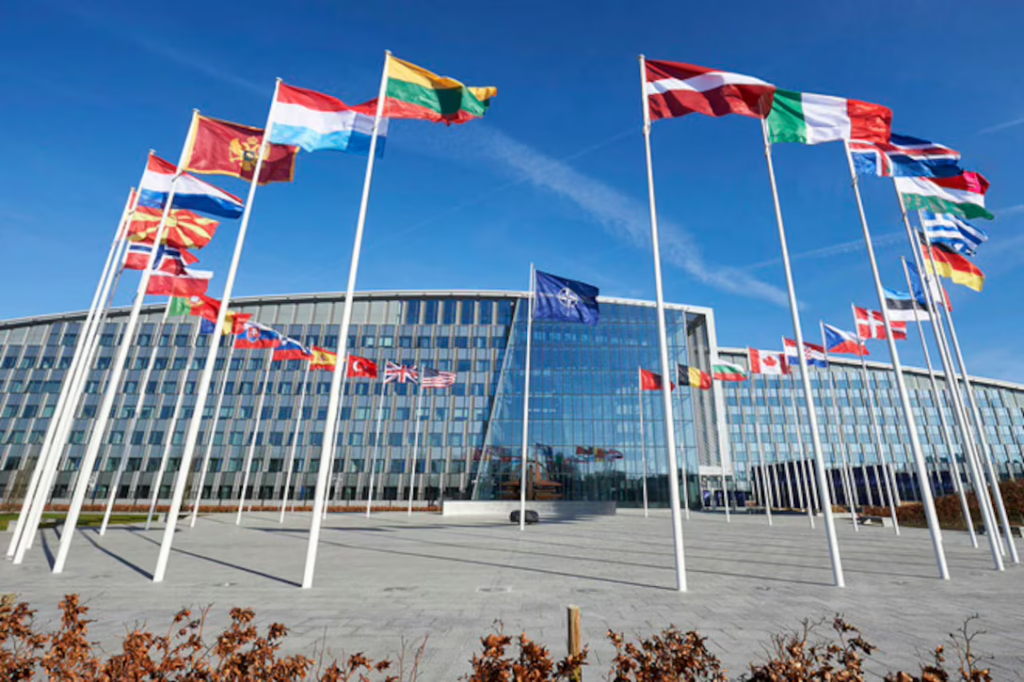
“That now presents Britain with another opportunity: to become the first major Western nation to organize its defence institutions around the new concept of warfare that Ukraine has been pioneering – and, in doing so, to help lead the transformation of NATO itself,” Petraeus said.
His proposals extend beyond equipment purchases to force structures, training, procurement, military education and relations with industry. Petraeus also called for NATO’s operational headquarters to change the way they organise and operate as the alliance absorbs lessons from the conflict.
UK expands commitments across NATO
The carrier deployment sits alongside a wider British presence across the alliance. More than 1,000 UK personnel are serving in NATO command posts, while Britain leads the Allied Rapid Reaction Corps from its headquarters in Gloucestershire.
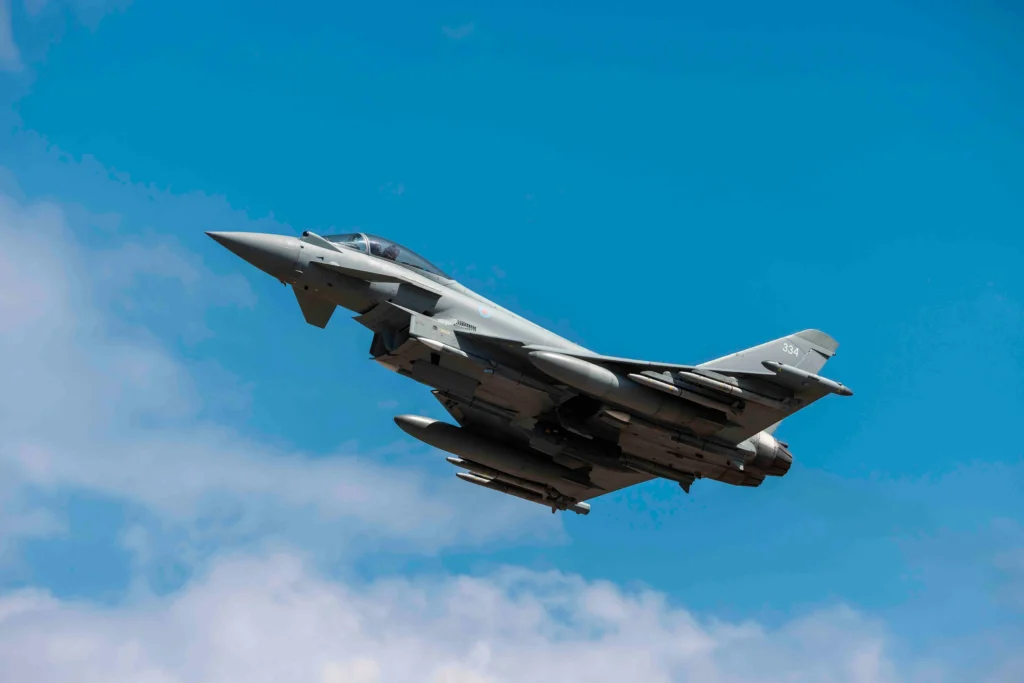
An 800-strong UK battlegroup is deployed in Estonia, RAF Typhoons are supporting NATO air defence in Romania, and P-8 Poseidon and Rivet Joint surveillance aircraft are operating over the Baltic Sea.
Britain is also the only European NATO member to commit its nuclear deterrent in full to the alliance. The Defence Investment Plan confirmed that the UK will join NATO’s Dual Capable Aircraft nuclear mission with F-35A fighters.
For Queen Elizabeth, the immediate focus will remain closer to home. Its three-month programme around the UK and Northern Europe is intended to restore the carrier’s aviation skills while testing its ability to operate as the command centre for a multinational NATO naval force.
Sign up for our newsletter and get our latest content in your inbox.
Similar Reads



Sign up for our newsletter. Select all sectors relevant to you.
Related