IFS identifies £1bn a year yet to be funded in UK defence investment plans



New analysis highlights outstanding funding decisions for the UK’s Defence Investment Plan ahead of the Autumn Budget.
The UK government has yet to identify funding for around £1 billion a year of its planned increase in defence spending, according to new analysis from the Institute for Fiscal Studies (IFS).
In its Green Budget 2026, published on 12 October, the IFS found that the government’s Defence Investment Plan increased planned expenditure by an average of £3 billion annually compared with previous commitments.
However, around £1 billion a year of that increase remains unfunded.
The IFS said this represents “money that the new Chancellor will have to find at the next Budget, whether from tax, borrowing or other spending, if he sticks to existing plans”.
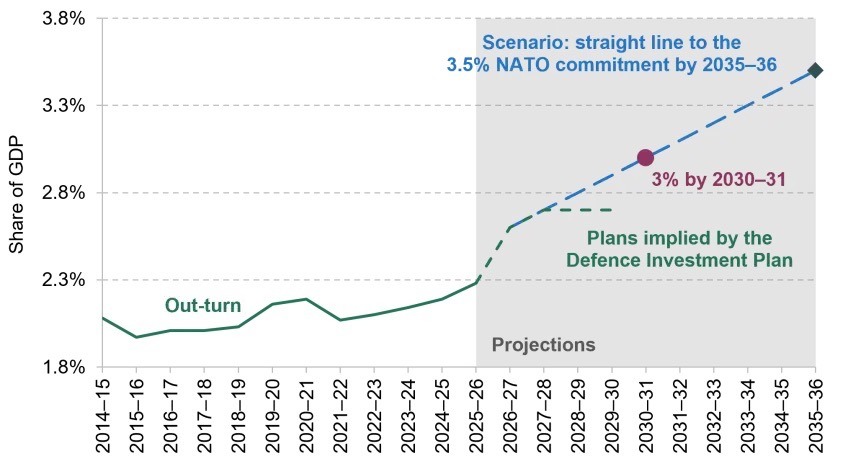
Source: Authors’ calculations using NATO figures, Defence Investment Plan funding explainer (https://www.gov.uk/government/publications/the-defence-investment-plan/the-defence-investment-plan-funding-explainer) and Office for Budget Responsibility’s Economic and fiscal outlook March 2026.
Graph: IFS
The institute also highlighted “domestic and international political pressure to move further and faster on defence spending”.
How much of the Defence Investment Plan is funded?
The government’s Defence Investment Plan, published in June, sets out almost £298 billion in Ministry of Defence expenditure between 2026–27 and 2029–30.
The plan includes £15 billion in additional investment over four years to support priorities identified in the 2025 Strategic Defence Review.
According to the government’s funding breakdown, £10.3 billion of the additional spending has an identified funding source, leaving £4.7 billion to be addressed at the Autumn Budget.
The government intends to fund much of the increase by reallocating capital spending from other departments, including reductions to transport and energy budgets.
UK defence spending commitments
Under existing plans, NATO-qualifying UK defence spending is due to reach 2.7% of gross domestic product (GDP) in 2027–28 and remain at that level until 2029–30.
The government has also committed to increasing core defence spending to 3% of GDP in the next Parliament, subject to future funding decisions.
The UK is among NATO allies that have agreed to spend 3.5% of GDP on core defence by 2035.
The IFS estimates that meeting the 2035 commitment would require approximately £25 billion in additional annual spending, in today’s prices, compared with current plans.
In its June assessment, IFS Senior Research Economist Max Warner said: “Defence spending will likely remain one of the biggest fiscal pressures facing the UK in the medium term.”
Warner also questioned how the government would meet its longer-term commitments, given the difficulty of identifying funding for the more modest increases announced in June.
The IFS’s latest analysis notes that reaching 3.5% by 2035 would require defence spending to increase substantially faster in the next Parliament if the government maintains its existing plans through 2029–30.
The institute also noted that other NATO members have increased defence spending as a share of national income more rapidly than the UK.
Autumn Budget funding decision
The outstanding defence funding requirement comes as the Treasury faces wider pressures on public spending.
In a parliamentary response on 15 September, the government confirmed that the remaining £4.7 billion for the Defence Investment Plan would be addressed at the Autumn Budget.
The Chancellor must now determine how to meet that commitment through taxation, borrowing or changes to other spending plans if the government maintains its existing defence investment programme.
Sign up for our newsletter and get our latest content in your inbox.
Similar Reads




Sign up for our newsletter. Select all sectors relevant to you.
Related