Why some Scottish flights operate as public transport lifelines

Scotland's regional aviation network offers some of the UK's most unusual flying experiences, but there's much more to these operations than interesting aircraft and short sectors.

Loganair Britten-Norman BN-2Islander
Photo: Loganair

Getting around Scotland isn’t always easy, particularly if you live on one of its remote islands. Roads and ferries can only take you so far, and for some communities, a regular flight is an essential part of everyday life.

These services might involve small aircraft carrying just a handful of passengers, but their importance is far greater than their size suggests.

Scotland’s geography presents some real challenges for transport operators. With scattered islands, limited road connections and unpredictable weather, ferry travel isn’t always practical or even possible.

For some residents, flying is the quickest way to reach the mainland and access services that many people take for granted.

What are Public Service Obligation (PSO) flights?

Unlike conventional airline routes, which need enough passengers to make a profit, some Scottish air services receive public funding to keep them running. These are known as Public Service Obligation (PSO) routes.

Under these arrangements, the government or local authorities help pay an airline to provide an agreed level of service. This can include a minimum number of flights and guaranteed connections.

The idea is simple. Some routes are too important to lose, even if there isn’t enough demand to make them commercially viable.

Loganair’s Scottish island routes keep communities connected

One of the best-known examples is Loganair’s Glasgow services to Barra, Tiree and Campbeltown, supported by the Scottish Government. These flights give residents a regular link to the mainland while also boosting local businesses and tourism.
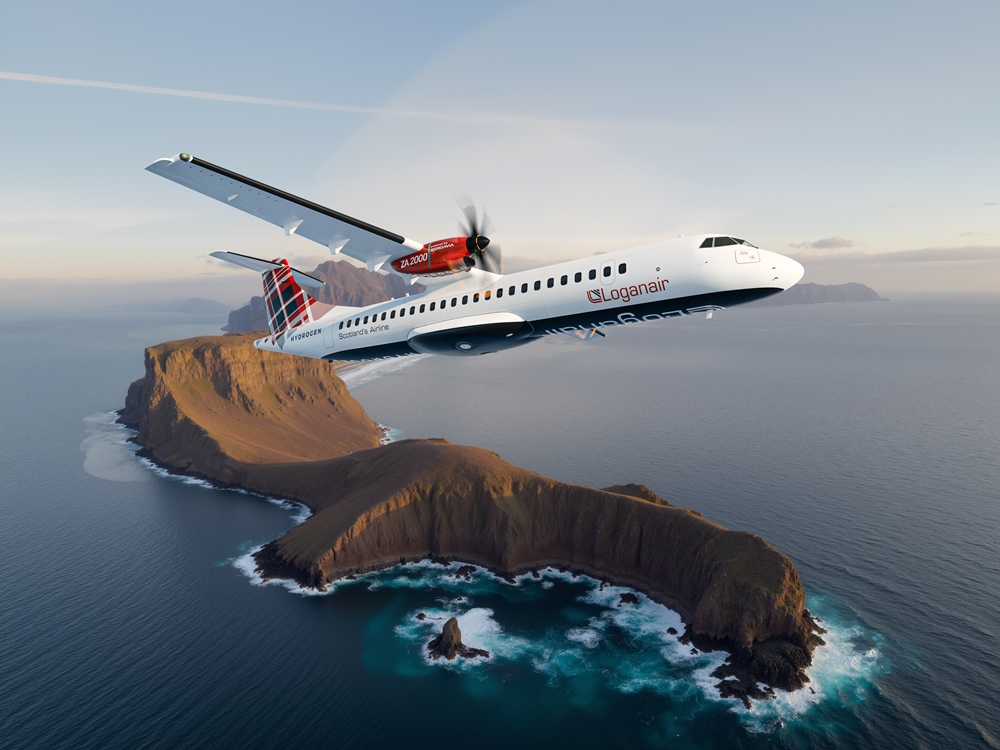
Loganair ATR72 in flight
Photo: Loganair

For aviation enthusiasts, Barra is particularly interesting. Its airport famously uses the beach at Traigh Mhòr as a runway, with flight operations timed around the tides. It’s an incredible place to operate scheduled services and a world away from the conventional runways found at most UK airports.

Orkney’s inter-island flights and the world’s shortest scheduled route

Further north, Orkney has its own network of scheduled air services. Loganair operates inter-island flights under a PSO contract with Orkney Islands Council, linking Kirkwall with six of the outer North Isles.

The services use the eight-seat Britten-Norman Islander, an aircraft well suited to short flights and smaller airfields.

One particularly interesting operation is the Westray-Papa Westray route, which takes around 90 seconds and is widely recognised as the world’s shortest scheduled passenger flight.

While it attracts plenty of interest from aviation enthusiasts, the route has a much more practical purpose. It allows residents to travel between islands quickly, without having to rely on longer ferry journeys.

There is also a more urgent side to island aviation. Residents needing specialist medical treatment may require more than a seat on a scheduled flight.

Dedicated air ambulance services and medical transfers provide an important link to mainland hospitals when time is critical, particularly for patients needing treatment unavailable locally.

The challenges of operating remote Scottish air services

Running these services isn’t always easy. Bad weather can disrupt flights at exposed island airfields, while keeping aircraft, crews and airport facilities available all adds to the cost.

With relatively few passengers using some routes, public funding is often needed to keep them running, despite competing demands on government and local authority budgets.

The number of passengers each aircraft can carry is another issue. For example, in March 2024, Civil Aviation Authority weight restrictions meant the number of bookable seats on Orkney’s Britten-Norman Islander services fell from eight to seven. Although that’s just one seat, it makes a difference on an aircraft with such limited capacity.

The future of aircraft in Scotland

Looking ahead, new technology could offer another way to improve regional air connections. Bristow Helicopters is leading a project in Scotland to investigate whether electric aircraft could be suitable for shorter journeys. Supported by £1.5 million in government funding, Project SEAN is expected to include trial flights across the Highlands and Islands from 2027.
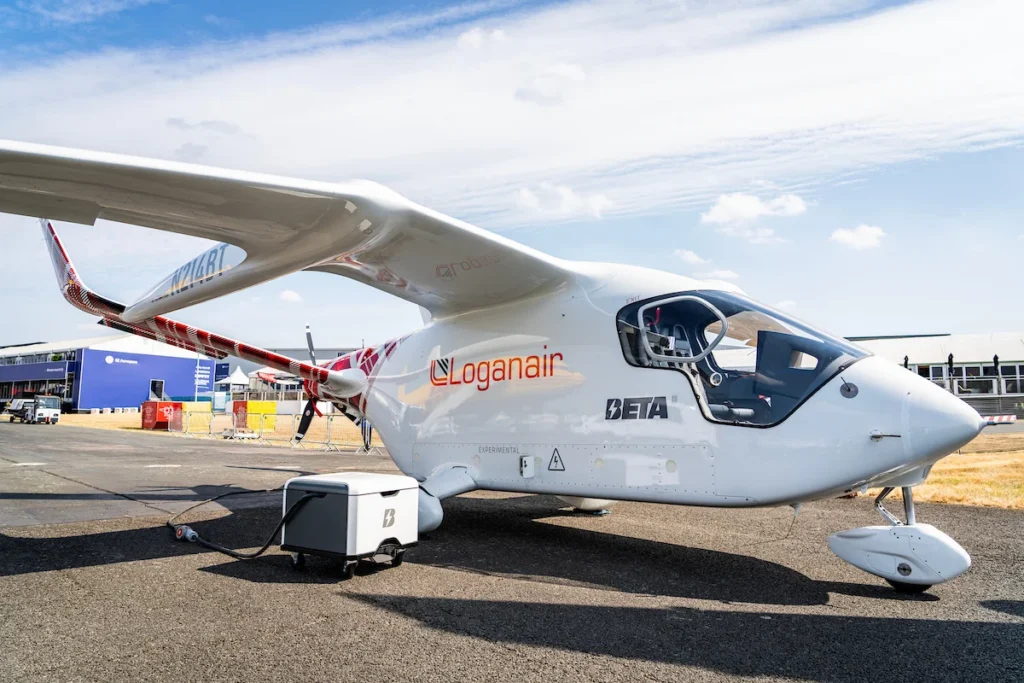
All-electric ALIA conventional takeoff and landing (CTOL) (CX300) aircraft
Photo: Loganair

The trials will explore how electric aircraft might be used to carry passengers, transport goods and support medical services. They will also assess what changes airports would need, including the installation of charging facilities. The findings should help establish whether electric aircraft could become a practical, lower-emission option for connecting communities in some of Scotland’s most isolated areas.

For Scotland’s island communities, flying offers far more than a convenient way to travel. They provide access to hospitals, education, jobs and family, helping residents go about their daily lives in some of the country’s most remote locations. Their importance goes well beyond the number of passengers they carry.

Related

EgyptAir will fly to three London airports as it launches Gatwick and Stansted, adds Edinburgh
Airbus A321neo Egyptair on static display at an airshow
EgyptAir will fly to three London airports as it launches Gatwick and Stansted, adds Edinburgh
EgyptAir will also be ending Boeing 777 flights to London Heathrow as of this month, replacing them with a mix of A350s and 787s.
Aerospace

21 Nov 2026

What is flowdown in an aerospace contract?
Marshall Aerospace-C-130 people working
What is flowdown in an aerospace contract?
Aerospace manufacturing relies on a complex network of suppliers and subcontractors, all working to meet strict technical and quality requirements. Contractual flowdown plays a key role in communicating these obligations throughout the supply chain, supporting consistency, accountability and compliance at every stage of production.
Aerospace

21 Nov 2026

Frewer Engineering completes leadership succession with ownership transfer
Dr Richard Lock, MD at Frewer Engineering
Frewer Engineering completes leadership succession with ownership transfer
Surrey engineering consultancy Frewer Engineering has completed a planned ownership transition, with managing director Dr Richard Lock acquiring a majority stake from founder Peter Frewer.
Aerospace Member News

20 Nov 2026

From D-Day to stealth bombers: The remarkable history of RAF Fairford
B1-B Lancer
From D-Day to stealth bombers: The remarkable history of RAF Fairford
The airbase has played a significant role in British and American military aviation for more than 80 years.
Defence

22 Nov 2026

UK manufacturing orders rebound, with aerospace and defence demand providing a boost
British Army
UK manufacturing orders rebound, with aerospace and defence demand providing a boost
British manufacturing output rose in November for the first time since May 2024, driven by strong aerospace and defence orders, CBI says.
Defence Uncategorized

20 Nov 2026

Aircraft return to RAF Brize Norton after runway reopened
RAF Brize Norton runway
Aircraft return to RAF Brize Norton after runway reopened
Aircraft returned to RAF Brize Norton after a 16-week dispersal while the runway was replaced, forming part of a £180 million programme to strengthen RAF Brize Norton’s airfield infrastructure for the future.
Defence Member News

20 Nov 2026

Why don’t rockets launch from the UK?
Starshield's proliferated low-Earth orbit architecture provides inherent resiliency and constant connectivity to on-orbit assets, while SpaceX's proven rapid launch capability provides expedient and economical access to space.
Why don’t rockets launch from the UK?
While the UK is often described as a poor location for rocket launches, the reality is more complicated. Its geography creates challenges for some missions, but also gives emerging spaceports in Scotland and Shetland a valuable niche in the fast-growing small-satellite market.
Space

21 Nov 2026

ESA awards OHB €102m ClearSpace-1 contract
ClearSpace Titel V2
ESA awards OHB €102m ClearSpace-1 contract
Following the selection of OHB as the prime contractor for the European Space Agency's ClearSpace-1 programme, Europe has moved a step closer to realising Europe’s first active space debris removal mission.
Member News Space

20 Nov 2026

Viasat launches VIA to work across all in-flight connectivity networks
A cloud-delivered media platform that runs on any in-flight connectivity network - including via satellite - has been launched by Viasat, which can enable airlines to deliver their own branded experience across their fleets.
Met launches handheld facial recognition pilot for frontline identity checks
New Scotland Yard sign
Met launches handheld facial recognition pilot for frontline identity checks
The Metropolitan Police have launched a six-month trial of a new handheld facial recognition tool that allows officers to verify a person's identity without their consent by comparing a photograph taken on a police-issued mobile device against the force's custody image database.
Security

20 Nov 2026

Hexagon and Red Bull look beyond engineering degrees to find manufacturing’s future talent
Formula 1 car at Red Bull's MK7 campus
Hexagon and Red Bull look beyond engineering degrees to find manufacturing’s future talent
At Red Bull’s Milton Keynes campus, Hexagon brought students and employers together to explore how interests in gaming, data and problem-solving could become a route into manufacturing — and what industry needs to do to open those doors.
Expert shares what SMEs should do in the first two hours of an energy or cyber disruption
Server racks creating data center corridor 3d
Expert shares what SMEs should do in the first two hours of an energy or cyber disruption
Cyber attacks, grid failures and rising electricity demand are creating new business risks. Dr Phil Wu explains the three actions SMEs should take in the first two hours of a disruption.
Security

19 Nov 2026