ACI Europe and EASA sign cooperation agreement
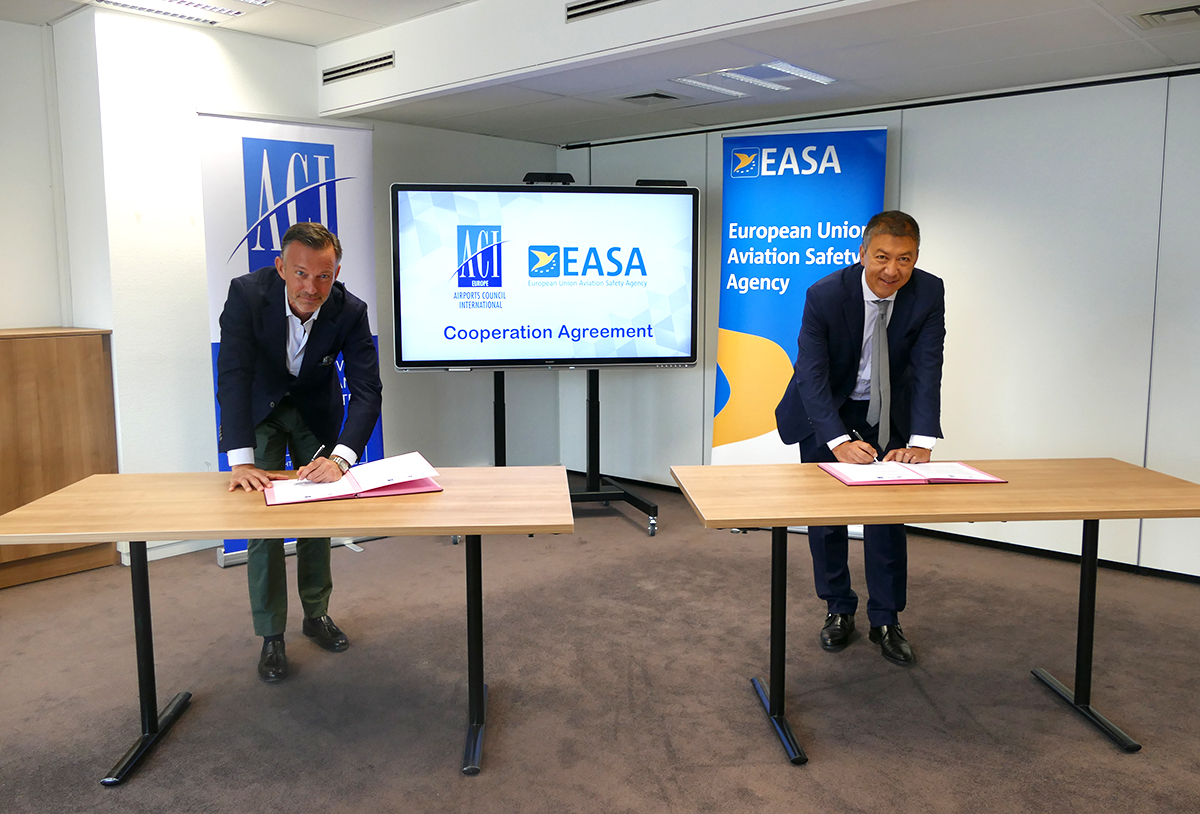
Above:
(left to right) Olivier Jankovec, Director General of Airports Council International Europe (ACI EUROPE) and Patrick Ky, Executive Director of the European Union Aviation Safety Agency (EASA), sign the cooperation agreement.
Courtesy ACI Europe
The Cooperation Agreement for the implementation of the joint EASA/ECDC COVID-19 Aviation Health Safety Protocol further consolidates this operational guidance to airports and airlines as the European standard and reference for States to follow. Following ACI EUROPE’s close involvement in the development of the Protocol, this agreement now commits the European airport trade body to coordinate the ongoing engagement of EASA with the European airport community.

Specifically, the cooperation agreement establishes a monitoring model in order to fine-tune and improve the Protocol in the light of operational practice and further developments. As such, this agreement complements EASA’s Aviation Industry Charter for COVID-19, through which a number of airports1 report data back to the Safety Agency.
Along with the signature of the cooperation agreement, ACI Europe also published its Guidelines for a Healthy Passenger Experience at Airports.
Endorsed by EASA, this comprehensive document marks the culmination of ACI Europe’s OFF THE GROUND initiative to support a safe and coordinated restart. These Guidelines provide detailed step-by-step guidance and advice to airports on how to implement the EASA/ECDC COVID-19 Aviation Health Safety Protocol – considering all possible actions, methodologies, technologies and implications in terms of facility and resource management as well as communications.
Olivier Jankovec said: “Working hand in hand with regulators and industry stakeholders is key to a safe and effective recovery of aviation. This is what airports have been committed to all along in this crisis and the cooperation agreement we have signed today with EASA is another reflection of that.
“There is no doubt that the Aviation Health Safety Protocol developed by EASA and ECDC has been instrumental in restarting of aviation. This is indeed the standard that Europe’s airports are following. The ACI EUROPE Guidelines we are releasing today are built upon this Protocol. They complement it by providing airports concrete advice and solutions to adapt to the new normal in operations and customer service. In doing so, our guidelines take stock of a new category of passengers - the health-concerned passenger - and also look at how we can harness technological developments and digitisation. The priority and focus are clear: this is about delivering a safe end-to-end journey unrivalled in any other transport mode."
Patrick Ky said: “We welcome the leadership shown by ACI EUROPE in embracing the EASA/ECDC Aviation Health Safety Protocol and developing further practical implementation advice for their members. Effective implementation and consistent application of the Protocol in Europe and beyond is fundamental to the restoration of customer confidence in the aviation industry after the collapse in passenger traffic as a result of the pandemic.
“Recovery from this unprecedented crisis requires coordination at European and international level and in this context EASA is pleased to build on its partnership with ACI. The pledge made by many ACI members through the EASA Aviation Industry Charter to contribute to the monitoring of the Protocol implementation ensures that we have the feedback loop necessary to consistently refine the guidelines, so as to provide the best and safest possible experience for travellers.”