Advancing UK Aerospace, Defence, Security & Space Solutions Worldwide
  • Home
  • /
  • Aerospace
  • /
  • Bombardier Aviation reduces Belfast workforce

Aerospace

Bombardier Aviation reduces Belfast workforce
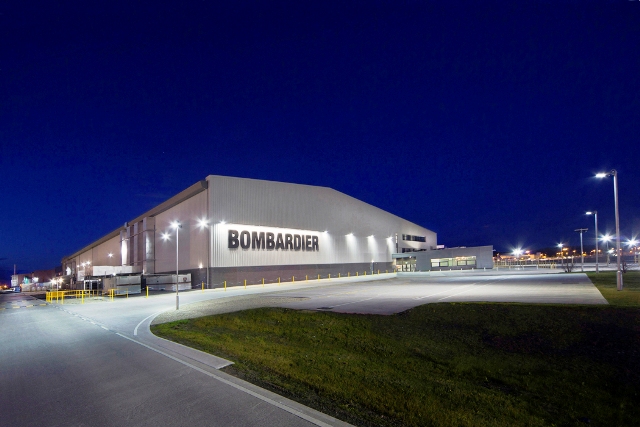
Following last week's news that Bombardier Aviation would adjust its workforce to align with current market conditions reflecting the extraordinary industry interruptions and challenges caused by COVID-19, it today announced it will reduce its Belfast workforce by approximately 400 people.

Above: Bombardier Belfast.
Courtesy Bombardier

Bombardier Aviation has now reviewed its requirements in Belfast for all of its aircraft programmes and regrettably confirms that it must adjust its core workforce levels downwards by around 400 to align with market demand for the remainder of this year and through 2021.

Advertisement
ODU RT

Around 400 Bombardier core employee jobs in Northern Ireland are currently at risk of redundancy. The company will be lodging a formal HR1 redundancy notice with the Department for the Economy, following which there will be a 90-day consultation period when Bombardier Aviation will explore opportunities to mitigate the number of redundancies.

Bombardier Aviation said it deeply regrets the impact this will have on its workforce and their families but concludes it is crucial that it resizes the business in line with market realities in these unprecedented circumstances.

Nicolas Jouan, Aerospace and Defense Analyst at GlobalData, said: “Bombardier’s move to cut up to 2,500 jobs in its aviation business, of which 600 are based in Belfast, must be understood in the context of the COVID-19 crisis and more fundamental transformations wanted by the company. Even before the pandemic wiped out air travel, and as a consequence eroded the need for commercial jetliners, Bombardier was engaged in divestments to reduce its exposure to aviation with the sale of its regional jet C-Series to Airbus in 2018 and its CRJ program to Mitsubishi in 2019. Considering that airlines and leasing companies accumulate cancellations and postponements of orders, Bombardier seem decided to accelerate its strategy in order to avoid overcapacity.

“The former C-Series, rebranded A220, is at the heart of the decision. Airbus decided earlier this year to postpone the planned production increase of the regional jet in spite of relatively good sales figures. The European plane maker still intends to reach an eventual production rate of ten platforms per month, compared to four at the moment, but not before 2026. Bombardier still produces wings for the A220 in its Belfast facility in Northern Ireland, but there is little point in maintaining production rate when the final integrator Airbus seems itself on the back foot.

Advertisement
PTC rectangle

“Regional aircrafts are not favoured by plane makers at the moment. Mitsubishi has shelved its SpaceJet program that was supposed to take off this year. Boeing has withdrawn from a partnership with Embraer on commercial aviation. It is hard to foresee how post-COVID-19 commercial aviation will look like, but anticipated social distancing safety regulations might not be well fitted to the costly, high-density cabins of regional jets. Bombardier’s decision to cut 600 positions in Belfast is both based on the reality of demand, adapted to Airbus’ decision, and on a more fundamental strategy regarding the future of regional jets.”




Advertisement
ECS leaderboard banner
Wales to be UK launchpad for advanced autonomous tech

Aerospace Defence Security

Wales to be UK launchpad for advanced autonomous tech

20 February 2026

Thousands of skilled workers in Wales will be involved in the design, testing and manufacture of advanced autonomous technologies and unmanned systems, as a landmark £50 million Defence Growth Deal positions the nation at the forefront of Britain’s defence future.

NPAS increases aircraft available for deployment

Aerospace Security

NPAS increases aircraft available for deployment

19 February 2026

In January this year, the National Police Air Service (NPAS) was able to increase the number of aircraft that were available for operational deployment.

Alloyed secures ATI Programme funding to develop ABD-1000AM

Aerospace

Alloyed secures ATI Programme funding to develop ABD-1000AM

19 February 2026

Developer and manufacturer of advanced metallic components, Alloyed Ltd, has secured funding from the ATI Programme for an ambitious £1 million project to accelerate the development of ABD-1000AM, a next-generation nickel-based superalloy designed for additive manufacturing.

Birmingham Airport publishes new sustainability strategy

Aerospace

Birmingham Airport publishes new sustainability strategy

19 February 2026

Birmingham Airport (BHX) has published its new sustainability strategy for 2026 to 2030, outlining the next strategic steps on its journey to becoming a more sustainable and socially responsible business.

Advertisement
Security & Policing Rectangle
UK hydrogen airport trial sets out roadmap for further studies

Aerospace

UK hydrogen airport trial sets out roadmap for further studies

18 February 2026

A new report into the UK’s first airside trial of multiple hydrogen-powered ground support equipment (GSE) has confirmed that hydrogen can be safely and effectively integrated into airport ground operations, whilst setting out a series of essential next steps needed to accelerate hydrogen adoption and decarbonisation across the aviation sector.

Kent collaborates on Pre-FEED study for Eq.flight SAF demo plant

Aerospace

Kent collaborates on Pre-FEED study for Eq.flight SAF demo plant

18 February 2026

Integrated energy services partner, Kent, has collaborated with Equilibrion during a successful bid for funding from the UK Department for Transport’s Advanced Fuels Fund (AFF) and with that funding for Equilibrion and its partners, Kent is delivering the Pre-Front-End Engineering Design (Pre-FEED) for Eq.flight, an advanced power-to-liquids ...

Advertisement
Security & Policing Rectangle
Advertisement
ECS leaderboard banner