

Winter hydrogen trial at Exeter Airport strengthens case for lower-carbon ground operations


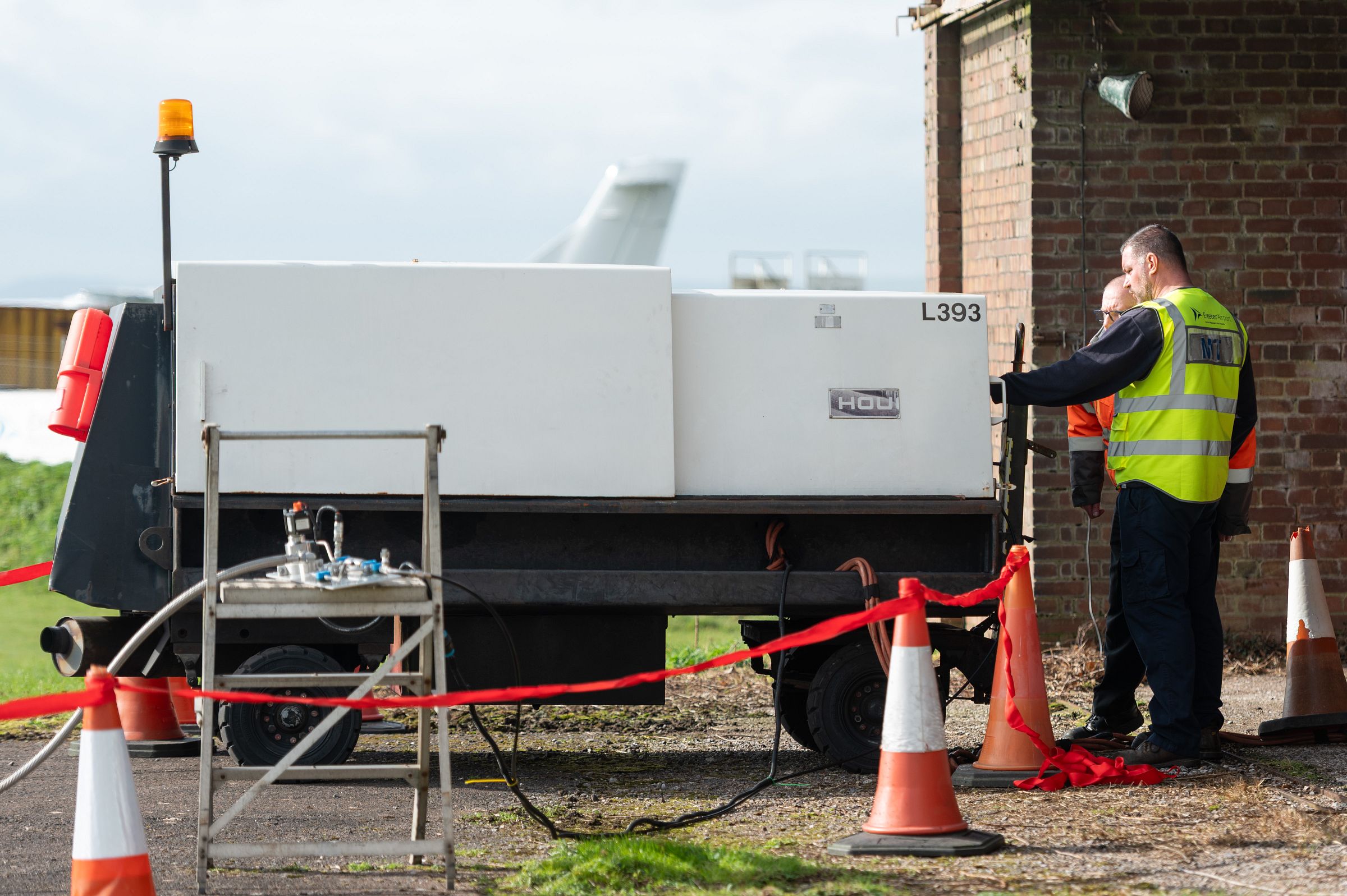
A winter trial at Exeter Airport has found that converting existing diesel ground equipment to run partly on hydrogen could cut fuel use and carbon emissions without significantly changing day-to-day airport operations.
The Winter Operations HyGPU project tested a converted hydrogen-diesel ground power unit (GPU) in colder conditions and after dark. The follow-up study was designed to move beyond a one-off demonstration and gather more representative operational data on hydrogen use at airports.
Led by Exeter Airport, Cranfield University and hydrogen technology company ULEMCo, the project was supported by Connected Places Catapult and operated with regulatory oversight from the UK Civil Aviation Authority (CAA).
The results suggest dual-fuel hydrogen could offer airports an interim route to lower emissions, particularly for equipment that operates for relatively long periods.
Hydrogen trial cuts diesel consumption
Testing took place from 16 February to 6 March 2026. Over the eight operational days, 15 tests totalled almost six hours in hydrogen mode.
In total, the GPU consumed 7.41kg of green hydrogen, replacing 24.23 litres of diesel and reducing CO2 emissions by 63.9kg. No safety incidents or significant operational problems occurred.
The technical report calculated average savings during 30-minute tests of about 2.06 litres of diesel and 5.52kg of CO2. Extrapolating those results across Exeter’s seven GPUs, using historic operating data, produced an estimated annual saving of 11,355 litres of diesel and almost 35 tonnes of CO2e.
Those figures are projections, not savings demonstrated during the short trial. They assume that all seven GPUs were converted and performed similarly over their normal annual operating cycles.
Dr Thomas Budd, Associate Professor of Airport Decarbonisation at Cranfield University and author of the report, said: “The results show that the equipment can operate safely and deliver measurable reductions in diesel consumption and carbon emissions, with very little change required from the people using it.”
Budd cautioned that the dataset remains relatively small but said it strengthens the evidence available to airports, regulators and manufacturers considering where hydrogen could contribute most effectively to decarbonisation.
Cold starts expose a limitation of dual-fuel hydrogen
The trial also revealed an important distinction between different types of airport equipment.
The converted GPU always starts using diesel. Hydrogen is introduced only once the engine reaches the required operating temperature. If the hydrogen supply stops, the equipment automatically reverts to diesel operation.
Temperatures during testing ranged from 4°C to 14°C, and researchers found no clear evidence that ambient temperature itself affected the GPU’s technical performance.
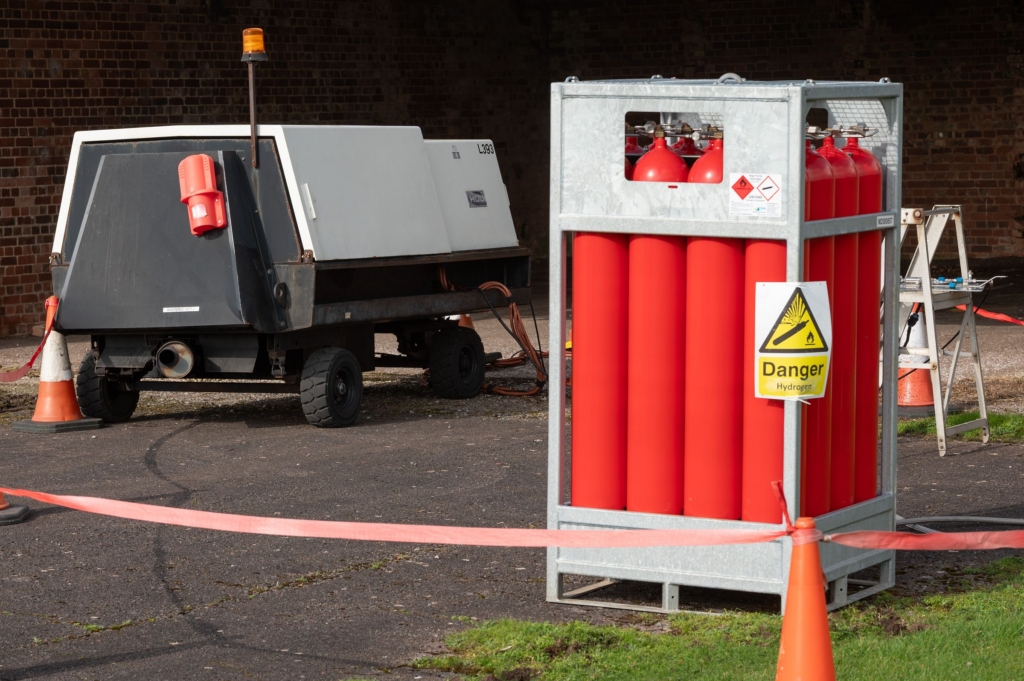
However, cold starts following longer periods of inactivity appeared to delay hydrogen use. Across the tests, the time before the first hydrogen injection varied from almost immediately to as much as 12 minutes. The six sunrise tests averaged around 180 seconds before hydrogen injection, compared with 32 seconds for nine daytime tests after the GPU had already been operated.
Equipment used only briefly could complete much of its operating cycle before hydrogen significantly reduces carbon emissions. The report therefore suggests dual-fuel technology may suit equipment such as GPUs that can run continuously or for relatively long periods. Short-cycle equipment with long intervals between uses could be better suited to fully zero-emission alternatives, including battery-electric systems.
Ground crews noticed little difference
Operationally, the conversion appears to have imposed relatively few changes on airport workers.
One member of Exeter’s ground team told researchers that operating the HyGPU in darkness was “the same as a normal GPU”, apart from having to disconnect and reconnect equipment specifically for the trial.
Researchers concluded that the team needed little, if any, adaptation compared with conventional GPU operations.
Ground support vehicles can remain in service for more than 20 years. Replacing an entire diesel fleet with new electric equipment would require a substantial capital investment. An earlier Zero Carbon Turn study identified converting existing diesel GSE as one way to cut emissions while retaining equipment already in service.
Trial builds on UK’s first multi-hydrogen turnaround
The latest research follows Exeter’s Zero Carbon Turn demonstration in April 2025.
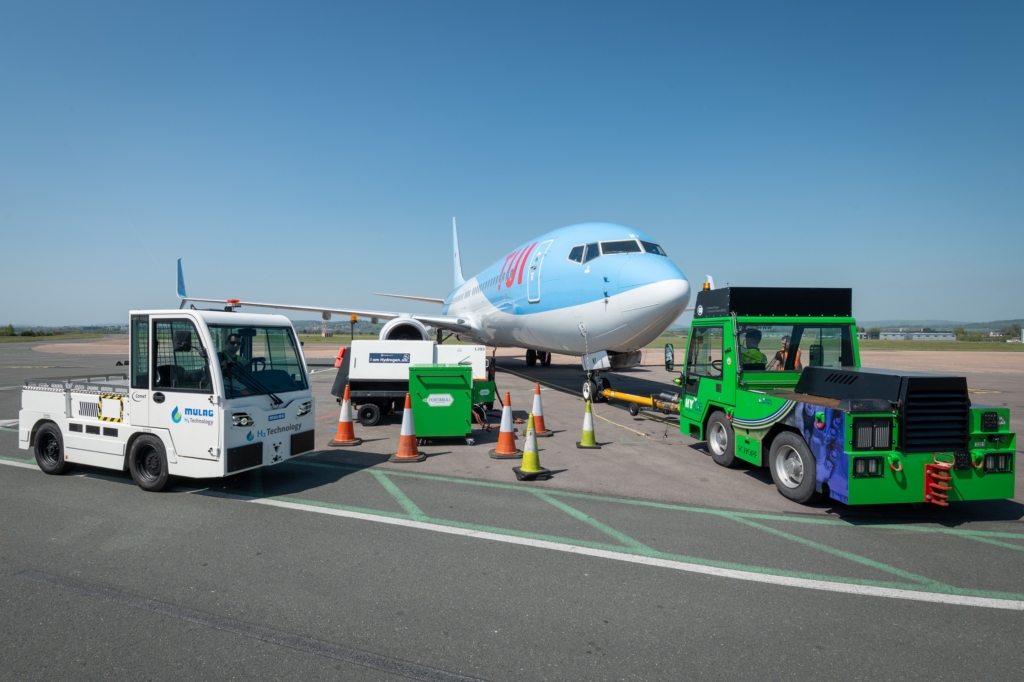
That project used three different technologies during the turnaround of a TUI Boeing 737: a hydrogen internal-combustion aircraft tug, a hydrogen fuel-cell baggage tractor, and a dual-fuel hydrogen-diesel GPU.
It included the UK’s first concurrent operation of several different types of hydrogen-powered equipment at an airport and the first use of a hydrogen-powered GPU to supply a commercial aircraft in the UK.
The original Cranfield report recommended longer trials under more representative conditions. The winter programme was developed directly in response.
Stephen Wiltshire, Managing Director of Exeter Airport, said the new research provides “a much clearer indication of the potential operational and environmental benefits”.
He added that converting existing equipment could give airports “a practical way to reduce emissions while the infrastructure for fully zero-emission technologies continues to develop”.
Why Exeter is focusing on ground power units
GPUs are a particularly relevant target at Exeter.
Research conducted during the original Zero Carbon Turn project found that the airport’s ground support equipment consumed just over 78,000 litres of diesel during the 12 months from September 2022 to August 2023, producing nearly 200 tonnes of CO2e.
GPUs were the largest individual source, accounting for just under 39% of GSE emissions. Unlike equipment such as baggage loaders or pushback tractors, which may operate for relatively short periods, GPUs can remain running while an aircraft is parked to provide electrical power. The engine could run on hydrogen instead of diesel during those longer running times.
Hydrogen infrastructure remains the next hurdle
Before airports can use the technology routinely, Cranfield recommends long-term trials, higher-volume hydrogen storage, and higher hydrogen volumes. It would also require semi-permanent refuelling infrastructure and scalable on-site testing to verify hydrogen fuel purity.
The Exeter work also feeds into the CAA’s wider Hydrogen Challenge, which has gathered evidence from 11 projects examining hydrogen aircraft, propulsion, airport operations and infrastructure. The regulator has published a roadmap towards scaling hydrogen operations for small aircraft around 2035.
The Exeter findings suggest hydrogen’s nearer-term opportunity may be on the ground rather than in the air.
Sign up for our newsletter and get our latest content in your inbox.
Similar Reads



Sign up for our newsletter. Select all sectors relevant to you.
Related