

GKN Aerospace and partners complete ASCEND

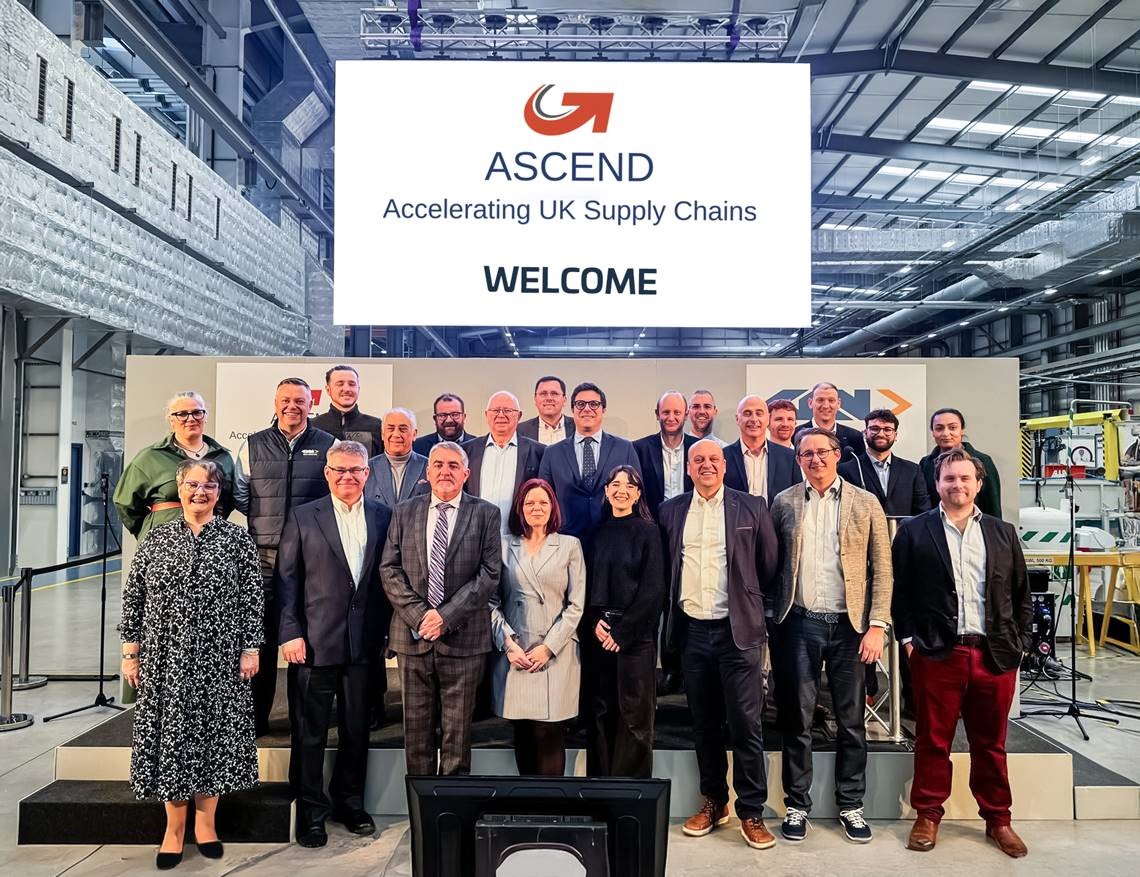
Image courtesy GKN Aerospace
GKN Aerospace, in collaboration with McLaren Automotive and other UK partners, proudly announces the successful completion of the ASCEND (Aerospace and Automotive Supply Chain Enabled Development) programme. This four-year, £39.6 million initiative has significantly advanced the UK’s high-rate composite manufacturing capabilities, focusing on high-rate production, Industry 4.0, and sustainable composite manufacturing.
The ASCEND programme, funded by a £20m commitment from industry and a £19.6m commitment from the UK Government via ATI, aimed to accelerate the adoption of composite technologies, industrialise new technologies, and meet future high-volume requirements. The collaboration brought together expertise from across the UK supply chain to develop advanced materials and automation equipment required for lightweight structures in the sustainable air mobility, aerospace and automotive industries.
Key developments:
- Collaborative Innovation: The programme brought together 16 partners from the UK’s composites supply chain, each contributing their unique expertise to advance automation, material processing, and tooling. GKN Aerospace led the consortium alongside Assyst Bullmer, Airborne, Cygnet Texkimp, Des Composites, FAR-UK Ltd, Hexcel Composites, Hive Composites, LMAT, Loop Technology, McLaren Automotive, NCC (National Composites Centre), Rafinex, Sigmatex (UK), and Syensqo, with collaboration and investment support from Axillium Research.
- Technological Advancements: Significant progress was made in developing new methods, materials and processes, such as composite topology optimisation with Rafinex, fast-cure prepreg technology systems from HEXCEL and Syensqo, joining mechanisms and cross sector bonding technologies with FAR and HIVE.
- Automation and Digital Integration: The development of automated systems from Loop Technology and GKN Aerospace’s RTM cell and Airborne’s Automated Ply Placement technology, showcased the potential for high-rate, high-quality composite manufacturing.
- Sustainability: NCC developed a Sustainability Maturity Level framework to assess and improve the environmental impact of composite manufacturing.
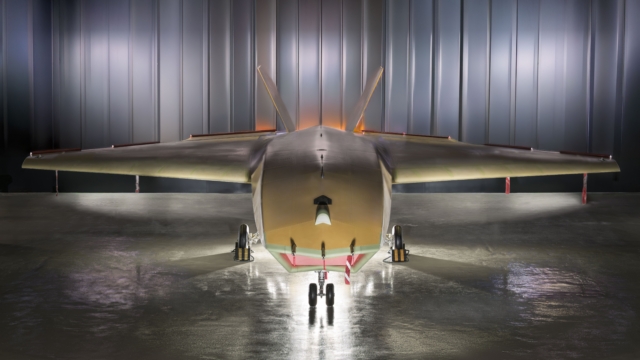
- Demonstrator Projects: The programme’s success was highlighted by two flagship projects: GKN Aerospace’s bladed wingtip and McLaren’s rear floor component, both demonstrating the integration of aerospace precision with automotive production rates.
The consortium, led from GKN Aerospace’s £32 million Global Technology Centre in Bristol, supported up to 130 jobs through 2023 and 2024. GKN Aerospace utilised its long-term experience and in-depth knowledge of composite engineering for integrated airframe structures throughout the project.
John Pritchard, President Civil Airframe GKN Aerospace, said: “GKN Aerospace has deep knowledge and expertise in composite technology, and we are proud to have led this consortium. Through ASCEND, we accelerated the development of next-generation lightweight, cost-effective advanced composite technologies – critical for the aerospace and automotive industries in their transition to more energy-efficient aircraft and vehicles. Successfully developing and demonstrating high-rate manufacturing capabilities across the UK supply chain has reinforced our position as an industry leader and underscored our commitment to sustainability.
"With the support of the Aerospace Technology Institute, which continues to play a vital role in advancing the UK’s position in next-generation aircraft, we have delivered key technological breakthroughs while achieving benchmark levels of price, quality, and repeatability.”
The ASCEND programme not only achieved its technological goals but also established a new paradigm for cross-sector collaboration, creating a robust supply chain and skilled workforce to support future innovations in composite manufacturing. The programme’s legacy extends far beyond its immediate achievements, positioning the UK composites industry for sustained growth and innovation in the decades ahead.
Sign up for our newsletter and get our latest content in your inbox.
Similar Reads




Sign up for our newsletter. Select all sectors relevant to you.
Related