HyFIVE to develop hydrogen fuel system
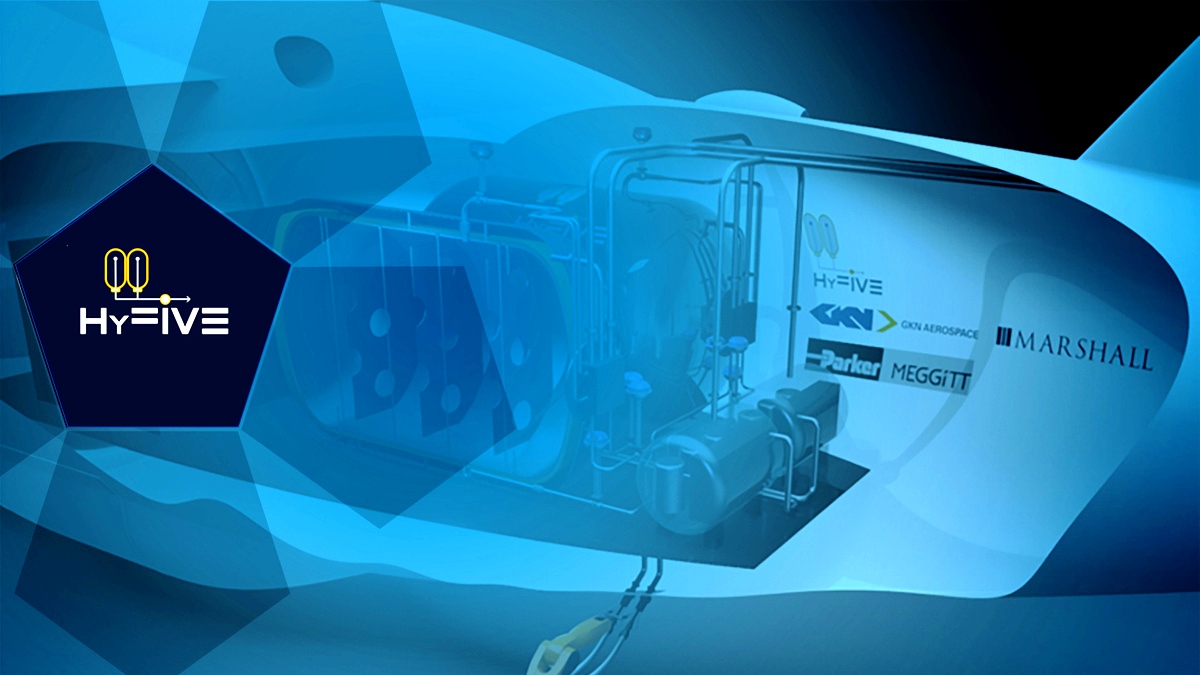
Image courtesy Marshall
HyFIVE combines the expertise of industry partners Marshall, GKN Aerospace and Parker Meggitt, while specialised R&D will be conducted by the University of Manchester, the University of Bath and Cardiff University.
Announced this week by Chancellor of the Exchequer Jeremy Hunt, the consortium will receive initial funding of nearly £40 million, with an investment of £17 million from industry to be matched with £20 million from government. The project is supported by the ATI Programme, a partnership between Department for Business and Trade, Aerospace Technology Institute and Innovate UK (UKRI).

Welcoming the announcement, Industry Minister Nusrat Ghani said: “This is another win for our world-leading aerospace sector, cementing the UK’s position at the forefront of zero emissions technology and taking the UK to new heights in the pursuit of cleaner, greener air travel.
“This announcement is the latest in a long line of wins for UK aviation and builds on the success of the £4.5 billion investment as part of our Advanced Manufacturing Plan and launch of our Hydrogen Taskforce, placing UK expertise at the cutting edge of hydrogen fuel innovation.”
Pioneering zero-emission flight
The overarching objective of the HyFIVE consortium is to develop, test and validate a modular, scalable cryogenic hydrogen fuel system architecture that is suitable for multiple aircraft classes and compatible with either hydrogen electric propulsion or hydrogen combustion powertrains.
Specifically, the collaboration will cover five key aspects of technology development for hydrogen fuel systems: storage, conveyance, indication, fuelling and venting.
The HyFIVE consortium members have defined a full technical programme spanning several years, starting with initial architecture development and supplier engagement and running all the way through to ground testing and final design review for the integrated fuel system.
By 2027 the consortium plans to have:
- Developed and validated an integrated family of mature fuel system technologies and capabilities conducive to certification
- Conducted ground demonstration (TRL 6) of an integrated fuel system encompassing the storage, conveyance, indication, venting and fuelling systems
- Opened a range of flight demonstration and exploitation paths with prospective customers and developed a customer-ready supply chain and industrialisation strategy
Timely achievement of these objectives will support the successful introduction of a new generation of zero emissions aircraft in the 2030s.
Building on complementary strengths
The HyFIVE collaboration is structured to take advantage of each industry partner’s unique capabilities.
Marshall will bring to the consortium its expertise in complex system design, integration and certification, honed through decades of delivering aircraft fuel systems and complex aircraft modification projects.
GKN Aerospace, which specialises in the design, manufacture and assembly of aircraft structures, engine components and systems, will contribute its industry-leading advanced materials and hydrogen cryogenic system optimisation knowhow.
Parker Meggitt, now part of the Parker Aerospace Group within Parker Hannifin, will lead on aspects of the collaboration related to sensing, thermal management, and fluid conveyance, drawing on its broad suite of solutions and capabilities for aircraft and aeroengine components and systems.
The consortium’s three UK academic partners—the University of Manchester, University of Bath and Cardiff university—have been selected for their world-leading research capabilities and advanced testing facilities in areas such as hydrogen-electric propulsion, cryogenic applications, power transmission, turbomachinery and next-generation material development.
Furthermore, the project will develop a supply chain of SMEs to undertake more specialised challenges around testing, engineering support and component development, supporting UK industry while also laying the groundwork for future supply chain capability development.
Jacqueline Castle, Chief Technology Officer, Aerospace Technology Institute (ATI), said: “The HyFIVE programme is primed to solve the significant technical, safety, certification and industrialisation challenges associated with the application of LH2 in aviation and those identified by our FlyZero programme and Destination Zero strategy.
“The HyFIVE team will work in parallel with key regulatory frameworks and infrastructure projects, including the ATI’s own Hydrogen Capability Network, to ensure the UK maximises the gains from such a significant industrial research project.”
Developing UK leadership in clean aviation
Hydrogen propulsion is considered a critical pathway for the aviation industry to achieve its ambitious goal of net zero emissions by 2050.
To that end, in 2021 the UK Government unveiled its Hydrogen Strategy, which takes a holistic approach to developing a thriving hydrogen sector. The strategy targets aviation as a key sector for decarbonisation from the 2030s onward.
“HyFIVE is a true UK powerhouse, bringing together industry leaders with a track record of certifying new aerospace technologies and the industrial scale to successfully deliver to market,” said Marshall CEO Kathy Jenkins.
“Combining our respective strengths and drawing on support from some of the world’s top R&D centres will result in a consortium that is truly greater than the sum of its parts.”
GKN Aerospace Chief Technology Officer Russ Dunn commented: “We believe that zero emissions flight will be a core part of delivering a sustainable global aviation industry and will make an important contribution to the UK Government’s Jet Zero targets. The HyFIVE programme will develop foundational technologies to deliver that future whilst also providing significant market opportunities for the UK as we look towards industrialisation.
“The ATI continues to be a vital part of the UK’s aerospace technology ecosystem, supporting important innovation projects like HyFIVE. We are very proud to be a partner in the HyFIVE programme and look forward to working in the consortium in the coming years."
Tracy Rice, VP Technology and Innovation for Parker Aerospace, said: "Parker is fully committed to sustainability which is why we are making focused investments in innovative, next-generation technologies. Hydrogen fuel systems play a critical role in achieving zero emissions in aviation and we are confident that this project will enable us to further advance our expertise in this area and drive the development of innovative solutions that support a more sustainable future."