Making SAF more accessible for all
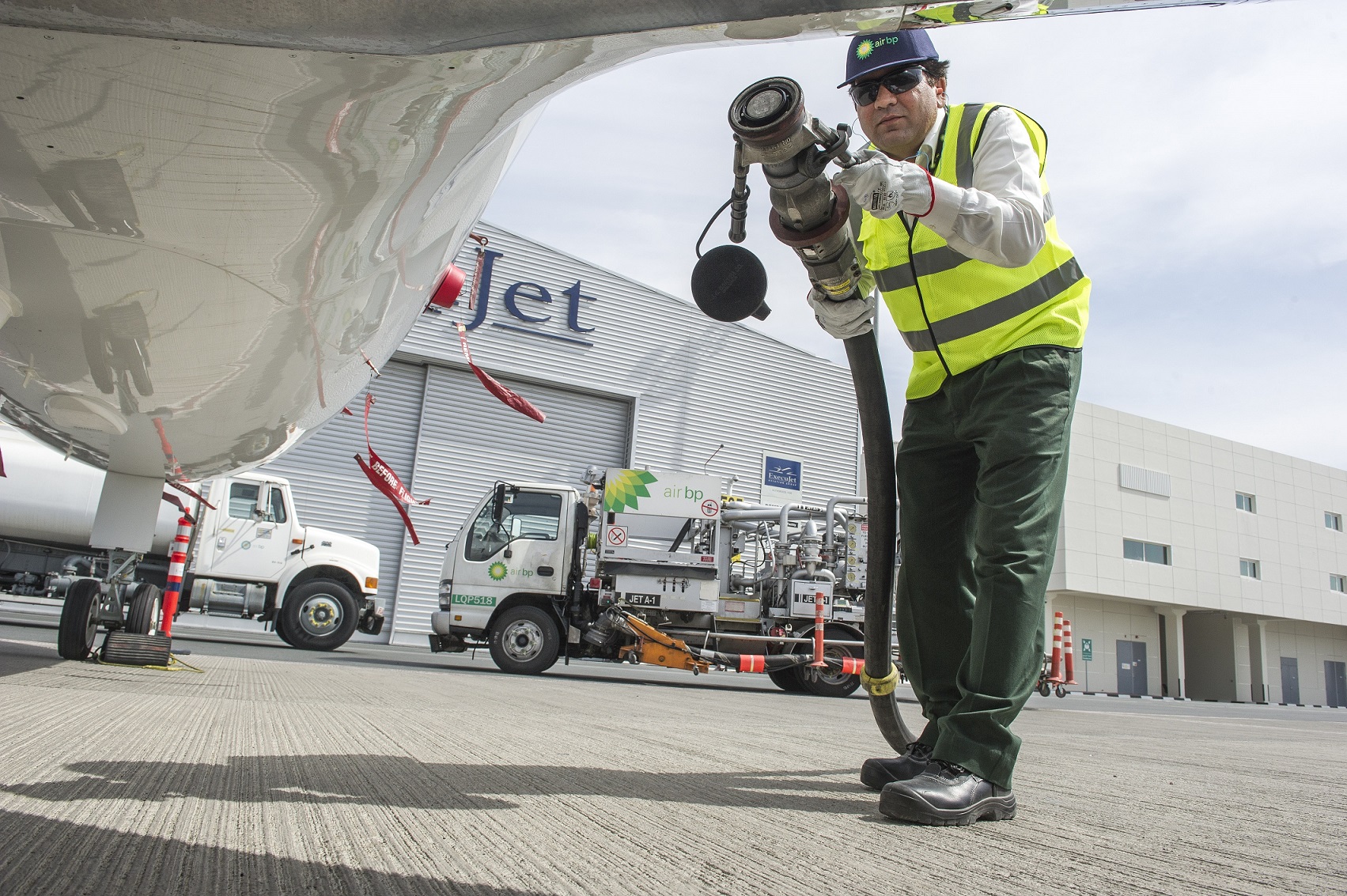
Image courtesy Air bp
The coronavirus pandemic has undoubtedly challenged the global aviation industry. However, as we look towards a post-pandemic landscape it’s encouraging to note there is a focus on building back more sustainably in line with the sector’s low carbon goals, including halving total carbon emissions by 2050 relative to 2005 levels.

One of the pillars identified by industry leaders to help reach these goals is the broad adoption of SAF, which produces around 80% fewer carbon emissions over its lifecycle than the traditional jet fuel it replaces. According to the Sustainable Aviation Jet Fuel (SAJF) initiative* – which Air bp is part of – the single-largest potential reduction in aviation’s lifecycle carbon emissions will come about through the wider use of SAF in place of the current fossil-based jet fuel.
One of the big challenges with SAF is that current volumes and existing supply points are limited. Subsequently, delivering SAF far from those supply points can be an expensive process. In addition, long supply chains can create increased carbon emissions, which would reduce the overall carbon savings from the use of the SAF. So, with SAF only available at a small number of locations across Europe and North America, Air bp is offering a book and claim solution to allow customers to access SAF carbon reductions without being physically connected to the supply site. In short, the programme enables bp to deliver the SAF into the supply chain at one airport location and ‘book’ the carbon reduction associated with it into a registry. Then the customer at another location can ‘claim’ those carbon reductions by purchasing their traditional jet fuel along with the benefit of the lifecycle carbon reductions that have been registered in that registry.
Book and claim SAF sales should be credible, traceable and must not lead to double counting. This is why Air bp has partnered with the Roundtable on Sustainable Biomaterials (RSB). RSB — a global multi-stakeholder organisation that supports the SAF and wider bioeconomy sector with sustainability solutions, partnerships and certification; RSB will certify Air bp’s book and claim SAF sales based on RSB’s robust procedures and manage the book and claim registry.
Building critical mass
Our book and claim solution is particularly relevant to the general and business aviation market where volumes are smaller and typically purchased over a wide number of locations. So, if SAF isn’t available at the location a customer is flying from, they still have the opportunity to purchase the carbon reductions for SAF that is placed into the supply chain where it is most cost effective and where carbon emissions from the transport of the product can be reduced. The book and claim customer is issued a certificate by the registry showing the volume of SAF delivered and the corresponding lifecycle carbon emission savings (as detailed in the associated proof of sustainability certificate). Customers can choose how to use the lifecycle carbon savings detailed on the certificate including in marketing communication or reporting. However, as this is a voluntary scheme certificates are not eligible under regulatory schemes.
And, as well as giving a wider range of customers access to the benefits of SAF, book and claim also helps us to develop a greater understanding of SAF demand.
Currently, our book and claim solution can be used with jet fuel purchases in France, Germany, Spain, Switzerland, the UK and the US**, and we are exploring additional locations. Customers can opt for specific quantity and they will then be invoiced separately for the incremental cost. Alternatively, they can opt for a percentage of their normal jet purchases from a particular airport and then pay an additional fee on their purchases of traditional jet fuel to cover the incremental cost of book and claim SAF.
The minimum volume of book and claim SAF that can be purchased is 5,000USG/19,000 L/ 19m3/ 15MT.
Reducing the lifecycle carbon emissions
The SAF delivered produces around 80% fewer carbon emissions over its lifecycle than the traditional jet fuel it replaces***. This lifecycle carbon reduction can be effective for the environment wherever it applied in the world.
Purchasing book and claim SAF reduces lifecycle carbon emissions by introducing more SAF into the supply chain and providing a wider range of customers with the benefits of SAF. It is one of several solutions Air bp is offering, that are consistent with bp’s ambition to be a net zero company by 2050 or sooner and to help the world get to net zero. In the meantime, our plans to develop physical SAF supply chains based on demand, remains unchanged.
We believe SAF will play an important role towards meeting the industry’s low carbon goals. And we’re delighted to be able to make its benefits more accessible to a wider audience through book and claim.