


MoD objects to four UK wind farms over military radar safety concerns



The Ministry of Defence (MoD) has objected to four proposed UK wind farms over concerns that their turbines could interfere with military radar systems, making aircraft harder to detect.
The wind farms the MoD objected to include three onshore developments in northern England and near the Scottish border, along with a proposed offshore wind farm in the Irish Sea.
As The Guardian reported, the objections present a challenge for the UK’s renewable energy expansion: ensuring new wind turbines do not compromise military surveillance, air traffic control or flight safety.
The MoD’s objections do not automatically prevent construction, but developers must prove that any radar interference can be satisfactorily addressed.
Which wind farms has the MoD objected to?
The four developments involve different military facilities and potential radar impacts.
| Proposed wind farm | Development | Reported MoD concern |
|---|---|---|
| Hope Moor, County Durham | 23 turbines, up to 200m tall | Aircraft detection within an RAF low-flying area |
| Burton Agnes, East Yorkshire | Six turbines | Interference with military operations |
| Scottish Borders | 13 turbines | Radar interference assessed as unmanageable |
| Irish Sea offshore development | 87 turbines | Interference with radar at Warton Aerodrome, Lancashire |
At Hope Moor, the MoD raised concerns in June that aircraft operating in the affected area might not be detected by radar. The development is classified as a nationally significant infrastructure project, meaning the final planning decision rests with the Secretary of State for Energy Security and Net Zero.
The other objections concern a smaller project near Driffield in East Yorkshire, a development near the Scottish border and a larger offshore project that could affect radar serving Warton Aerodrome.
These are planning-stage objections. They do not establish that any of the proposed developments has already disrupted military operations.
Why do wind turbines interfere with military radar?
Wind turbines can interfere with radar because their large, rotating blades reflect radio signals.
Radar systems transmit radio waves and analyse their reflections to identify the position and movement of objects, including aircraft.
Rotating turbine blades produce changing radar returns that can resemble moving targets.
Multiple turbines can also generate persistent interference, known as radar clutter, making genuine aircraft harder to distinguish.
The main risks include:
- False targets: Rotating blades can produce radar returns that resemble moving aircraft.
- Reduced detection: Turbine interference can make genuine aircraft harder to identify, particularly at low altitude.
- Radar clutter: Large wind farms can generate multiple unwanted returns that complicate surveillance.
- Physical obstruction: Tall turbines can be obstacles for aircraft operating at low altitude.
The severity of interference depends on turbine height, location, terrain, distance from radar installations and radar equipment capabilities.
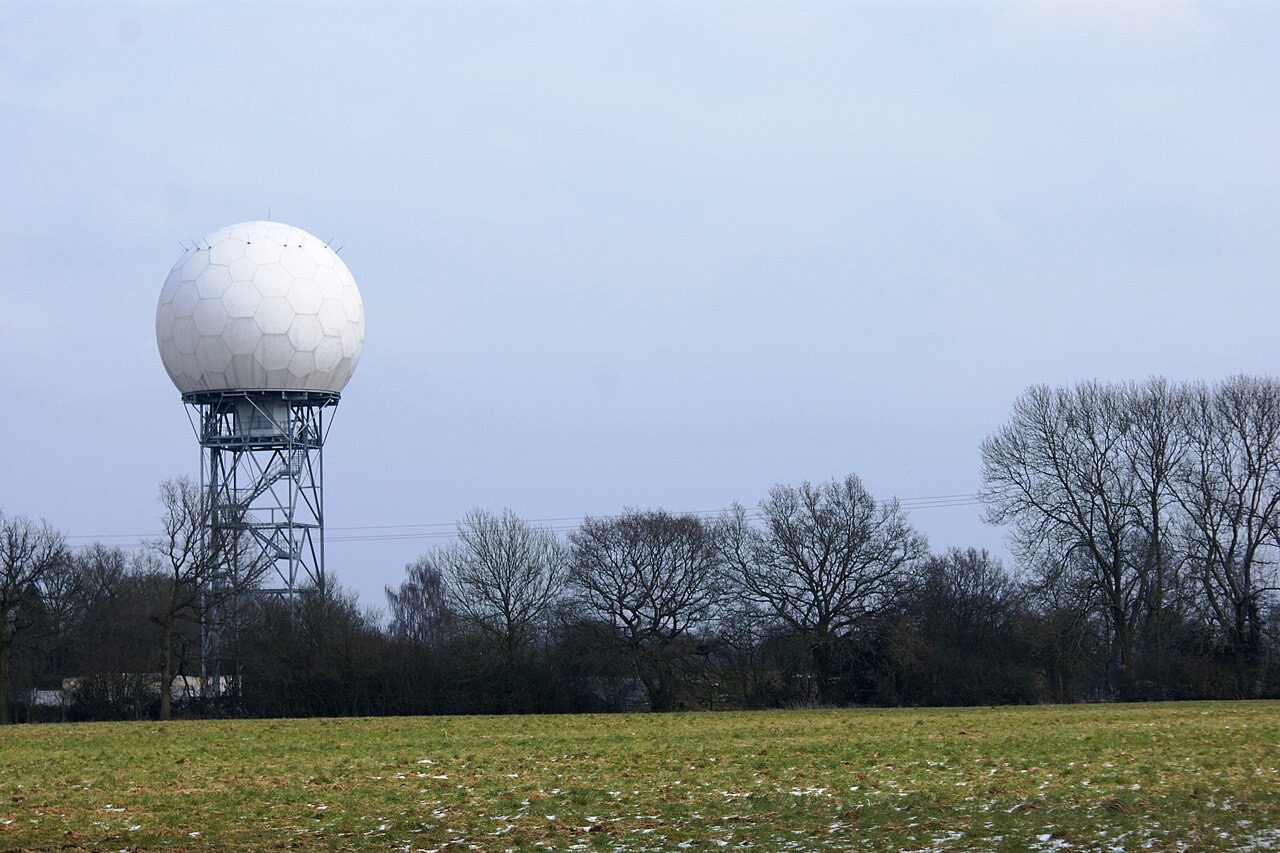
The issue is particularly important for primary surveillance radar, which detects aircraft through reflected signals rather than relying on transmissions from onboard equipment. Military radar must also detect aircraft that are not transmitting identification or position information.
What does the Ministry of Defence say about wind farms?
The MoD’s official wind farm safeguarding guidance identifies several potential effects of turbines on defence operations.
These include interference with radar surveillance, communications, naval operations and military low flying.
Wind turbines can also affect seismic monitoring equipment used to detect underground nuclear explosions.
The Defence Infrastructure Organisation (DIO) assesses proposed developments in consultation with military specialists to determine whether they could compromise operational capabilities.
Developers are advised to consult the MoD about turbines measuring at least 11 metres to blade tip or having a rotor diameter of at least two metres.
However, an MoD objection does not necessarily mean a project cannot proceed. The department works with developers to identify measures that could address its concerns without compromising defence capabilities.
Can technology prevent wind turbine radar interference?
Several technologies can reduce interference, though no single solution works everywhere.
Options include changing turbine layouts, upgrading radar equipment, installing additional surveillance sensors and introducing software that helps distinguish aircraft from turbine reflections.
However, the government’s 2025 Onshore Wind Taskforce Strategy acknowledged that finding effective solutions for military radar remains difficult.
It found that approximately 2GW of proposed onshore wind capacity had faced, or was expected to face, MoD objections involving air traffic control radar.
The strategy identified a shortage of proven mitigation technologies that meet military requirements, particularly for primary surveillance radar.
The government proposed a developer-funded programme of trials, led by the MoD, to assess possible solutions. This included examining radar interference affecting RAF Lossiemouth in Scotland.
A joint military air traffic control task force was also proposed to help resolve objections and test mitigation technologies.
Balancing renewable energy and national security
The objections come as the government seeks to expand renewable electricity generation.
Its ambition is to reach 27GW to 29GW of onshore wind capacity across Great Britain by 2030, compared with 14.8GW when the 2025 strategy was published.
Wind developments can support energy security and reduce dependence on fossil fuels. However, defence planners must establish whether new infrastructure could affect military readiness and aviation safety.
The government’s 2025 energy infrastructure planning policy requires developers to assess potential impacts on civil and military aviation, radar and defence installations.
It also provides for mitigation measures, including radar upgrades, operational changes and modifications to developments.
For the four wind farms facing objections, the central issue is whether interference can be reduced to a level acceptable to the MoD. The outcome will depend on the evidence submitted during planning and whether developers can agree effective mitigation measures with defence authorities.
Sign up for our newsletter and get our latest content in your inbox.
Similar Reads





Sign up for our newsletter. Select all sectors relevant to you.
Related