Advancing UK Aerospace, Defence, Security & Space Solutions Worldwide
  • Home
  • /
  • Aerospace
  • /
  • Reaction Engines advances its hypersonic propulsion system

Aerospace Defence

Reaction Engines advances its hypersonic propulsion system
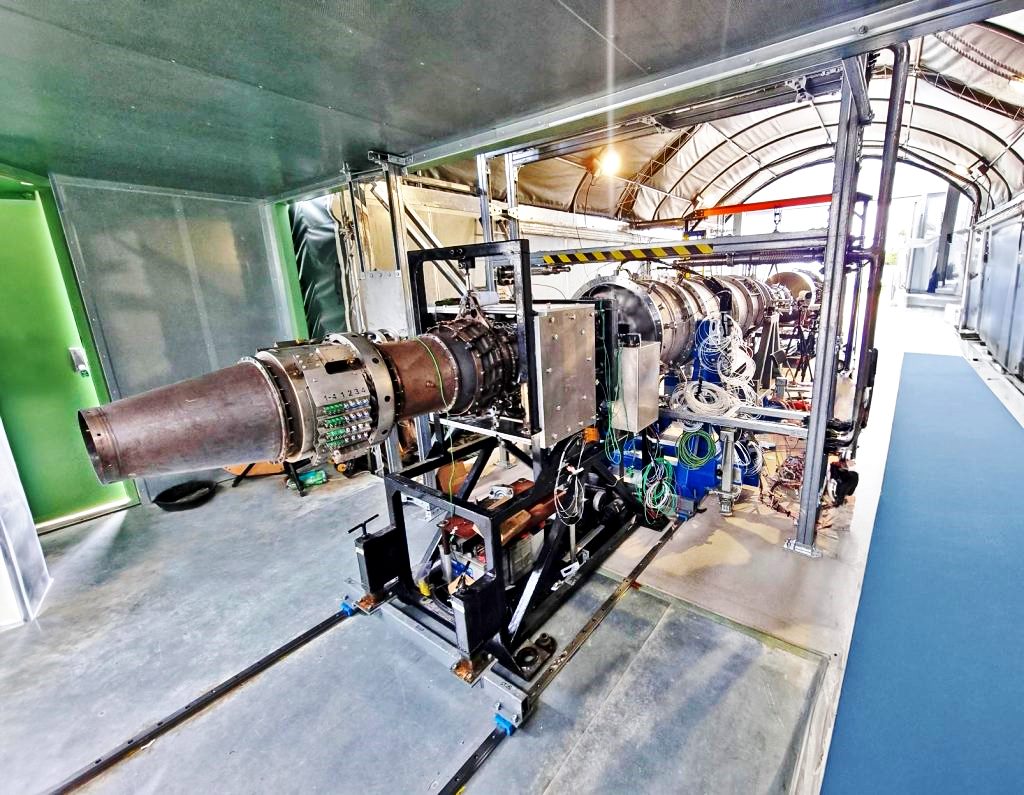
Reaction Engines has successfully demonstrated the integration of its innovative precooler technology with existing jet-engine architecture, achieving sustained Mach 3.5 operating conditions and demonstrating the viability of a key element for its innovative propulsion system concept for high-Mach/hypersonic aircraft.

Image courtesy Reaction Engines

In the current ground-based testing programme, Reaction Engines’ innovative precooler has been integrated and close-coupled with a modified Rolls-Royce jet engine to simulate a propulsion system for an unpiloted, reusable high-Mach air vehicle concept.

The test programme initially achieved sustained Mach 2.3 operating conditions, representing speeds faster than Concorde’s maximum operating speed, before operating at Mach 3.5 pressures and temperatures, matching the maximum known airspeed record of the SR-71, the world’s fastest aircraft powered by an air-breathing engine.

Advertisement
Leonardo animated rectangle

In addition to developing precooler technology, Reaction Engines is developing and testing novel high-Mach intake designs and technology for hypersonics capabilities. Hardware is currently being manufactured and assembled for a full-scale ground-based high-Mach thermomechanical test. Sub-scale aerodynamic wind-tunnel testing is already being undertaken to assess intake performance over a range of supersonic conditions.  

Advertisement
ODU RT

Mark Thomas, Chief Executive of Reaction Engines, said: “As the world’s most advanced heat exchanger technology company, this significant milestone is a testament to our relentless efforts to develop novel, innovative, reusable and affordable propulsion systems for hypersonic air vehicles at pace. This capability is transferrable to thermal management solutions for multiple applications and mission profiles.”


Advertisement
General Atomics LB
ITA Airways adopts Iris tech

Aerospace Space

ITA Airways adopts Iris tech

11 December 2025

Viasat has announced that ITA Airways is being equipped with Iris technology, paving the way to trajectory-based operations which can cut emissions and enhance airline efficiency.

Stansted records busiest ever November

Aerospace

Stansted records busiest ever November

11 December 2025

London Stansted had its busiest-ever November as it prepares for what is forecast to be a record-breaking festive season.

Report highlights potential of hydrogen in aviation

Aerospace

Report highlights potential of hydrogen in aviation

10 December 2025

Rolls-Royce, easyJet, Heathrow and University College London Air Transportation Systems Lab (UCL ATSLab), have published a report highlighting how hydrogen-powered aircraft could enable European and UK aviation to cut carbon emissions while supporting future growth.

CAA publishes NERL final proposals

Aerospace

CAA publishes NERL final proposals

10 December 2025

The Civil Aviation Authority (CAA) has published CAP 3164, a statutory consultation on final proposals for modifications to NATS (En Route) Plc’s (NERL) air traffic services licence conditions in support of the creation of a new UK Airspace Design Service.

Advertisement
Leonardo animated rectangle
TCS joins Airbus’ Skywise Partner Programme

Aerospace

TCS joins Airbus’ Skywise Partner Programme

10 December 2025

Tata Consultancy Services (TCS) has joined the Skywise Certified Partner Programme created by Airbus and will be using its expertise in generative AI, digital twins and quantum computing to develop unique, scalable, Skywise-aligned solutions for operators in the aviation sector worldwide.

IATA reveals airlines constrained by aerospace supply chain bottlenecks

Aerospace

IATA reveals airlines constrained by aerospace supply chain bottlenecks

9 December 2025

In its recently released global outlook, the International Air Transport Association (IATA) has updated its analysis of aerospace supply chain bottlenecks, noting that aircraft availability remains one of the most significant constraints on industry growth.

Advertisement
ODU RT