Research blasts off towards future space factory development


Image courtesy University of Glasgow
Dr Gilles Bailet (above), of the University of Glasgow’s James Watt School of Engineering, has been awarded a patent for a new system which overcomes the challenges of 3D printing in zero-gravity.
His technology has recently been rigorously tested during a series of trips on a research aeroplane known as the ‘vomit comet’.
Dr Bailet says that solving the challenge of 3D printing objects in low-gravity environments could pave the way for orbital fabricators capable of producing parts and components which could be assembled into novel equipment in orbit never seen before.
That equipment could include solar reflectors to generate zero-carbon power for transmission back to Earth, improved communication antennae, or drug research stations that can create purer, more effective pharmaceuticals.
For several years, Dr Bailet has been working on a prototype 3D printer better-suited for use in outer space. Instead of the filaments used in earthbound 3D printers, it uses a granular material developed by the team designed to work effectively in microgravity and in the vacuum of space. The unique properties of the materials allow it to be drawn reliably from the prototype’s feedstock tank and delivered to the printer’s nozzle faster than any other method.
Dr Bailet and his colleagues are also exploring methods of embedding electronics into the materials as part of the printing process, opening up the possibility of creating functional components for use in devices created in space as well as recyclable space systems.
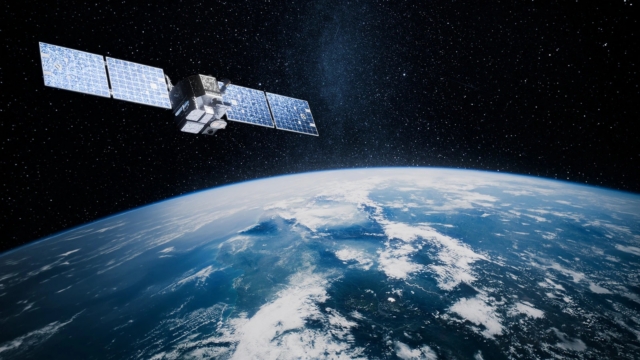
Dr Bailet said: “Currently, everything that goes into Earth’s orbit is built on the surface and sent into space on rockets. They have tightly limited mass and volumes and can shake themselves to pieces during launch when mechanical constraints are breached, destroying expensive cargo in the process. If instead we could place fabricators in space to build structures on demand, we would be freed from those payload restrictions. In turn, that could pave the way to creating much more ambitious, less resource-intensive projects, with systems actually optimised for their mission and not for the constraints of rocket launches.
“Additive manufacturing, or 3D printing, is capable of producing remarkably complex materials quickly and at low cost. Putting that technology in space and printing what we need for assembly in orbit would be fantastically useful.
“However, what works well here on Earth is often less robust in the vacuum of space, and 3D printing has never been done outside of the pressurised modules of the International Space Station. The filaments in conventional 3D printers often break or jam in microgravity and in vacuum, which is a problem that needs to be solved before they can be reliably used in space. Through this research, we now have technology that brings us much closer to being able to do that, providing positive impacts for the whole world in the years to come..”
Their prototype demonstrator proved its effectiveness in microgravity in November as part the 85th European Space Agency parabolic flight campaign in collaboration with Novespace in Bordeaux, France.
The team took their test kit on three flights which provided them with more than 90 brief periods of weightlessness at the apex of rollercoaster-like sharp ascents followed by rapid descents – a physical challenge which has earned the planes which fly the routes the ‘vomit comet’ for their effect on passengers’ digestive systems.
During each 22-second period of weightlessness, the team closely monitored the prototype’s dynamics and power consumption, which showed that the system worked as designed in the challenges of microgravity.
Dr Bailet added: “We’ve tested the technology extensively in the lab and now in microgravity, and we’re confident that it’s ready to perform as expected, opening up the possibility of 3D printing antenna and other spacecraft parts in space.
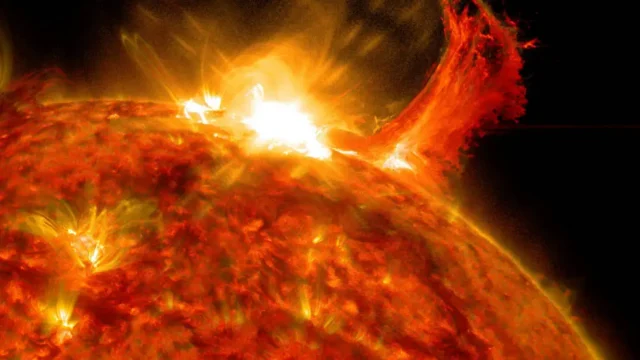
“3D-printed space reflectors, like those being developed by my colleague Professor Colin McInnes’ SOLSPACE project, could gather energy from the sun 24 hours a day, helping us reach net-zero with an entirely new form of low-carbon power generation.
‘Similarly, crystals grown in space are often larger and more well-ordered than those made on Earth, so orbital chemical factories could produce new or improved drugs for delivery back to the surface. It has been suggested, for example, that insulin grown in space could be nine times more effective, allowing diabetic people to inject it once every three days instead of three times a day, as they often have to do today.”
Dr Bailet and his team are now looking for funding to help support the first in-space demonstration of their technology. They are also leading efforts, supported by funding from the UK Space Agency, to ensure that future in-space manufacturing projects do not contribute to the growing problem of space debris.
The development of Dr Bailet’s in-space manufacturing project is supported by funding from the University of Glasgow’s Glasgow Knowledge Exchange Fund and the EPSRC Impact Acceleration Account. The programme is supported both via the RAEng Chair in Emerging Technologies of Professor Colin McInnes and the RAEng Proof of Concept award.
Sign up for our newsletter and get our latest content in your inbox.
Similar Reads


Sign up for our newsletter. Select all sectors relevant to you.
Related