Rolls-Royce’s ‘Spirit of Innovation’ powers through another milestone
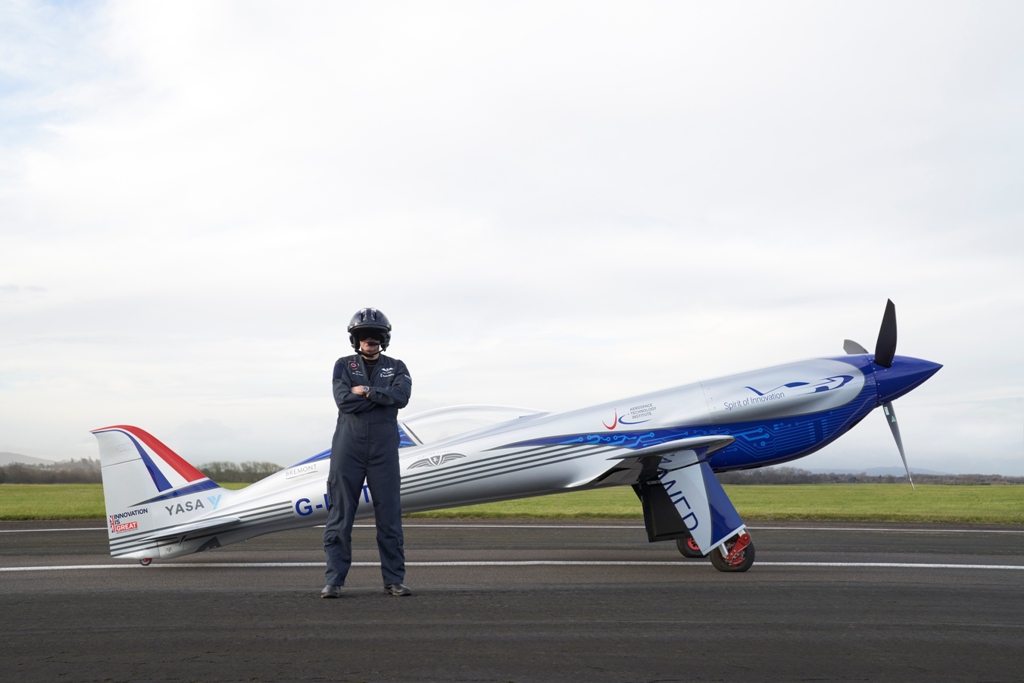
Image copyright Rolls-Royce
For the first time, the plane powered along a runway propelled by its powerful 500hp [400kw] electric powertrain and the latest energy storage technology developed to set world speed records and enable a new generation of urban air mobility concepts.
The taxiing of the plane is a critical test of the integration of the aircraft’s propulsion system, ahead of actual flight-testing. The first flight is planned for the Spring and when at full power the combination of electrical powertrain and advanced battery system will power the aircraft to more than 300mph, setting a new world speed record for electric flight.

Minister for Business Paul Scully said: “The taxiing of Rolls-Royce’s ‘Spirit of Innovation’ forms part of an exciting new chapter in aviation as we move towards its first flight in the spring. Set to be the world’s fastest electric plane, this pioneering aircraft highlights the value of close collaboration between industry and government.
“The UK is committed to achieving net-zero carbon emissions by 2050. Through government grants for research and development, we’re championing innovation in the aerospace sector to meet this ambitious target as we build back greener from the pandemic.”
The ACCEL programme, short for ‘Accelerating the Electrification of Flight’ includes key partners YASA, the electric motor and controller manufacturer, and aviation start-up Electroflight. The ACCEL team have continued to innovate while adhering to the UK Government’s social distancing and other health guidelines.
Rob Watson, Director – Rolls-Royce Electrical, said: “Electrification of flight is an important part of our sustainability strategy as we aim for net zero carbon by 2050. Taxiing of the ‘Spirit of Innovation’ is an incredible milestone for the ACCEL team as we progress to first flight and the world-record attempt later this year. For the first time, the plane propelled itself forward using the power from an advanced battery and propulsion system that is ground-breaking in terms of electrical technology. This system and the capabilities being developed will help position Rolls-Royce as a technology leader offering power systems to the Urban Air Mobility market.”
Half of the project’s funding is provided by the Aerospace Technology Institute (ATI), in partnership with the Department for Business, Energy & Industrial Strategy and Innovate UK.
Gary Elliott, Chief Executive Officer of the Aerospace Technology Institute, said: “The Aerospace Technology Institute is proud to co-fund the ACCEL project. The aims of ACCEL align with the long-term objectives of the ATI strategy: to fund exciting and innovative technology development that secures a lead for the UK in next-generation zero-emission propulsion, and to continue to support highly-skilled jobs and generate economic return for the benefit of the UK. Our congratulations to the ACCEL team for reaching this latest milestone against a very challenging backdrop.”
The characteristics that ‘air-taxis’ require from batteries are very similar to what is being developed for the ‘Spirit of Innovation’ so that it can reach record-breaking speeds. Rolls-Royce will be using the technology from the ACCEL project and applying it to products for the market. We are bringing a portfolio of motors, power electronics and batteries into the general aerospace, urban air mobility and small commuter aircraft sectors as part of our electrification strategy.
The ACCEL project is part of Rolls-Royce’s journey towards net zero carbon by 2050 and we are also looking to inspire young people, through the ACCEL project, to consider careers in STEM (Science, Technology, Engineering and Mathematics). We have developed downloadable materials aimed at primary school children around the project. These are linked to the UK curriculum and everything can be downloaded from our website.