Advancing UK Aerospace, Defence, Security & Space Solutions Worldwide

Aerospace

Rolls-Royce UltraFan ALPS testing underway

Engineers at Rolls-Royce in Derby, UK, have successfully tested a key component of the UltraFan engine design, with - for the first time - all composite elements of the Advanced Low Pressure System (ALPS), including fan blades, a fan case and annulus fillers, being tested together on a donor engine.

Above: Engineers at Rolls-Royce in Derby, UK, have successfully tested a key component of the UltraFan engine design.
Copyright Rolls-Royce All rights reserved

UltraFan will deliver significant weight, noise and fuel burn reductions and will be 25% more efficient than a first-generation Trent engine.

Advertisement
ODU RT

The engine parts are manufactured using state-of-the-art, fully automated construction methods at Rolls-Royce’s Composites Technology Facility, a Composites Centre of Excellence.

Each fan blade is made robotically, building up around 500 layers of carbon fibre materials. Heat and pressure are then applied, and each blade is finished with a leading titanium edge, which offers extreme protection against foreign objects and bird strikes. When laid out, the layers of composite material that make up the fan blades and the fan case on this engine would stretch from London to Leeds.

The Advanced Low Pressure System demonstrates Rolls-Royce’s IntelligentEngine vision. Each blade has a digital twin – an identical virtual copy. During testing, vast amounts of data will be collected that will be fed into the digital twins, and allow engineers to predict how each blade will perform in service.

Ash Owen, Rolls-Royce, Chief Engineer, Civil Aerospace Demonstrator Programmes said: “These incredible technologies are taking our world-leading fan efficiency to the next level. More than a decade of research and development has brought us to this point and I’m confident that after extreme weather testing in Canada and performance testing in Germany, we can prove ALPS technology even further here in Derby, moving us one step closer to our UltraFan demonstrator.”

Advertisement
ODU RT

The Advanced Low Pressure System programme is a partnership between Rolls-Royce, Clean Sky, Innovate UK, the Department for Business, Energy and Industrial Strategy, the Aerospace Technology Institute, ITP Aero and GKN.


 

Advertisement
FIA2026 animated banner
May

Aerospace

May's air passenger demand down whilst air cargo demand rises

30 June 2026

International Air Transport Association (IATA) data for May 2026 global passenger demand revealed that air passenger demand fell by 2.2% and air cardo rose by 6.0%, compared to May 2025 levels.

SAS orders 18 A330neo aircraft

Aerospace

SAS orders 18 A330neo aircraft

30 June 2026

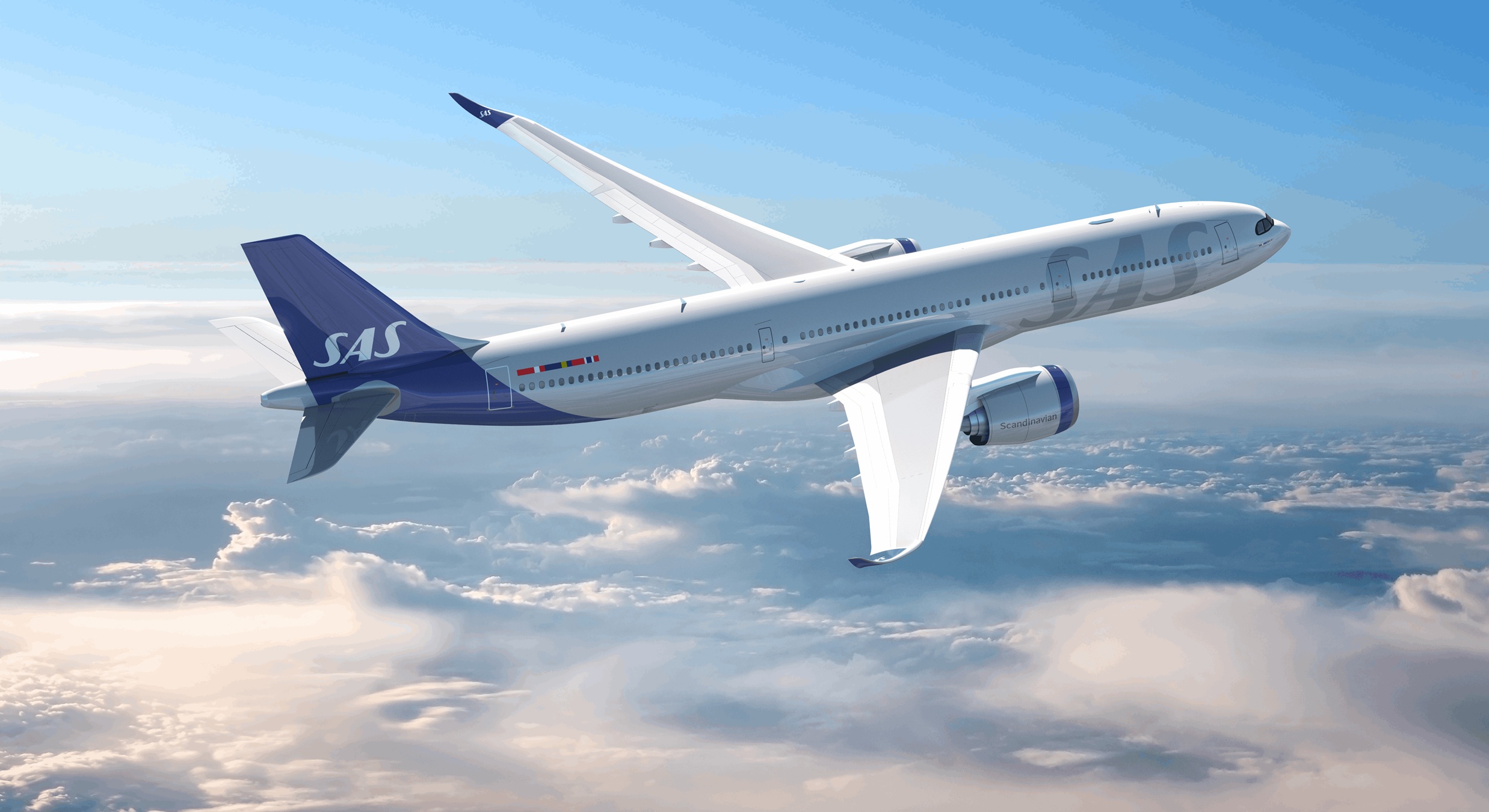
Scandinavian carrier SAS has placed a firm order with Airbus for 18 A330-900 aircraft powered by Rolls-Royce Trent 7000 engines, as part of its ongoing fleet renewal strategy.

London City Airport appoints Jonathan Rayner as COO

Aerospace

London City Airport appoints Jonathan Rayner as COO

30 June 2026

London City Airport has today announced the appointment of Jonathan Rayner as its new Chief Commercial Officer (COO) and a member of the Executive Committee.

ADS sees aircraft deliveries up 45%

Aerospace

ADS sees aircraft deliveries up 45%

30 June 2026

ADS has reported that commercial aircraft orders and deliveries have surged during May 2026, with aircraft deliveries seeing a 45% increase compared to May 2025.

Advertisement
ODU RT
CAA warns of risks posed by incorrectly packed batteries

Aerospace Security

CAA warns of risks posed by incorrectly packed batteries

26 June 2026

Ahead of the big summer getaway where over 60 million people are expected to be flying, the UK Civil Aviation Authority (CAA) is telling all passengers to 'pack right for a safe flight' by taking their batteries in the cabin with them.

University of Bristol study looks at reducing vertical air taxi noise

Aerospace

University of Bristol study looks at reducing vertical air taxi noise

25 June 2026

The University of Bristol has published a study in Applied Acoustics this week, showing how landing pad design could reduce noise for vertical air taxis.

Advertisement
ODU RT
Advertisement
General Atomics LB