Advancing UK Aerospace, Defence, Security & Space Solutions Worldwide

Aerospace

SAS selects eight A350 XWBs and four A330s

Scandinavian carrier SAS has signed a Memorandum of Understanding (MoU) for eight A350 XWBs and four A330s, as part of its strategy to modernise its fleet with more fuel-efficient aircraft.


The agreement was signed in the Nowegian capital, Oslo. The new A350-900s and A330-300s will join the airline’s existing fleet of 30 Airbus aircraft. Engine selection for the A330s will be announced by the airline at a later date. 

Currently, SAS operates a fleet of 19 A320 Family aircraft, four A330s and seven A340s. The new wide-body aircraft will fit seamlessly into the airline’s fleet and deliver operational efficiencies and cost savings due to the commonality across the fleet, a feature unique to Airbus. 

Advertisement
ODU RT

“The great technological improvements of this extensive fleet renewal plan give SAS a long haul fleet that will be top of class in the industry. It will truly increase our competitiveness and strengthen our customer offering – both with regard to comfort, service and efficiency. We look forward to welcoming our passengers on board these fuel efficient aircraft with extremely comfortable and quiet cabins,” said Rickard Gustafson, SAS Group president & CEO. 

“We are delighted that SAS has underscored their confidence in Airbus by selecting our A330, which offers unbeatable economics and the highest level of operational reliability alongside the A350 XWB, the world’s most technologically advanced and efficient aircraft,” said John Leahy, Airbus Chief Operating Officer, Customers.’’    

Advertisement
ODU RT

The A350 XWB (Xtra Wide-Body) is an all-new, mid-size long-range aircraft product line comprising three versions and seating between 270 and 350 passengers in typical three-class layouts. The A350 XWB Family will bring a step change in efficiency compared with existing aircraft in its size category, using 25 per cent less fuel and providing an equivalent reduction in CO2 emissions. 

The A330 Family, which spans 250 to 300 seats, and includes Freighter, VIP, and Military Transport/Tanker variants, has now attracted more than 1,200 orders, with around 900 aircraft flying with more than 100 operators worldwide. Ever since the original version of the A330-300 entered service, the hallmark has been its very efficient operating economics. Thanks to the introduction of numerous product improvements, it still remains the most cost-efficient and capable aircraft in its class operating today, and the family achieves average dispatch reliability above 99%. 

Advertisement
General Atomics LB
Muirhead Avionics appointed ARC for selected IA products

Aerospace

Muirhead Avionics appointed ARC for selected IA products

19 May 2026

AMETEK MRO's Muirhead Avionics, announced today that it has entered into a long term agreement with Innovative Aerosystems (IA) to become an Authorised Repair Centre (ARC) for selected legacy avionics products formerly developed under Honeywell product lines and now fully supported by IA.

Intelligent Energy joins UK alliance to accelerate hydrogen flight

Aerospace

Intelligent Energy joins UK alliance to accelerate hydrogen flight

19 May 2026

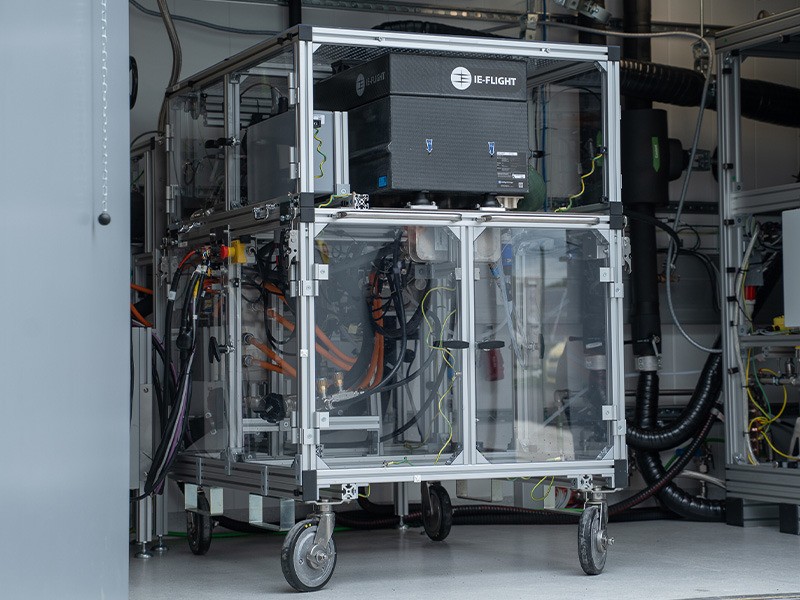
Intelligent Energy (IE) has joined the Hydrogen in Aviation Alliance, alongside leading UK aerospace and UK hydrogen fuel cell manufacturer, Intelligent Energy (IE), has joined the Hydrogen in Aviation Alliance (HIA),which brings together companies from across aerospace, including Airbus, Bristol Airport, easyJet, GKN Aerospace and ...

Hexagon releases NCSIMUL upgrade

Aerospace Defence

Hexagon releases NCSIMUL upgrade

19 May 2026

Hexagon’s Production Software Division has announced the latest release of NCSIMUL, strengthening its integrated approach to NC programme verification, simulation and optimisation with a new Selective Simulation capability.

ATI launches tech strategy to double value of UK aerospace

Aerospace

ATI launches tech strategy to double value of UK aerospace

19 May 2026

The Aerospace Technology Institute (ATI) has today launched the latest UK technology strategy targeting a generational prize of doubling the UK aerospace sector's market value to $18 billion (£13.44bn) by 2035 and increasing by over four times, to $41 billion (£30.6bn), by 2050.

Advertisement
ODU RT
Aviation operational gains offset by industry growth

Aerospace

Aviation operational gains offset by industry growth

18 May 2026

Analysis from aviation intelligence company IBA, has found that global aviation carbon intensity improved from 860 gCO₂ per revenue tonne-kilometre (RTK) in 2018 to 690 gCO₂/RTK by September 2025 - an efficiency improvement of 20% - but that flight activity growth is offsetting those operational gains.

Egis appoints Shakir Khaja to drive UK and Ireland airport growth

Aerospace

Egis appoints Shakir Khaja to drive UK and Ireland airport growth

18 May 2026

Architecture, engineering and consulting firm Egis has appointed Shakir Khaja as Aviation Sector Director for Europe and Africa, to oversee the firm’s expansion across the airport sector, with a strategic focus on the UK, Ireland and wider European market.

Advertisement
ODU RT
Advertisement
FIA2026 animated banner