Scotland’s First Minister welcomes Glasgow STEM Academy
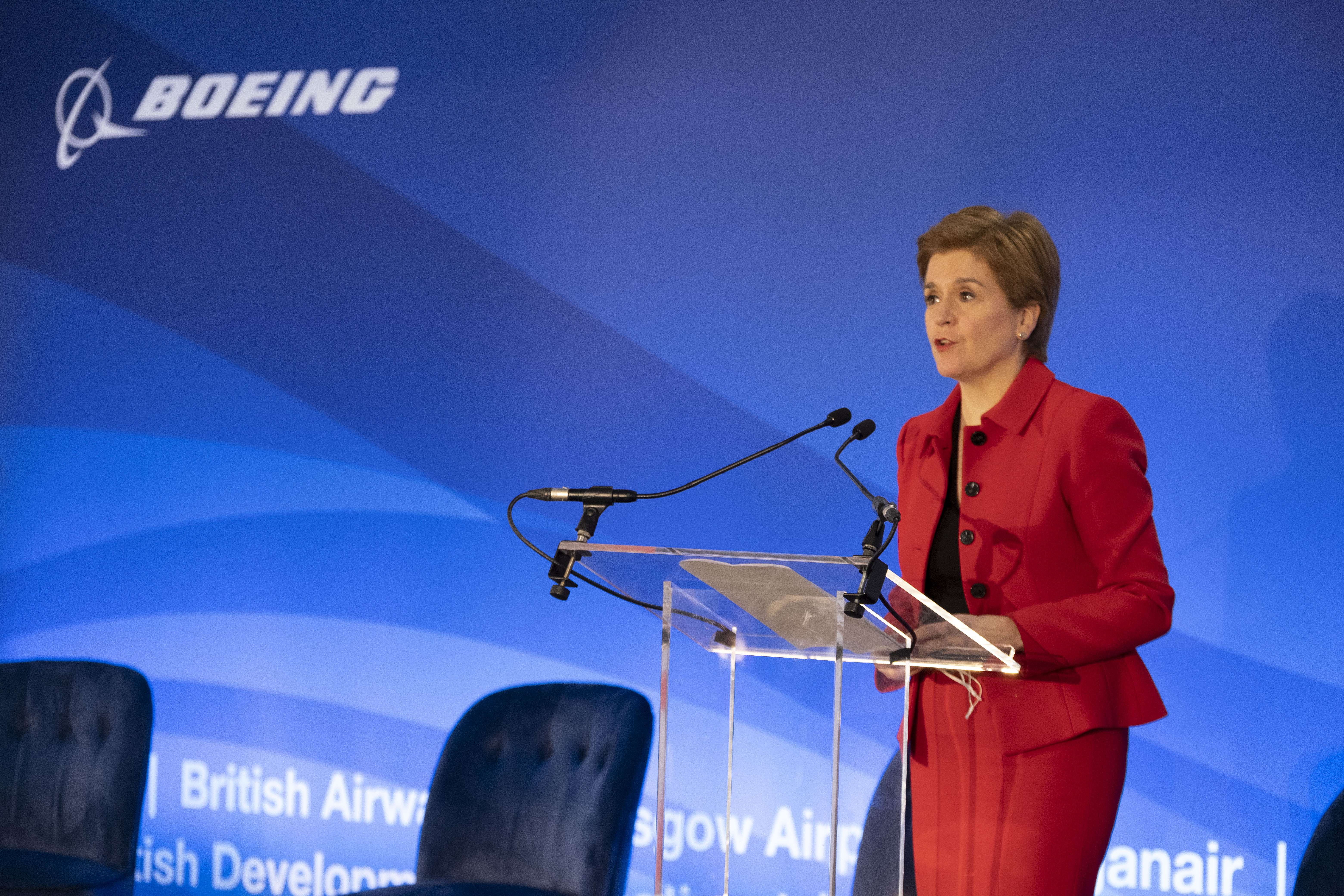
Above:
First Minister of Scotland, Nicola Sturgeon, making the announcement at the Boeing Innovation Forum, at Glasgow Airport, designed to bring together partners in Scotland and the broader aviation sector to demonstrate the role today’s sustainable technologies can play in the future of aviation and prepare the industry for a more sustainable future.
Courtesy Boeing

The academy is made possible through funding from Boeing and is being developed in partnership with First Scandinavia. In 2018, Boeing invested more than £3.5 million to set up a network of STEM-focused 'Newton Rooms' around Europe. This will be the first full academy outside of Norway when it opens in spring of 2022.
First Minister Nicola Sturgeon said: “Delegates from around the world will start to arrive in Glasgow for COP26 in a matter of weeks. The summit is the world’s best chance – and possibly one of our last chances – to limit global warming to 1.5 degrees. We need to find ways to decarbonise air travel if we are to achieve that goal while rebuilding connectivity, and that needs international collaboration between governments and industry.
“Only by maximising the opportunities in front of us – research and development; inspiring young people to consider STEM careers in Scotland and further afield; and testing out sustainable technologies – can we endeavour to leave a planet that future generations can be proud of. Every step is an investment in our young people’s future and innovations like Boeing’s Glasgow Newton Flight Academy enable young people to join us on this crucial journey and discover the fascinating learning and career opportunities a net zero society creates.”
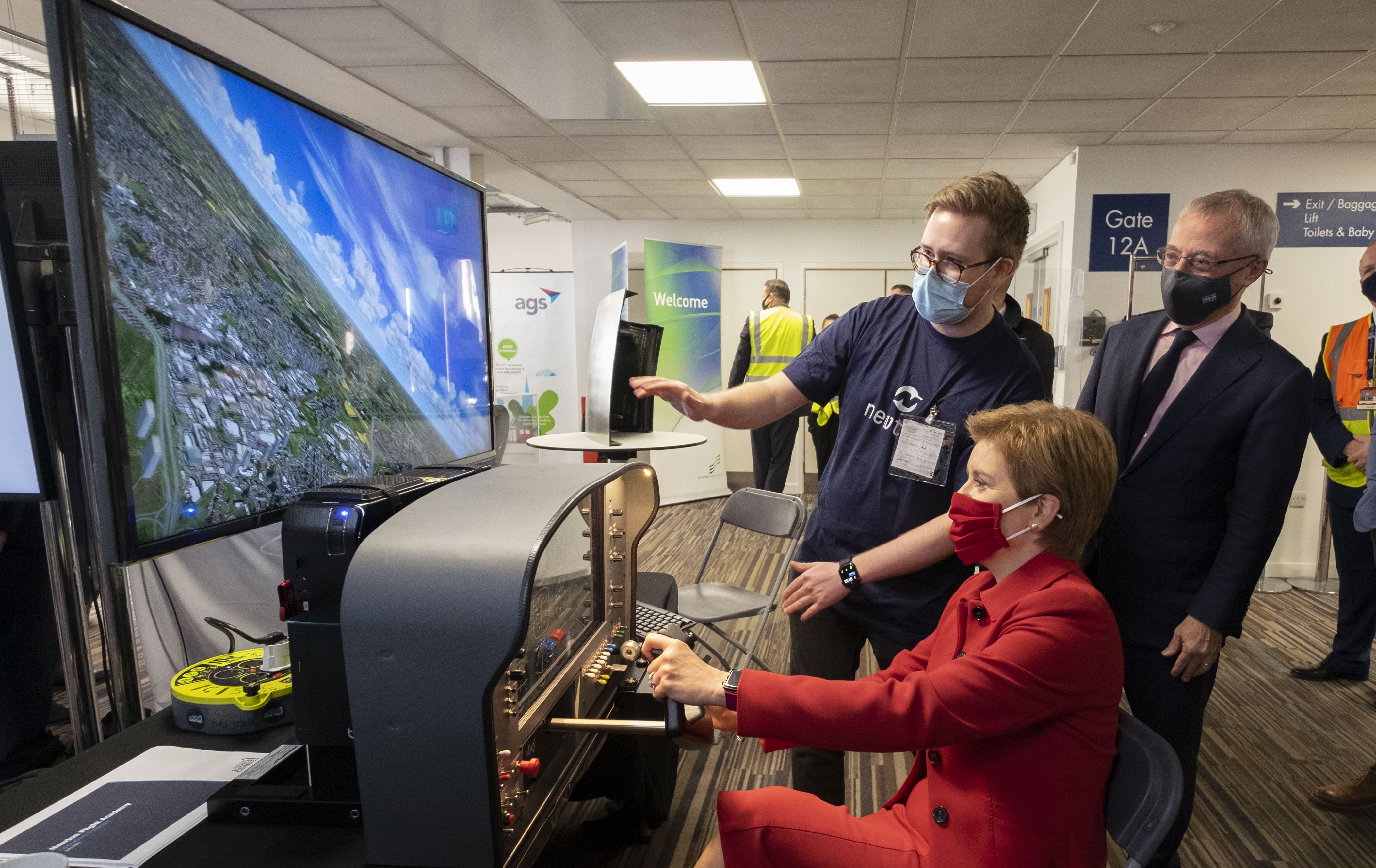
The state-of-the-art space will be used to deliver immersive, experiential learning programmes that will enable students to engage in real-world challenges by working together with industry professionals and will include the experience of flying in state-of-the-art flight simulators. The programmes will cover themes including space, biofuels, and advanced materials and manufacturing. These will be delivered in partnership with the University of Strathclyde.
The First Minister made the announcement at the Boeing Innovation Forum, an event at Glasgow Airport designed to bring together partners in Scotland and the broader aviation sector to demonstrate the role today’s sustainable technologies can play in the future of aviation and prepare the industry for a more sustainable future.
The centerpiece of the event is a visit by Boeing’s ecoDemonstrator. Since 2012, the programme has accelerated innovation by testing nearly 200 promising technologies to address challenges for airlines, passengers and the environment. This year’s plane is a new 737-9 from Alaska Airlines. Among the technologies being tested are an engine nacelle designed to reduce noise and cabin sidewalls made from recycled material.
Boeing partnered with ADS, British Airways, Glasgow Airport, Loganair, Menzies Aviation, Scottish Development International, Scottish Government and Scottish Enterprise on the forum, and dozens more were represented in the supplier showcase and through panel discussions.
The Boeing Innovation Forum is under the umbrella of the Boeing Scotland Alliance, which was launched in 2020 with Scottish Enterprise. It is designed to explore opportunities to work together in Scotland, with the aim of doubling Boeing’s supply chain and creating 200 new quality jobs in five years. On Tuesday, Boeing and the National Manufacturing Institute Scotland opened a new £11.8 million R&D programme next to Glasgow Airport that will explore novel manufacturing technologies for metallic components, supported by a £3.5m Scottish Enterprise grant.
“When we signed the Boeing Scotland Alliance almost two years ago we wanted to work in many locations and sectors, to combine the best of what Boeing can offer with the world-class supply chain, startups, universities and research centres in Scotland,” said Sir Martin Donnelly, president of Boeing Europe and managing director of Boeing in the UK and Ireland. “This week’s events are a showcase of what we’ve done collectively already, and also what is possible in Scotland and the wider UK when industry, government and academia work collaboratively to create a more sustainable future.”
Adrian Gillespie, chief executive of Scottish Enterprise, said: “The Newton Flight Academy in Glasgow is a fantastic partnership between Boeing, Glasgow Science Centre, Scottish Government, University of Strathclyde, Skills Development Scotland and Scottish Enterprise to inspire the next generation of STEM pioneers. The Boeing Scotland Alliance is already proving extremely valuable in cementing Scotland’s global reputation for sustainable aerospace and manufacturing excellence by bringing Scottish companies and partners together to find innovative solutions to global low-carbon aviation challenges.”
Boeing has a growing presence in Scotland. On Tuesday, Boeing and the National Manufacturing Institute Scotland opened a new £11.8 million R&D programme next to Glasgow Airport that will explore novel manufacturing technologies for metallic components.
The sixth of the UK’s nine P-8A Poseidon maritime patrol aircraft was delivered last month to RAF Lossiemouth, where they are housed in a Boeing-built facility. More than 100 Boeing employees already are working alongside the RAF in Moray on maintenance, training and support of the fleet.
Boeing has invested in Scottish startups through the first two cohorts of its UK-based accelerator. The three-month programme provides startups access to leading industry strategists and technical experts, a global mentoring network and a Boeing investment of £100,000 in each. In February, more than 100 companies from across Scotland and a range of sectors joined a virtual event to learn about opportunities with Boeing and sources of government support available to them for research and development.